A mature tree beside a busy commercial car park can look like an asset right up to the point it starts blocking light, pushing over bays and dropping deadwood near pedestrians. That was the position in this commercial tree reduction case study – a large, established broadleaf tree on a mixed-use site needed to be managed properly, not cut back carelessly.
The client was responsible for keeping the site safe, presentable and operational throughout the working week. They did not want a heavy-handed job that would leave the tree disfigured, create complaints from tenants or introduce unnecessary risk. They needed a contractor who could reduce the crown sensibly, manage access around vehicles and footfall, and leave the area clean and ready for use.
What made this commercial tree reduction case study different
Commercial tree work is rarely just about the tree. On this site, the reduction had to fit around business activity, delivery access and public movement. The work area included parked cars, marked pedestrian routes and nearby buildings, which meant every cut had to be planned with the wider site in mind.
There was also a balance to strike between risk reduction and tree health. Removing too much growth in one visit can stress a tree, spoil its shape and trigger poor regrowth. Reducing too little can leave the original problem in place. The brief was clear – improve clearance, reduce end-weight on long lateral limbs, limit shading over the frontage and retain a natural-looking crown.
That is where experience matters. A proper reduction is not a shortcut for topping, and commercial clients usually know the difference once they have seen poor work elsewhere. The aim was to deliver a tidy, professional result that looked intentional and performed well over time.
Site assessment and planning
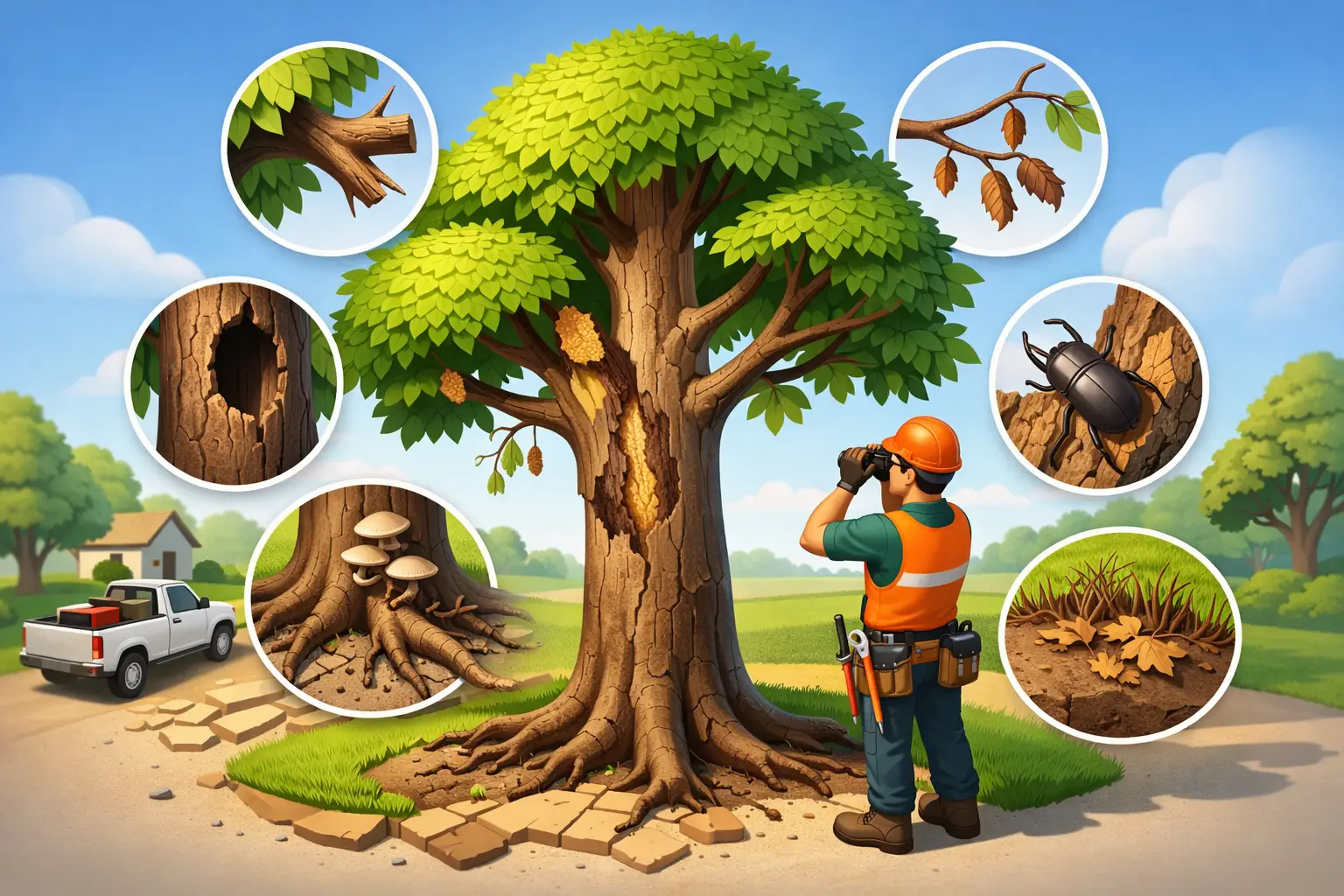
Before any equipment came on site, the job started with a full visual assessment from ground level. The team checked crown spread, branch unions, signs of decay, deadwood, likely loading points and the relationship between the tree and surrounding structures. The drop zone was tight, so the method of dismantling and lowering branches had to be chosen carefully.
The next part was planning the working area. On a domestic job, you can often rely on a garden boundary and a cooperative household. Commercial sites are different. People arrive early, move unpredictably and often assume they can still pass under a tree being worked on. Temporary exclusion zones, clear communication and sensible timing were all part of the job.
Access also shaped the approach. Specialist equipment, including elevated access where appropriate, can make a reduction safer and more efficient on awkward sites. That said, machinery is not always the answer. Ground conditions, overhead obstacles and available space all affect whether climbing, a cherry picker or a mixed approach is best.
The reduction strategy
In this commercial tree reduction case study, the reduction specification was designed around three priorities – safety, clearance and long-term structure. Rather than taking a blunt percentage off the whole crown, the work focused on selective reduction to suitable growth points, shortening extended limbs and rebalancing heavier sections.
This matters because percentage figures on their own can be misleading. A 20 per cent reduction carried out badly can do more harm than a larger but carefully judged reduction. On this tree, the key was to preserve the framework, keep a natural outline and avoid creating large wounds where smaller, better-positioned pruning cuts would do the job.
The lower limbs overhanging parking spaces were reduced to improve vehicle clearance and visibility. Higher lateral branches towards the building were shortened to lessen encroachment and reduce sail effect in strong winds. Deadwood and minor defective growth were removed as part of the same operation, giving the client a safer and cleaner overall canopy.
Working safely on a live commercial site
One of the main lessons from this case is that safe tree work depends as much on site control as cutting skill. The team worked in a way that kept the site functional while protecting staff, visitors and property. Sections were lowered in a controlled manner where free-fall was not suitable, and the ground crew managed arisings continuously to prevent clutter building up around the work area.
That tidy approach is not just about appearance. Brash left lying around creates trip hazards, slows the job down and gives the impression of poor site discipline. For commercial clients, that matters. If tenants or customers are arriving while work is under way, the standard of housekeeping reflects directly on the contractor.
Timing was another factor. Depending on the site, early starts or quieter operating windows can make a big difference. There is no single right answer. Some premises prefer tree work before peak activity, while others need it arranged around deliveries or school-run traffic nearby. Good commercial contractors adapt the plan to the site rather than forcing the site to fit the job.
The result on completion
Once the reduction was complete, the difference was obvious without looking severe. The tree retained its natural shape, but the canopy sat more comfortably within the space. Clearance over bays and walkways improved, shading on the frontage was reduced and the longer, heavier limbs no longer projected as far over high-use areas.
Just as importantly, the site was left clean. Timber and brash were processed and removed, the work zone was cleared properly and the client could return the area to normal use without dealing with leftover debris. That clean finish is a small detail until it is missing. Then it becomes the thing people remember.
From a management point of view, the reduction also bought time. The tree did not need drastic intervention or removal. Instead, the client now had a healthier, more manageable canopy and a sensible maintenance point for future inspections.
Why reduction was better than removal
It is easy to assume that a problematic commercial tree should simply come down, but that is not always the best answer. Removal is sometimes necessary where there is advanced decay, structural failure or an unsuitable species in the wrong place. In this case, the tree still had value. It contributed to the appearance of the site, softened a hard commercial setting and remained structurally worth retaining with the right work.
Reduction offered a practical middle ground. It addressed the immediate operational concerns without losing the benefits of the tree altogether. For many estates, business parks and managed properties, that is the better long-term decision. Mature trees add character and presence that are not quickly replaced.
There are trade-offs, of course. Reduction is not a once-and-done fix forever. Depending on species, vigour and exposure, the tree may need periodic reassessment and future pruning. But planned maintenance is usually more cost-effective and visually acceptable than reacting after complaints, storm damage or branch failure.
What commercial clients can take from this case study
The main takeaway from this commercial tree reduction case study is that good results come from clear objectives and proper arboricultural judgement. If the brief is simply to make a tree smaller, the outcome can be poor. If the brief is to improve clearance, reduce loading, retain shape and protect the site, the work becomes far more precise.
It also shows why commercial tree work should never be priced or judged on cutting alone. Planning, traffic awareness, equipment choice, site protection and clean-up are all part of the service. A cheaper quote can quickly become expensive if it leads to damaged surfaces, tenant complaints, a badly misshapen tree or follow-up work that could have been avoided.
For property managers and site operators, the best time to deal with an overextended tree is before it becomes an urgent problem. Early intervention usually gives more options. It allows for a measured reduction rather than a harsher response under pressure after a branch drop or access issue.
That is especially relevant on busy sites across places such as Fife and the wider area, where mature trees often sit close to roads, car parks, boundaries and buildings. Local knowledge helps, but the core principle is universal – safe, tidy, well-judged tree work protects both the site and the tree.
If a commercial tree is starting to outgrow its space, the right answer is rarely the fastest cut. A careful reduction carried out by an experienced team can keep the site safer, the tree healthier and the result looking right for years rather than months.