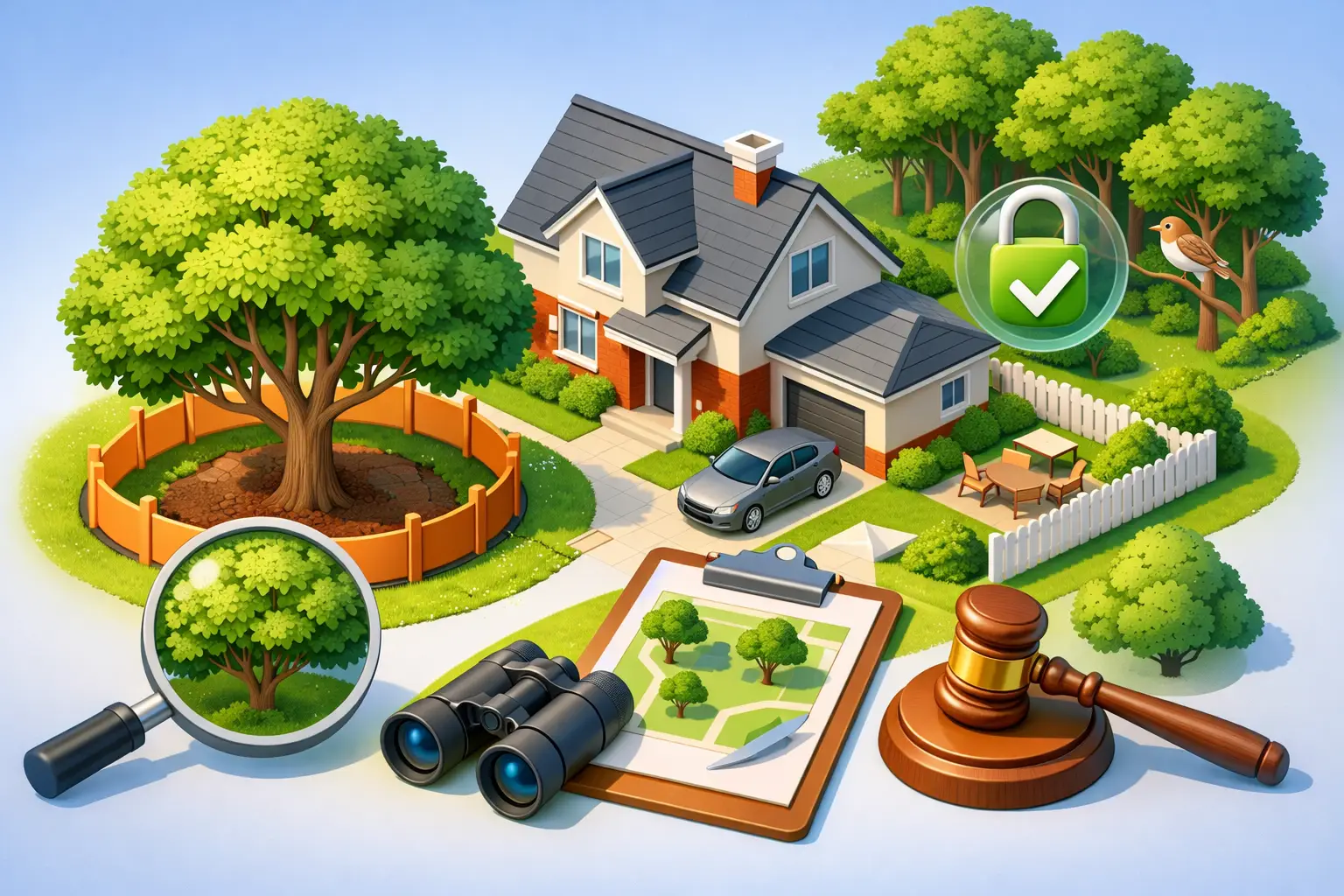
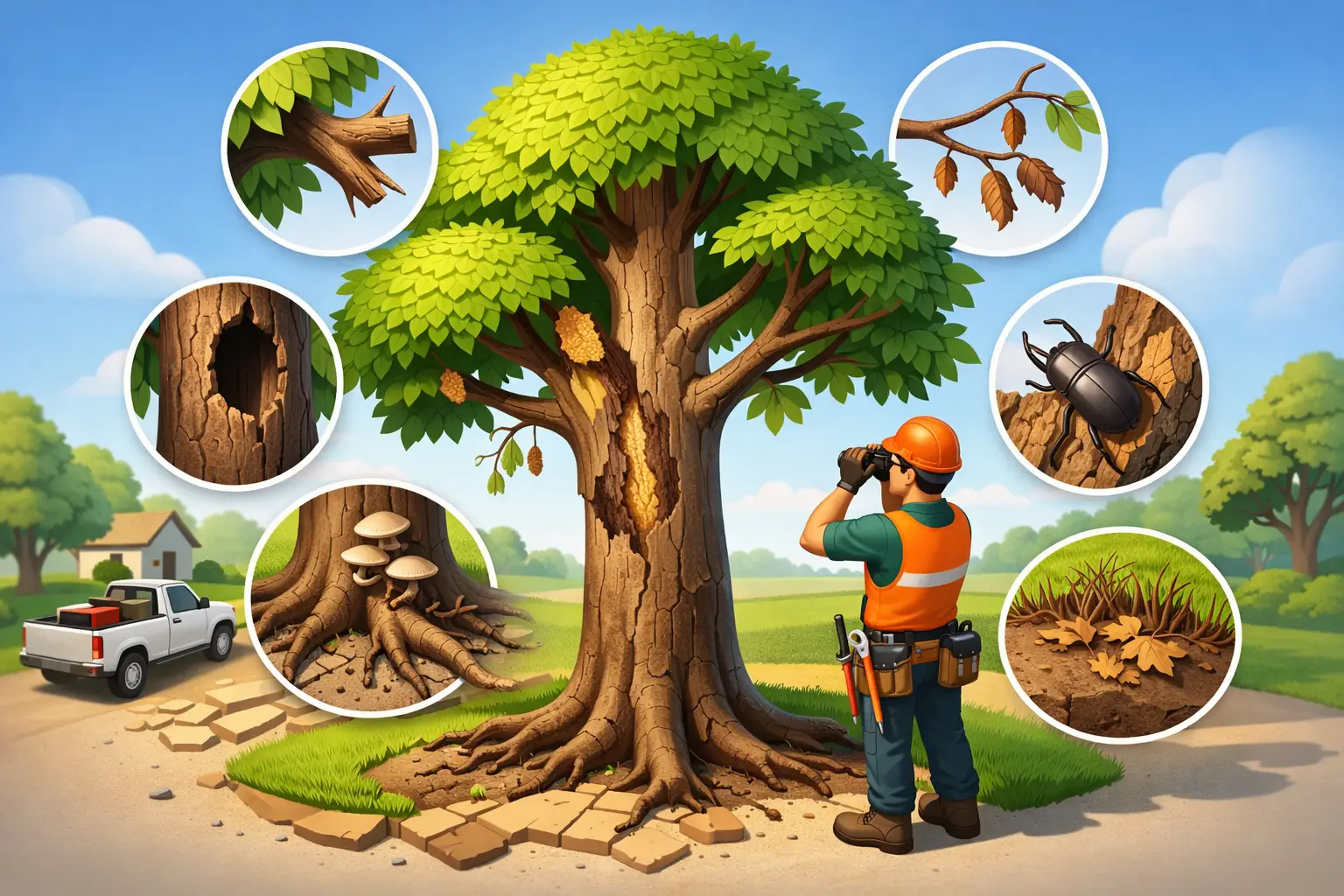
When a tree is squeezed between sheds, leaning over a conservatory or standing tight against a road, standard climbing methods are not always the safest or most efficient choice. That is where specialist access for awkward trees comes in. It allows difficult work to be carried out with better control, less disruption and a much clearer margin of safety.
Awkward trees are rarely just a matter of height. The real issue is usually what sits underneath, beside or beyond them. Greenhouses, fences, parked cars, overhead lines, public footpaths and fragile garden features can all turn a straightforward job into one that needs a different access plan. In these situations, the right equipment and the right team matter just as much as the cutting itself.
What makes a tree awkward to access?
A tree can be classed as awkward for several reasons, and they are not always obvious from the ground. Some are growing in rear gardens with poor entry routes, where there is no room to drop branches safely. Others are positioned on steep banks, near extensions, or over neighbouring property where every cut has to be carefully managed.
Height can be part of it, but layout is often the bigger challenge. A mature tree overhanging a garage may still be climbable in theory, yet climbing may not be the most sensible option if the crown is unbalanced, storm-damaged or structurally weak. The safest route may be mechanical access, sectional dismantling or a combination of both.
There is also a legal and practical side to awkward access. If work sits close to roads, pedestrian areas or shared boundaries, the job may need more planning, more protection on the ground and tighter control of debris. Good tree work is not just about reaching the canopy. It is about reaching it in a way that protects people, property and the tree itself where retention is the goal.
Why specialist access for awkward trees matters
Trying to force a standard method onto a non-standard tree usually creates more risk. It can slow the work down, increase the chance of damage and make the finished result less precise. Specialist access for awkward trees is about choosing the method that suits the site rather than treating every tree the same.
One of the main benefits is control. When a team can position itself properly, it can make cleaner cuts, lower sections safely and work without overreaching. That helps with pruning as much as dismantling. If the aim is crown reduction, deadwood removal or reshaping, proper access often means a better finish and less unnecessary stress on the tree.
It also affects tidiness. On confined sites, poor access can lead to dragged brash, damaged lawns and avoidable mess. With the right setup from the start, materials can be handled more cleanly and the site can be left in far better order. For homeowners, estates and commercial properties alike, that practical difference matters.
The equipment and methods that make the difference
There is no single answer for difficult access. The right approach depends on the tree, the ground conditions and what surrounds it.
Cherry picker access
For some jobs, a cherry picker is the safest and most efficient option. It can provide stable access into parts of the canopy that would otherwise be slow or risky to reach by climbing alone. This is especially useful for damaged trees, trees with poor anchor points, or work near structures where careful positioning is essential.
That said, a cherry picker is not suitable for every site. Ground conditions need to support it, and there must be enough width and clearance to bring it in safely. In a tight rear garden with narrow access, it may simply not be possible. Where it can be used, though, it often speeds up the job and improves precision.
Rope and harness climbing
Climbing remains an essential skill in arboriculture and is often the best solution where machinery cannot reach. Skilled climbers can move through the crown with flexibility and carry out detailed work in areas that are inaccessible to larger equipment.
The trade-off is that climbing can be slower on heavily obstructed sites or unsafe on compromised trees. It is not a lesser option, just a different one. Good contractors assess whether climbing is genuinely the best method rather than defaulting to it.
Rigging and sectional dismantling
When there is no safe drop zone below, branches and timber are lowered in controlled sections using ropes, pulleys and rigging systems. This is common when removing trees over buildings, fences, gardens or shared spaces. It keeps impact to a minimum and allows heavy sections to be managed with much more accuracy.
Rigging adds time, but it is often the reason a difficult tree can be removed safely at all. On awkward sites, careful dismantling is usually preferable to quick but uncontrolled cutting.
When difficult access changes the job itself
Access is not just a way of getting to the tree. It can shape the whole recommendation.
A tree that looks like a simple prune from a distance may need a staged reduction once the access constraints are considered. A full removal may be possible, but only with more time, more equipment and more protection for the surrounding area. In some cases, retaining the tree with targeted remedial work is the better route because removal would create unnecessary disruption or cost.
This is why an honest site assessment matters. The right advice is not always the cheapest-looking option on paper. It should reflect how the work can actually be carried out safely and to a proper standard.
What to expect from a professional site assessment
A proper assessment should look at more than the tree alone. Access routes, surface strength, nearby structures, neighbouring land, public exposure and disposal arrangements all affect the plan. If a machine is needed, the team should consider whether it can reach the site without causing damage. If climbing is proposed, they should be confident that the tree can be worked safely from within.
You should also expect clear answers. Can the work be done in one visit? Will sections need to be lowered? Is traffic or pedestrian management needed? Will the lawn, drive or planted borders need protection? Straightforward advice at this stage avoids surprises later.
For commercial sites and managed properties, this planning is especially important. Work often has to fit around access times, public use and health and safety requirements. A dependable contractor should be able to explain the method clearly and carry it through without fuss.
Common situations where specialist access is worth it
Some jobs repeatedly call for specialist thinking. Trees overhanging conservatories are a common example, because glass roofs leave no room for error. The same goes for trees close to roads, where cut material cannot simply be dropped, and storm-damaged trees where movement in the canopy makes climbing more hazardous.
Back gardens with limited entry are another frequent challenge. A tree may be manageable once you are there, but getting men, kit and arisings in and out can be the hardest part. In those cases, experience counts. A team used to awkward residential sites will usually find a method that keeps the job controlled and the property respected.
Across places such as Fife, Dundee and Perth, many properties also have mature trees in established gardens where access was never designed for modern machinery. That does not mean the work cannot be done well. It simply means the access plan needs to be thought through properly from the start.
Choosing a contractor for awkward tree work
Difficult access work is not the place for guesswork. You want a contractor who is comfortable explaining why a particular method is being used and what the risks are if it is done badly. That confidence normally comes from real hands-on experience, not vague promises.
Look for a team that understands both tree care and site management. The cutting side matters, but so does protecting surfaces, controlling debris, keeping the work area safe and leaving the site tidy afterwards. On awkward jobs, these details are not extras. They are part of doing the work properly.
It also helps to choose a local firm that knows the type of properties and access constraints common in the area. HL Tree Services handles everything from routine pruning to large, high-risk tree work, with the equipment and practical experience to deal with sites that are anything but straightforward.
If you have a tree that feels too tight, too high or too risky for ordinary access, trust that instinct. The right approach is usually clear once an experienced arborist sees the site, and getting that advice early can save a great deal of stress later.