A mature tree can add privacy, character and real value to a property, but it can also become a serious hazard when its condition changes. Knowing the 7 signs a tree could be dangerous and need professional attention can help you act before a falling branch, failing trunk or damaged root system puts people, buildings or vehicles at risk.
Not every imperfect-looking tree needs to be removed. Many can be safely pruned, reduced, braced or monitored. The key is recognising when the risk is beyond sensible DIY work and needs a trained arborist with the right equipment, experience and safety controls.
7 signs a tree could be dangerous and need professional attention
1. Large dead, broken or hanging branches
Deadwood is one of the clearest warning signs, particularly when it is high in the canopy or above an area people use. A dead branch may look stable from the ground, but decay weakens the timber over time. Wind, snow loading or even a calm day can be enough for it to drop without warning.
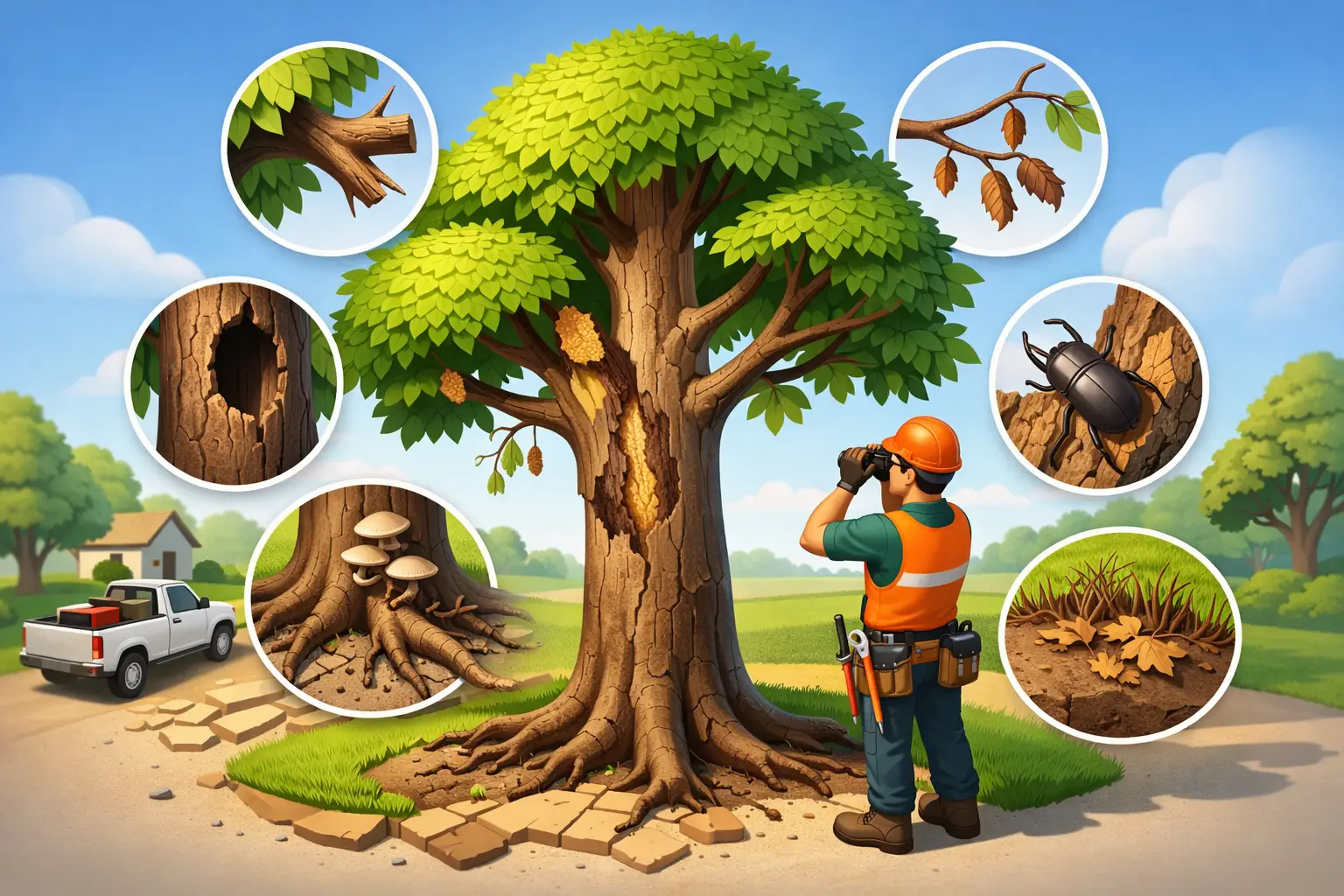
Look for bare branches when the rest of the tree is in leaf, peeling bark, fungal growth, snapped limbs caught in the canopy, or branches that have noticeably changed colour. A hanging branch is especially urgent if it is over a driveway, path, garden seating area, public pavement or neighbouring property.
Small, accessible twigs are one thing. Cutting heavy branches from a ladder, climbing a tree or using a chainsaw overhead is another. Professional tree surgeons can remove hazardous sections in a controlled manner, using ropes, lowering equipment or a cherry picker where access demands it.
2. Cracks, splits or a weak fork in the trunk
A crack in a trunk does not always mean a tree will fail immediately, but it should never be ignored. Vertical splits, deep cavities and bark that is pulling away can all indicate structural weakness. The concern increases where a trunk divides into two or more large stems, known as a fork or union.
Some tree forks are naturally strong. Others have included bark – bark trapped between stems instead of solid wood joining them together. This creates a weak point that may split apart as the stems grow heavier. You may see a narrow, V-shaped union, a visible crack, swelling around the join, or a gap that opens after strong winds.
An arborist will assess the tree’s species, size, lean, canopy weight, the extent of the defect and what could be struck if it failed. Depending on the findings, the right approach may be selective pruning to reduce loading, installing a support system in suitable cases, or carefully dismantling the tree.
3. Fungal brackets or signs of decay at the base
Mushrooms and fungal brackets around a tree should prompt a closer look, especially when they appear on the trunk or at ground level. Fungi can be part of a healthy woodland ecosystem, so their presence does not automatically make a tree unsafe. However, certain fungi feed on wood and may indicate internal decay in roots, the lower stem or both.
A tree can retain a green, leafy canopy while significant decay develops inside. Other clues include hollow areas, soft or crumbly wood, cavities, cracks around the base, loose bark, or a pronounced flare of roots that appears to be breaking down.
Decay is a matter of degree. A veteran tree in a large garden may be retained and managed if there is plenty of space around it. The same defect beside a house, busy car park, school boundary or footpath deserves a more cautious response. A professional assessment considers both the tree’s condition and the target beneath it.
4. Roots lifting, soil movement or a new lean
Trees do not need to fall completely over to show that their anchorage is compromised. Raised soil, newly exposed roots, cracks in the ground, a lifting root plate or soil mounding on one side can suggest the root system is moving. These signs often appear after prolonged rain, flooding, high winds, excavation work or damage from construction activity.
A lean also needs context. Some trees have grown at an angle for decades and remain stable. A recent lean, however, especially one accompanied by disturbed ground or root damage, should be treated seriously. Take note if the tree is moving more in wind than it used to, or if the lean is towards a building, road, play area or neighbouring garden.
Do not try to pull the tree straight, cut major roots or park beneath it while waiting for advice. Root failure can be sudden, and the safest response may be an urgent inspection.
5. A thinning canopy, dieback or leaves appearing at the wrong time
A sparse canopy is not always a structural danger, but it can be a sign that a tree is under stress. Dieback often starts at the tips of branches, leaving dead twigs and bare sections in the upper crown. Leaves may be unusually small, pale, scorched at the edges or absent from one side of the tree.
There are many possible causes: drought, compacted soil, root disturbance, disease, pests, poor drainage or age-related decline. In some cases, targeted pruning and better management of the area around the roots can improve the tree’s condition. In others, progressive decline makes branches brittle and increases the likelihood of failure.
Season matters. Deciduous trees naturally lose their leaves in autumn and winter, while some species leaf up later than others in spring. What matters is a clear change from the tree’s normal pattern or a noticeable difference compared with similar trees nearby.
6. Storm damage that is more than cosmetic
After a storm, it is tempting to tidy up the obvious debris and assume the rest of the tree is fine. Yet wind damage is not always visible from ground level. Limbs may be torn but still attached, cracks can form at branch unions, and weakened stems may remain in place until the next spell of bad weather.
Check from a safe distance for broken tops, split limbs, hanging branches, fresh wounds, shifted roots and branches resting on roofs, cables or other trees. Keep people away from the area. Never attempt to remove branches touching overhead lines, and do not climb a storm-damaged tree – the structure may be unstable.
For homeowners and site managers across Fife, Dundee and Perth, rapid professional attendance after severe weather can prevent a manageable issue becoming property damage or an emergency. The priority is making the area safe, then deciding whether the tree can be retained with remedial work.
7. Branches or roots are affecting buildings, access or services
A tree can be healthy and still require professional attention because of where it has grown. Heavy branches over a roof can damage tiles, block gutters and scrape against chimneys during high winds. Low limbs can restrict access for vehicles, pedestrians or emergency services. Roots may lift paving, affect drainage runs or destabilise boundary walls.
The solution is not always felling. Sensitive crown lifting, deadwood removal, reduction pruning or carefully planned clearance can often resolve the immediate issue while keeping the tree healthy and attractive. Poor cutting, such as topping a mature tree or removing too much canopy at once, can create weak regrowth and make long-term problems worse.
If work is near a road, public path, neighbouring land or overhead services, the job may need traffic management, specialist access equipment or additional safety measures. This is where a professional team’s planning matters as much as the cutting itself.
When to call for urgent tree work
Treat the situation as urgent if a tree or major branch has fallen, is visibly moving at the base, is leaning suddenly, has split over an occupied area, or is in contact with a building or overhead line. Keep clear, prevent others from entering the area where possible and arrange qualified assistance. For an immediate danger involving power lines, contact the relevant emergency service or network operator first.
For less immediate concerns, a professional inspection gives you a clear, practical answer. A good arborist should explain what they have found, outline realistic options and recommend work proportionate to the risk. That may be routine maintenance rather than removal – honest advice protects both your property and the tree.
Before arranging work, remember that some trees may be protected by a Tree Preservation Order or located within a conservation area. Permission may be needed before pruning or felling, and ownership or boundary position should be checked where a tree affects neighbouring land.
A worrying tree does not always need to come down, but it does deserve the right judgement. Acting early gives you more options, helps protect the people around your property and keeps necessary work safer, cleaner and more cost-effective.