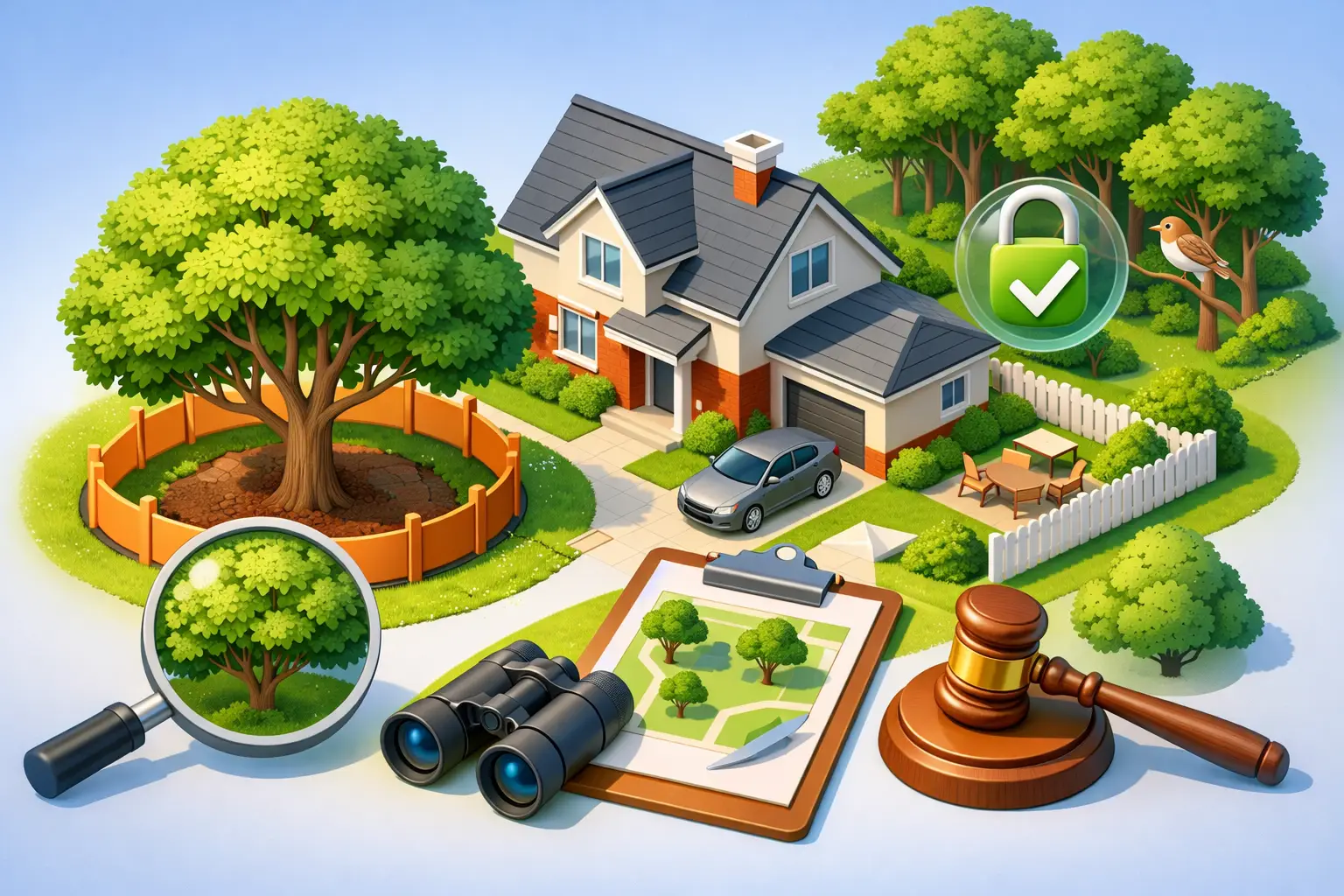
A leaning ash over a driveway needs one kind of decision. A row of overgrown boundary trees beside a car park needs another. That is where domestic commercial tree services make sense – not as a vague label, but as the practical overlap between home tree care and larger site management, where safety, access, and tidy workmanship matter just as much as the finish.
For some customers, the job is straightforward. A hedge has got out of hand, a stump is in the way, or a tree is shading half the garden. For others, the work carries more pressure. Branches are overhanging a road, roots are affecting surfaces, storm damage has made a tree unstable, or a site needs clearing before the next phase of work can start. In both cases, the right approach is not just about cutting. It is about assessing the tree, the surroundings, and the safest way to complete the job properly.
What domestic commercial tree services actually cover
Domestic commercial tree services include the full range of arboricultural work carried out for homeowners, landlords, estates, developers, schools, local businesses, and property managers. The domestic side often centres on gardens, boundaries, access roads, and private land. The commercial side may involve shared spaces, managed grounds, development plots, public-facing sites, and larger scale maintenance.
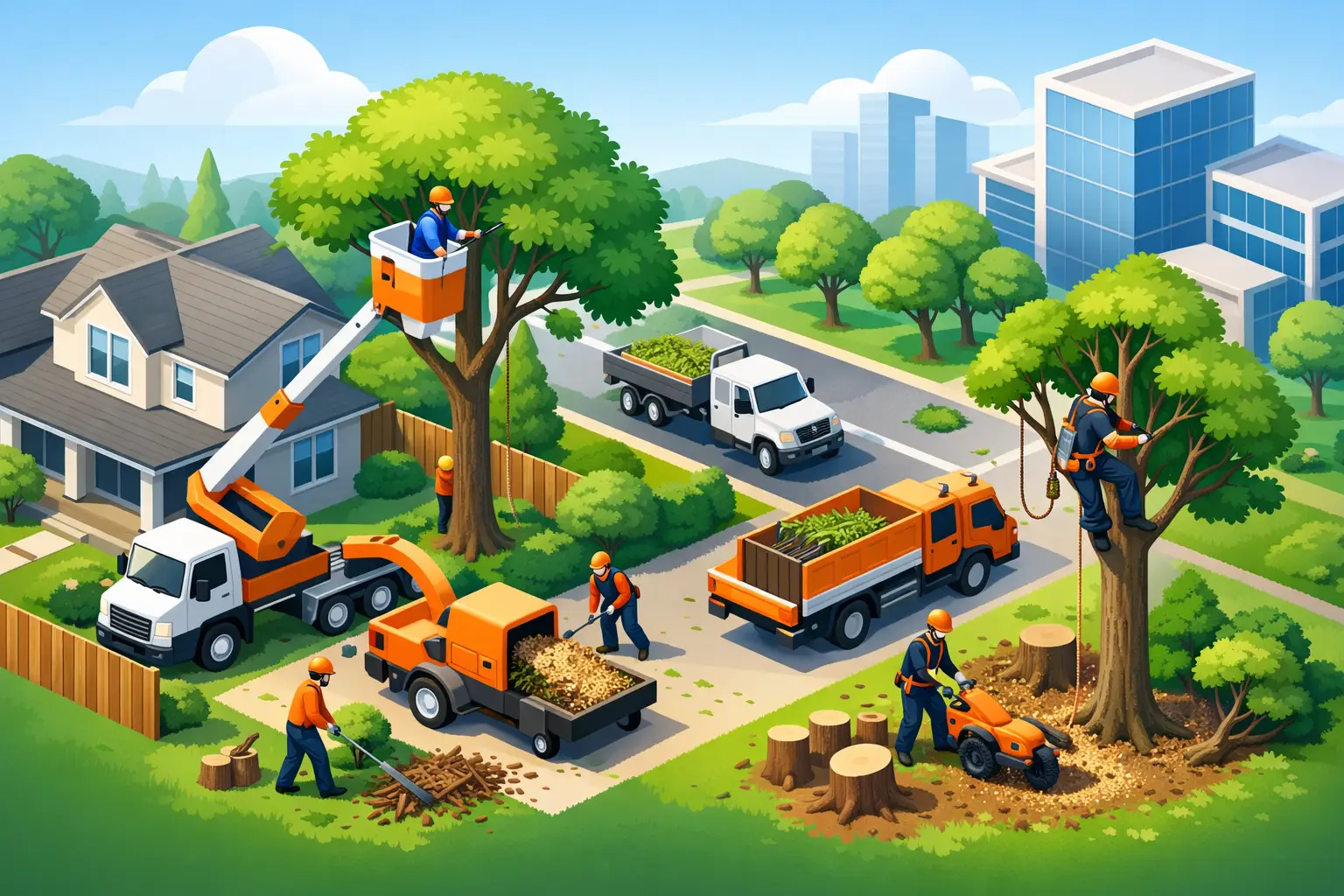
The services themselves are often the same. Tree pruning, crown reduction, tree felling, stump grinding, hedge cutting, planting, surveys, and emergency call-outs all sit within the same broad skill set. What changes is the complexity around the work. A domestic customer may need help improving light, tidying a mature tree, or dealing with storm damage close to a shed or fence. A commercial client may need method statements, careful scheduling, specialist access equipment, and a team that can work efficiently around vehicles, staff, tenants, or the public.
That overlap is why experience matters. A contractor who only handles simple garden jobs may not be equipped for difficult access or high-risk dismantling. Equally, a large contractor used to open commercial sites may not always offer the care and communication a homeowner expects. Good domestic commercial tree services bridge both.
Why domestic commercial tree services are not one-size-fits-all
Tree work always depends on the tree, the site, and the objective. That sounds simple, but it is what separates sensible advice from guesswork. Removing a tree is not always the best answer. Sometimes a careful reduction or crown lift will achieve the same result while keeping the tree healthy and the space usable.
There are trade-offs. Heavy pruning may give fast clearance, but too much at once can stress a tree and leave it looking poor. Full removal may solve a recurring issue, but it changes the character of a garden or site and may not be necessary if the tree can be managed safely. On the other hand, delaying work on a structurally weak or storm-damaged tree can create a much bigger risk and cost later.
This is where honest advice is worth far more than a quick quote. Customers need to know what must be done now, what can be managed over time, and what options exist if budgets or site constraints are tight. A good arborist explains the reasoning, not just the price.
Safety is the real foundation of the job
Most people call a tree surgeon because the work is beyond what can be done safely from the ground. Height, weight, decay, poor access, nearby buildings, roads, conservatories, greenhouses, fences, and overhead lines all change the method. Even a modest tree can become high-risk if it is in the wrong place or has suffered unseen damage.
For domestic jobs, safety means protecting people, pets, property, and neighbouring land. For commercial sites, it also means planning around staff, customers, deliveries, parked vehicles, and public access. That often requires traffic awareness, controlled drop zones, and the right equipment for lifting or dismantling sections safely.
Specialist machinery can make a major difference. A cherry picker, for example, is not needed on every job, but on awkward trees or restricted sites it can improve access, reduce climbing risk, and speed up the work without compromising control. The best method depends on the tree and the site, not on using the same approach every time.
The value of tidy, professional workmanship
Customers remember two things after tree work – whether the job felt safe, and what the site looked like when the team left. Professional standards show in the details. Cuts should be made properly. The shape of the tree should still look right. Timber, branches, and debris should be managed efficiently. Lawns, paths, and surrounding areas should be left clean and usable.
That matters just as much on commercial sites as it does at home. A tidy finish protects the reputation of the property manager or site operator as well as the contractor. On domestic jobs, it gives customers confidence that the work has been carried out with care rather than rushed through.
It is also one of the clearest signs of experience. Anyone can promise to cut a tree back. Doing it neatly, safely, and with respect for the site is what clients actually pay for.
When surveys and assessments become essential
Not every tree issue begins with a chainsaw. Sometimes the first step is a survey or professional assessment, especially where development, safety concerns, or tree preservation questions are involved. Commercial clients often need this to support planning, site management, or risk decisions. Domestic customers may need reassurance about the condition of a mature tree near a house, boundary, or road.
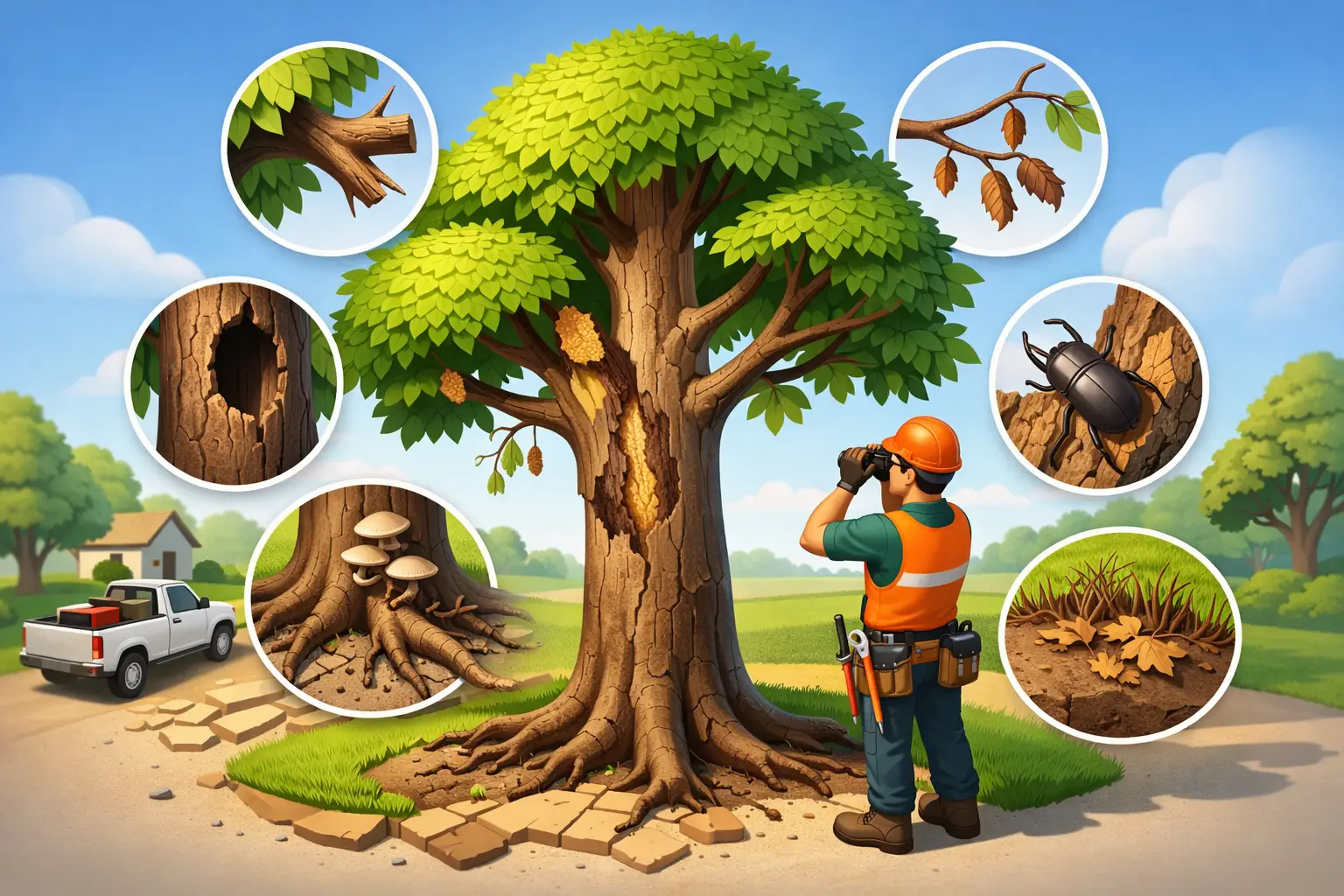
An assessment can highlight decay, deadwood, poor structure, previous pruning damage, or signs of disease. Just as importantly, it can confirm when a tree is sound and worth retaining. That can prevent unnecessary removal and help owners plan sensible maintenance instead.
There is no benefit in turning every tree into a problem. The aim is to understand its condition, its surroundings, and the level of risk it presents. From there, the right course of action is much easier to justify.
Emergency work needs calm judgement
Storms do not wait for convenient working hours. Split stems, hanging limbs, uprooted trees, and blocked access can all require urgent attention, but urgency should not mean panic. Emergency tree work needs quick response, clear thinking, and safe control of a situation that may still be unstable.
In residential areas, that often means making a tree safe after wind damage or clearing access where a fallen limb is blocking a driveway or path. On commercial premises, there may be greater pressure to protect public access, reopen routes, or reduce immediate liability. In both settings, the first priority is to stabilise the risk and make the area safe. Full remedial work can then follow in a controlled way if needed.
Customers are often understandably stressed in these situations. A professional team should make the process feel straightforward, explain what can be done immediately, and deal with the job without adding confusion.
Choosing the right contractor for homes and commercial sites
If you are comparing contractors, look beyond whether they can do the cutting. Ask how they assess the work, how they plan access, and how they protect the site. A firm used to both domestic and commercial work should be comfortable explaining different methods depending on the location, the tree, and the level of risk.
It also helps to choose a genuinely local team. Tree issues are often urgent, and local knowledge counts for a lot when weather, ground conditions, access routes, and response times come into play. Across places such as Fife, Dundee, and Perth, customers want a contractor who knows the area, turns up when promised, and treats each property with the same level of care whether it is a back garden, an estate boundary, or a busy commercial yard.
That is why many customers choose established local firms such as HL Tree Services. The appeal is not just technical ability. It is the confidence that the job will be handled properly from first visit to final clean-up.
A service that should feel straightforward
Domestic commercial tree services are not really about labels. They are about getting the right level of skill for the tree, the site, and the risk involved. Sometimes that means careful pruning to preserve a valued tree. Sometimes it means full removal, stump grinding, or site clearance so a property can function properly again.
The best outcome is simple. You should feel that the advice was honest, the work was carried out safely, and the site was left in good order. If a tree contractor can offer that with clear communication and solid workmanship, you are not just paying for tree work – you are paying for peace of mind.