A tree does not have to be fully down to be an emergency. One split stem hanging over a driveway, a root plate lifting after heavy rain, or a large limb caught in another canopy can be enough to make a property unsafe. That is usually when people want clear answers about how emergency tree removal works, what happens first, and why the job cannot be treated like ordinary tree cutting.
Emergency tree work starts with risk, not appearance. A tree may still be standing and look mostly intact from the ground, but if the trunk has cracked, the crown has shifted, or branches are under tension, it can fail without much warning. After strong winds, snow loading, vehicle impact, or sudden ground movement, the priority is to make the site safe and prevent further damage to people, buildings, vehicles, roads, fences, or power and telecoms lines.
How emergency tree removal works in practice
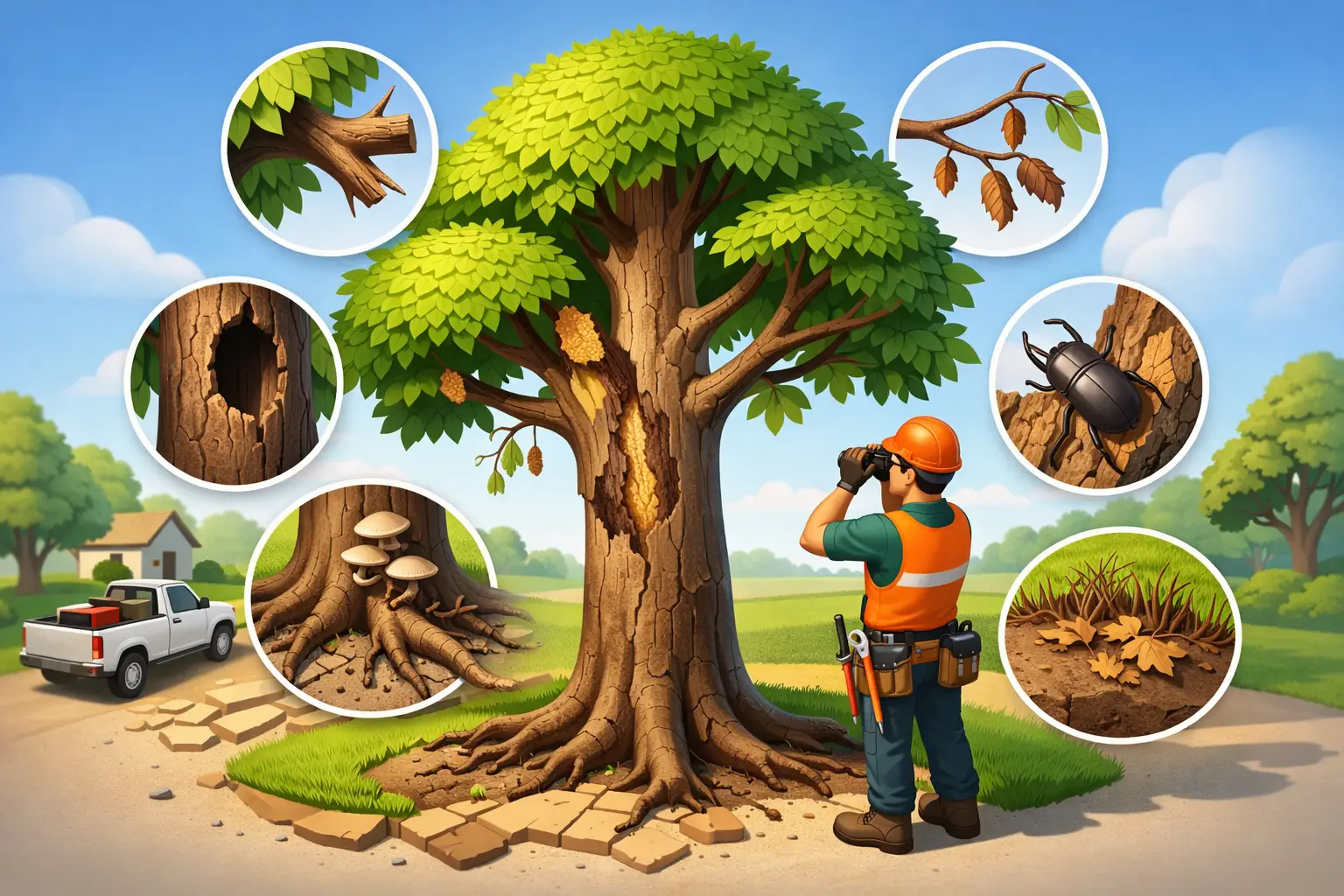
The first stage is assessment. When a professional team arrives, they do not simply start cutting. They look at how the tree has failed, what it could strike if it moves again, whether access is restricted, and what equipment is needed to dismantle it safely. They also check for hazards that are not obvious to a householder, such as unstable limbs suspended in the canopy, split compression wood, or a trunk that is resting on a structure but still carrying weight.
This initial assessment shapes everything that follows. In some cases the fastest safe option is to remove the tree in sections from the top down. In others, the immediate need is to stabilise the area, cordon it off, and remove only the parts creating the highest risk. If the tree is tangled with utility lines, work may need to pause until the relevant authority has made the area safe. That can be frustrating when the damage is visible and urgent, but it is the right call. No reputable contractor takes risks around live services.
The first priority is making the area safe
Before any dismantling begins, the site is secured. That might mean stopping access to a garden, keeping vehicles away from a driveway, or preventing entry to a commercial area until the hazard is controlled. Emergency tree removal is often as much about scene management as cutting.
For residential properties, this stage is reassuring because it brings order to a stressful situation. For commercial sites and estates, it helps reduce liability and keeps staff or the public away from danger. If the tree is blocking access or affecting operations, the team will usually focus on reopening safe access as soon as possible, but not at the expense of a rushed job.
If weather is still poor, that changes the approach too. High winds, lightning, and saturated ground can all affect whether work can begin immediately or whether the safest option is temporary isolation of the area until conditions improve. Emergency does not mean careless. It means responding quickly with the right judgement.
Why emergency work is rarely one straight cut
People sometimes picture emergency removal as a chainsaw job from the base. In reality, that is often the one thing that cannot be done. A damaged tree may be twisted, hung up on another tree, leaning onto a roof, or partially uprooted with the root plate still connected. Cutting the wrong section too early can release stored tension and make the whole tree move unpredictably.
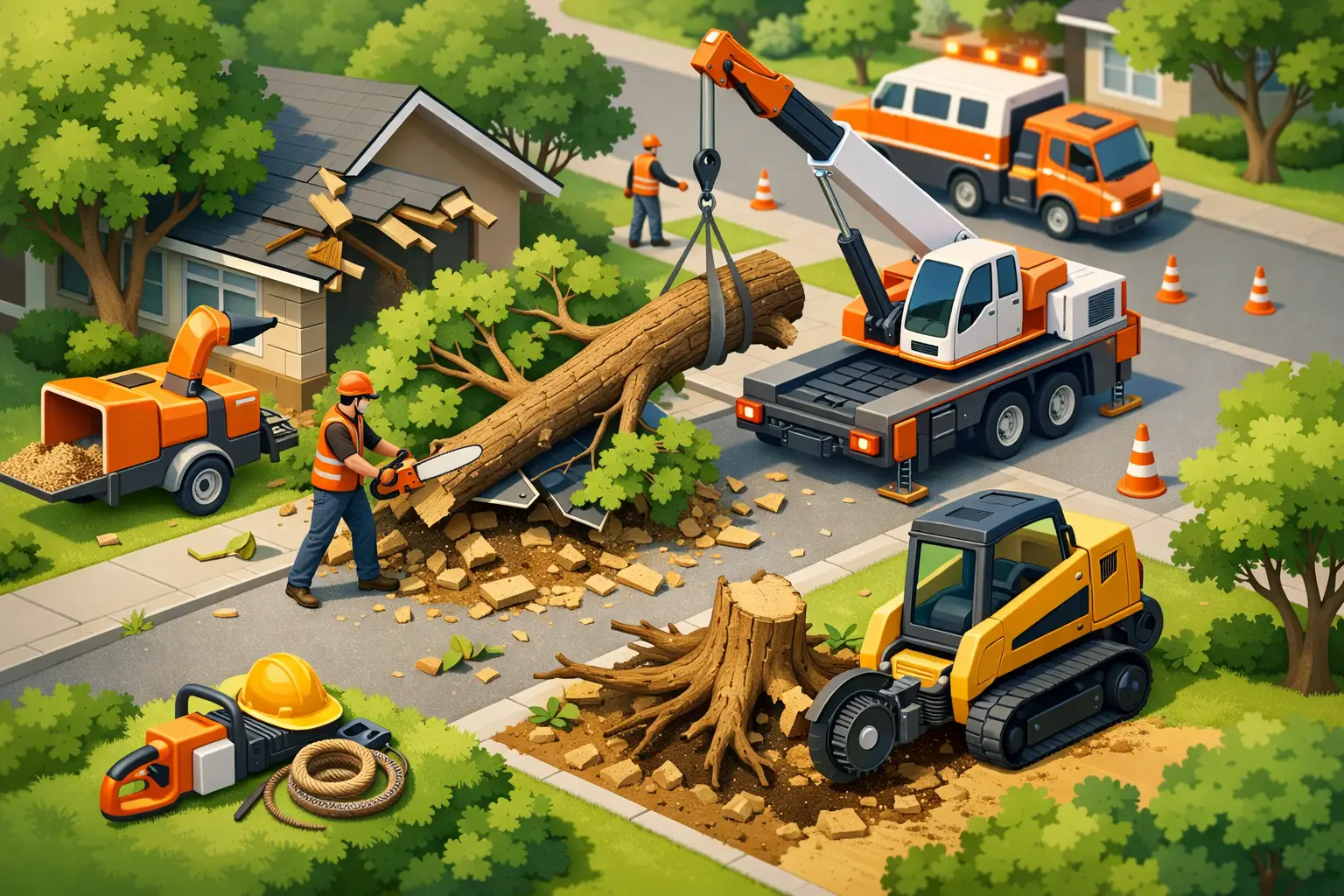
That is why emergency removals are usually done in controlled stages. Sections are cut and lowered in a planned order to reduce weight safely. Where there is enough room, branches and stem sections may be rigged down. Where access is awkward or the tree is over a conservatory, garage, road, or boundary line, specialist equipment may be needed to avoid dropping material free.
Equipment depends on the site, not just the tree
One of the biggest differences between routine tree work and emergency response is equipment choice. The right kit depends on height, access, spread, condition of the tree, and nearby targets. Climbing may be suitable on one job and completely inappropriate on another if the structure is too unstable. In those cases, a cherry picker can provide a much safer working position and better control over dismantling.
Ground conditions matter as well. A large garden with decent access gives more options than a tight rear plot, a lane with parked cars, or a commercial site with fencing and overhead obstacles. Sometimes the most difficult part is not the cutting itself but getting machinery into place and moving timber and brash out without causing further damage.
This is where hands-on experience really shows. Emergency work is full of variables, and there is no single script that fits every fallen or dangerous tree. A good team adapts the method to the site, rather than forcing the site to fit the method.
What happens during the removal
Once the plan is set, the removal itself is carried out in a sequence designed to reduce risk. Loose or broken limbs are usually dealt with first, because they are often the most immediate hazard. After that, the crown may be reduced to take weight off the main stem. If the trunk is damaged but still standing, it is commonly dismantled in sections. If the tree is already down, the work may involve releasing pressure points, separating the crown from the stem, and cutting timber into manageable lengths for removal.
Where a tree is resting on a building, vehicle, shed, greenhouse, or fence, each cut has to account for load and movement. Material that looks supported may shift once its balance changes. That is why trained arborists work methodically and communicate constantly throughout the job.
Not every emergency call-out ends with a full removal. Sometimes the safest immediate outcome is partial dismantling to remove the danger, followed by a return visit for final works once the site is stable or permissions are clarified. That can happen with storm-damaged trees near boundaries, trees subject to restrictions, or situations where access equipment needs to be arranged.
Clean-up is part of the job, not an afterthought
After the danger has been removed, the site still needs to be left safe and usable. Branches, timber, sawdust, and smaller debris can create their own hazards if they are left behind. A professional emergency service includes a proper clean-up so the area is not just safer, but presentable and practical again.
If a stump is left in place after an urgent removal, that is usually because the emergency priority was above-ground risk. Stump grinding can often be done later as a separate stage. The same applies to replanting advice or follow-up pruning to neighbouring trees that may have been affected by the incident.
What you should do before the team arrives
If a tree has failed or looks close to failing, keep well clear of it and stop others from going near. Do not try to cut hanging branches yourself, and do not approach a tree touching overhead lines. If possible, move vehicles away and keep pets indoors. A quick phone video or a few clear photos can help explain the situation when you call, but only if they can be taken from a safe distance.
It also helps to mention access issues straight away. Narrow entries, locked gates, nearby roads, conservatories, outbuildings, and overhead cables all affect how the job will be approached. The more accurate the information, the better prepared the response can be.
Why speed matters, but judgement matters more
In places such as Fife, Dundee and Perth, strong winds and saturated ground can turn a manageable tree problem into an urgent one very quickly. Fast response matters because the condition of a damaged tree can deteriorate by the hour. What starts as a split limb can become a full failure overnight.
Even so, the best emergency contractors are not the ones who promise to cut first and think later. They are the ones who turn up ready to assess properly, work safely, use the right equipment, and leave the site under control. That is what protects people, property, and the wider landscape around the tree.
For homeowners and site managers, the most useful thing to remember is that emergency tree removal is a controlled safety operation. It may look dramatic from the outside, but the process is deliberate. Every decision, from access and equipment to dismantling order and clean-up, is made to reduce risk.
When a tree becomes dangerous, you do not need guesswork or a rushed fix. You need a skilled local team that can read the situation properly, act quickly, and leave you with one less problem to worry about.