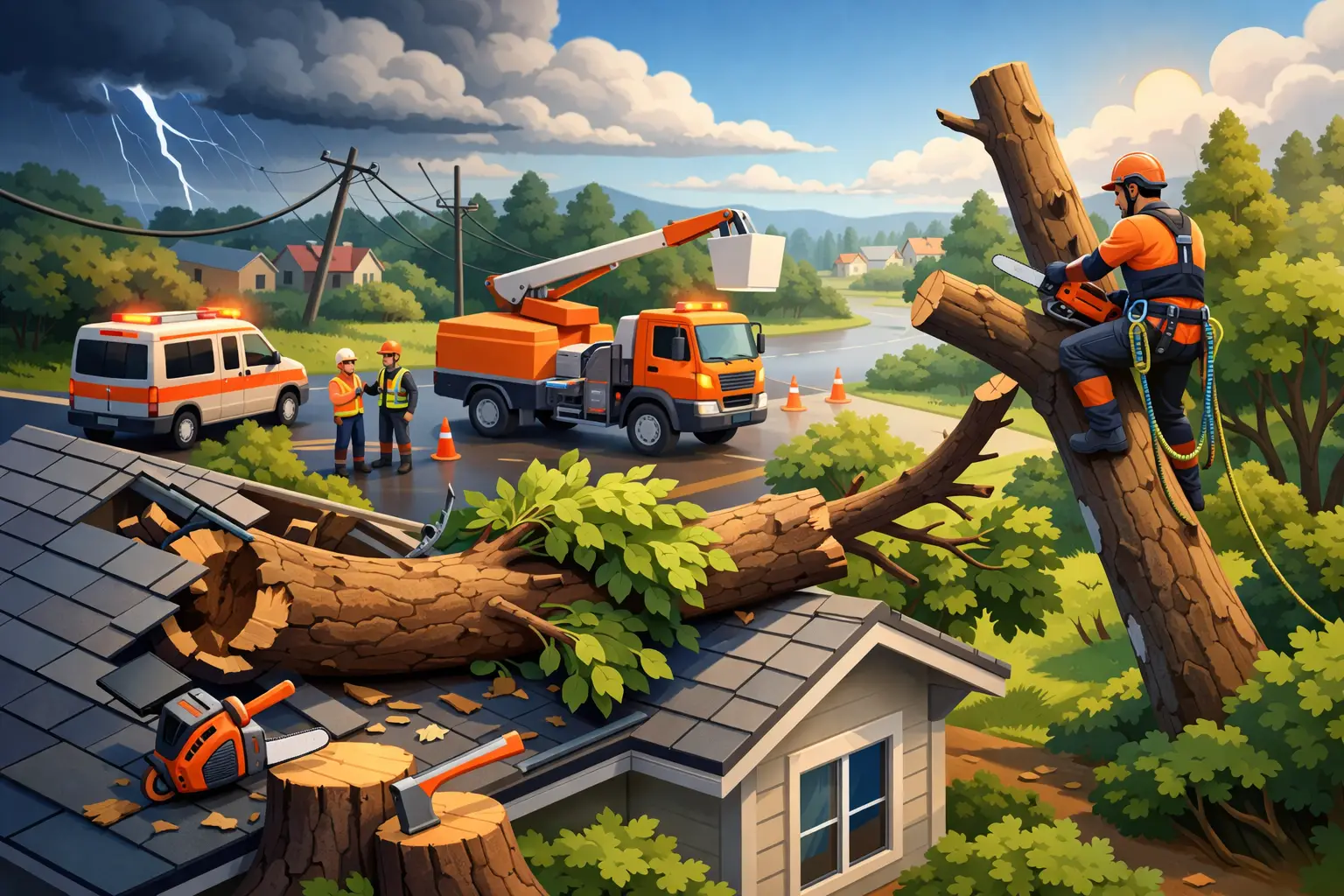
When a tree comes down across a drive, leans towards a house, or drops heavy limbs after high winds, the next hour matters. Emergency tree work Fife is not just about clearing a mess – it is about making the area safe, preventing further damage, and dealing with a hazardous tree properly rather than taking risks in a panic.
Storm damage is the obvious trigger, but it is not the only one. Trees can fail after prolonged wet ground, hidden decay, root disturbance from building work, or heavy limbs splitting without much warning at all. In Fife, where mature trees often sit close to homes, roads, farm access routes and boundary lines, a tree emergency can quickly become a safety issue for people, vehicles and neighbouring property.
What counts as emergency tree work in Fife?
Not every tree problem is an emergency, even if it looks untidy. A few small branches down in the garden can usually wait for a routine visit. The job becomes urgent when there is immediate risk – a tree blocking access, a cracked stem under tension, a fallen limb over a public footpath, or a wind-damaged tree now resting against a building, fence or another tree.
Another common situation is partial failure. A tree does not always fall cleanly. It can split and hang, leaving large sections suspended overhead. That is one of the most dangerous scenarios because the weight is unpredictable and the timber can shift without warning. Trying to cut or pull it down without the right equipment and training can make a bad situation much worse.
Commercial properties and managed sites have another layer to think about. If a damaged tree affects public access, parking, delivery routes or shared spaces, there is a duty to act quickly and sensibly. The right response is not only about speed. It is about controlling risk, protecting the site and using a team that knows how to work safely around structures, traffic and the public.
First steps before emergency tree work Fife begins
The safest first move is usually the simplest one – keep well clear. If the tree is near a road, footpath, parked vehicles, power lines, sheds or the house, do not go underneath it to investigate. A tree that looks still can continue to move as the wind changes or as fibres slowly fail.
If it is safe to do so from a distance, keep others away from the area. That may mean moving people inside, keeping children and pets out of the garden, or preventing vehicles from using the affected access point. If there is any chance that cables are involved, treat the area as extremely dangerous and stay back.
Photos can be useful, especially for insurance or to help explain the issue when you call, but only take them from a safe position. A clear description helps too. Is the tree fully down, split, leaning, blocking access, or resting on a building? Has it damaged anything? Is there room for machinery? Those details help a professional team judge what is needed before arriving.
Why emergency tree work needs proper equipment
A genuine emergency is rarely a straightforward chainsaw job. Trees that have failed under storm load or structural weakness often hold enormous internal tension. Branches may be trapped, twisted or supporting part of the remaining canopy. Cutting in the wrong place can release that pressure suddenly.
That is why experienced emergency teams assess the tree first and work methodically. In some cases, the safest option is sectional dismantling from above. In others, it may involve specialist rigging, traffic management, or access equipment such as a cherry picker where climbing is not the safest route. The right machinery does not just make the work quicker. It often makes the difference between a controlled dismantle and unnecessary damage to the rest of the site.
A tidy finish matters too, especially after an already stressful event. Once the tree is made safe and removed, the site should be left clear, usable and properly managed, whether that means stacking timber, removing debris, or dealing with the stump at a later stage.
It depends on the tree, the site and the risk
There is no one-size-fits-all answer in emergency tree work. A windblown conifer at the edge of a field is a very different job from a mature beech that has split over a conservatory in a built-up area. The species, size, condition and position of the tree all affect how the work should be carried out.
Ground conditions matter as well. After heavy rain, access can be difficult and unstable footing can increase risk. The surrounding area also changes the plan. Close fences, greenhouses, garages and neighbouring gardens mean the job has to be more controlled. On larger estates or commercial ground, the issue may be scale rather than tight access.
That is where local knowledge helps. A team that regularly works across Fife understands the mix of rural access, coastal exposure, urban gardens and mature tree stock found across the area. What looks like a simple clearance on paper can become a more technical operation once the site is assessed properly.
Can a damaged tree be saved?
Sometimes yes, sometimes no. Homeowners often assume a storm-damaged tree must come down, but that is not always the best outcome. If the failure is limited to one section and the main structure remains sound, careful pruning or weight reduction may retain the tree safely.
That said, there are situations where removal is clearly the right choice. A major split through the main stem, significant root plate movement, severe decay exposed by the failure, or repeated structural weakness usually point towards dismantling rather than trying to preserve it. Saving a tree only makes sense if it can be left safe, stable and worth keeping in the long term.
Good emergency work is not about removing more than necessary. It is about making the right call based on safety, tree condition and what will serve the property best after the immediate danger has passed.
The hidden issues after the obvious damage
Once the visible problem is cleared, there can still be follow-on concerns. Impact damage to sheds, fences and roofs is easy to spot, but root disturbance and hidden cracks are often missed. A nearby tree may also have been compromised if it has taken part of the load from the fallen one.
This is why a proper post-emergency assessment matters. You may need further pruning to neighbouring trees, stump grinding to fully clear the area, or advice on replanting if a valuable tree has been lost. For managed sites, schools, estates and commercial premises, there may also be a need for a wider review of tree condition to reduce the chance of repeat issues.
Fast action deals with the immediate hazard. Professional follow-up helps make sure the site is genuinely back under control.
Choosing the right team for emergency tree work Fife
In an urgent situation, people naturally want the quickest answer. Speed matters, but it should come with competence. Emergency tree work should be handled by trained professionals who understand dismantling, aerial work, site safety and clean-up, and who can deal with awkward, high-risk trees without making the situation worse.
It also helps to choose a team with the right equipment already available. Large damaged trees, restricted access and work near buildings often need more than standard tools. A capable local contractor will be honest about what the job involves, clear about how the site will be managed, and focused on leaving the area safe and tidy once the immediate danger has been removed.
That is the standard clients expect from HL Tree Services, whether the call comes from a householder dealing with overnight storm damage or a commercial site needing urgent access restored.
After the emergency, think longer term
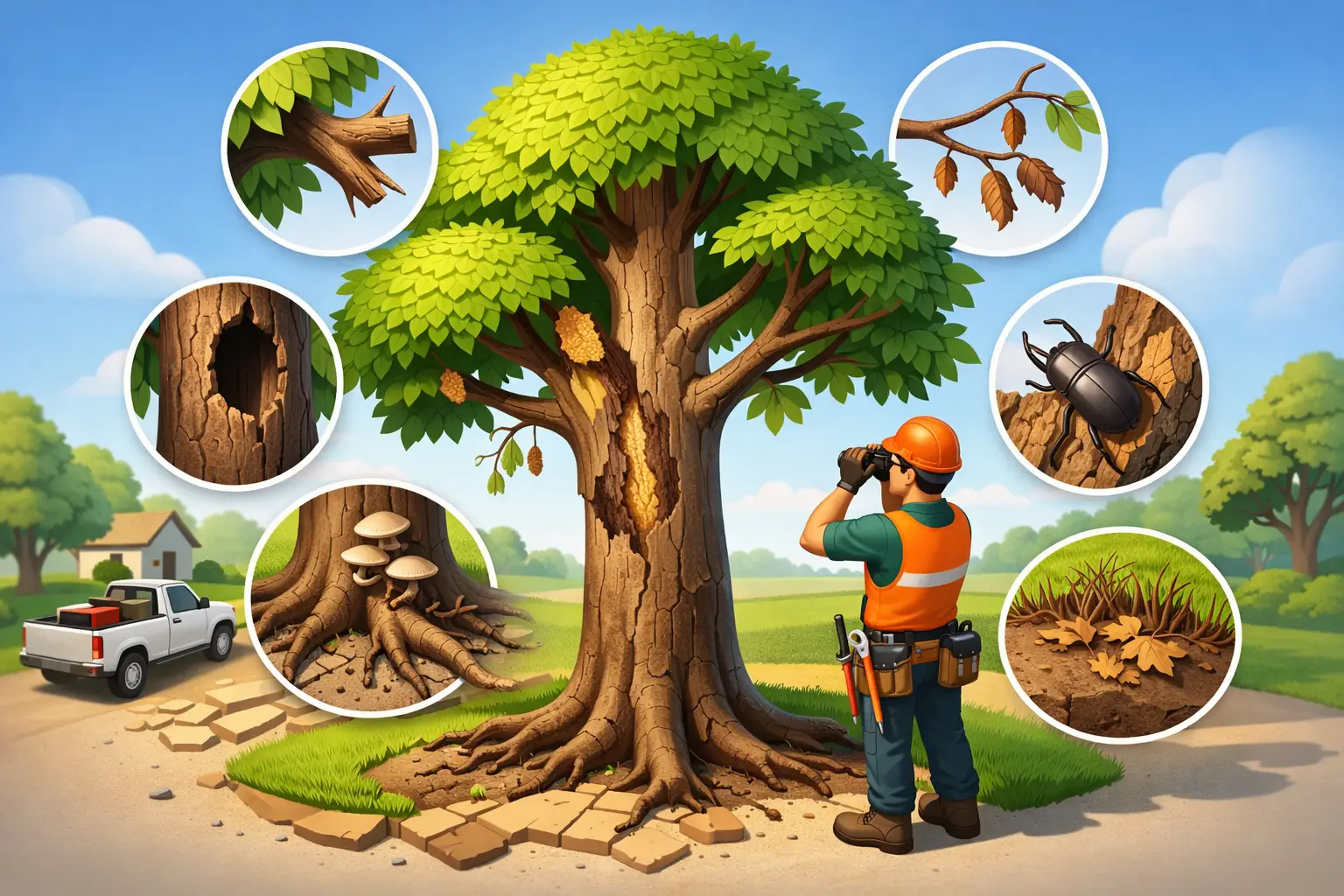
A tree emergency often prompts a wider question – could this have been avoided? Not every failure is predictable, but many risks show warning signs first. Deadwood, fungal growth, poor unions, historic storm damage, heavy end weight and root issues can all increase the chance of future problems.
Routine inspections and timely pruning are usually far less disruptive than emergency call-outs. They also protect the look and health of the tree where retention is the better option. For homeowners, that can mean peace of mind before the next spell of rough weather. For commercial sites and estates, it means fewer surprises, better safety management and less chance of access being affected at the worst possible time.
When a tree fails, the priority is to make it safe. After that, the smartest next step is to look at the rest of the site with a clear eye, because the best emergency response is often the one you do not need next time.