When a branch fails over a car park, blocks access to a loading bay or damages a boundary fence, tree maintenance stops being a background task and becomes an urgent operational problem. A proper commercial tree maintenance guide helps site managers, landlords and estates teams stay ahead of risk, protect tree health and avoid disruption that could have been prevented.
What a commercial tree maintenance guide should cover
Commercial tree care is not the same as keeping a private garden tidy. On a managed site, trees sit alongside footpaths, roads, signs, buildings, lighting columns, parked vehicles and public access. That changes the standard required.
A useful commercial tree maintenance guide needs to balance three things at once – safety, appearance and long-term tree health. Focus too heavily on appearance and you can create weak regrowth or stress mature trees. Leave everything untouched and small defects can become expensive hazards. The right approach is planned, practical and based on the actual use of the site.
That means looking at who uses the space, how often it is used and what sits beneath or around the trees. A school entrance, retail frontage, industrial yard and rural estate all need different maintenance priorities, even if the species are similar.
Start with risk, not just appearance
The most common mistake on commercial sites is treating tree work as a reactive tidy-up. If the brief is simply to “cut back what’s overhanging” every few years, important warning signs can be missed.
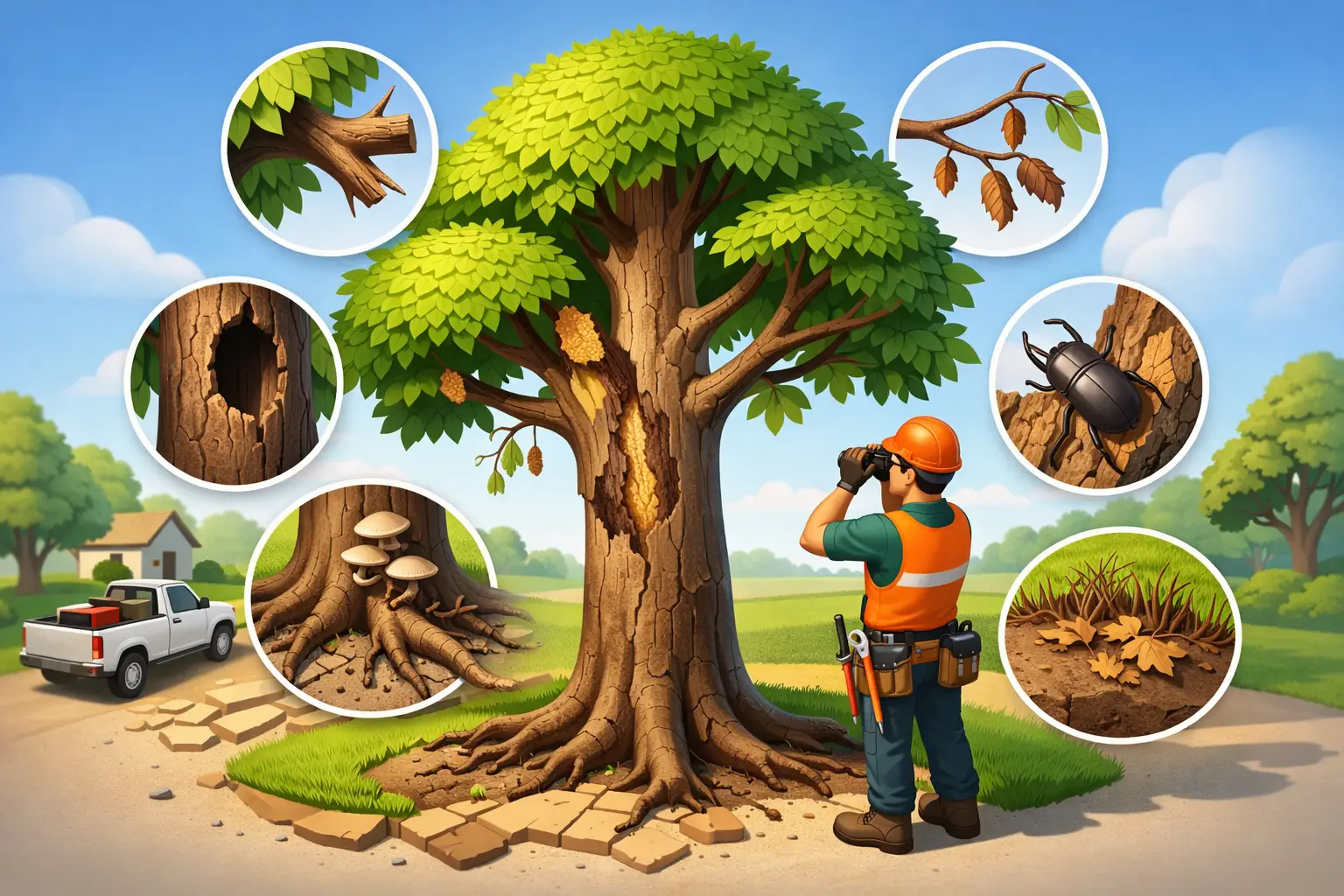
A better starting point is risk-based inspection. Trees near roads, pedestrian routes, staff parking areas, play spaces and buildings usually need more frequent attention than those in low-traffic areas. That does not always mean major work. Sometimes it means monitoring unions, deadwood, clearance levels, signs of decay or movement in the root zone.
This is where experienced arborists add real value. The issue is not only whether a tree looks overgrown. It is whether there are structural faults, storm damage, poor previous pruning or site pressures such as compacted ground, excavation or vehicle strikes. On commercial premises, those details matter because liability and business interruption matter.
Inspection frequency depends on the site
There is no single inspection timetable that suits every property. A hotel with mature trees over guest parking will need a different maintenance rhythm from a development plot awaiting clearance. The age, species, condition and location of the trees all affect the schedule.
As a rule, higher-use areas need more regular checks, especially after strong winds or heavy rain. Mature trees can remain safe and valuable assets for decades, but only if defects are identified early. Younger trees also need attention. Stakes, ties, formative pruning and establishment care are often overlooked, yet they shape future safety and maintenance costs.
For larger sites, a tree survey can help organise priorities. Instead of treating all trees the same, you can group work into urgent safety actions, medium-term maintenance and longer-term management. That makes budgeting easier and avoids unnecessary cutting.
The core jobs in a commercial tree maintenance guide
Most commercial maintenance plans revolve around a few key types of work, but the right choice depends on the objective.
Deadwood removal is often one of the first priorities in occupied spaces. Removing dead, damaged or hanging branches reduces risk without altering the whole crown.
Crown lifting is useful where branches are obstructing roads, footpaths, signage, lighting or sightlines. Done properly, it improves clearance without making the tree look harsh or unbalanced.
Crown reduction can help manage size and loading where a tree has outgrown its position, but it should be carried out carefully. Heavy-handed reduction may create weak regrowth, spoil the shape and place the tree under stress.
Crown thinning can reduce sail effect and let in more light, though it is not always appropriate and should not be treated as a default fix.
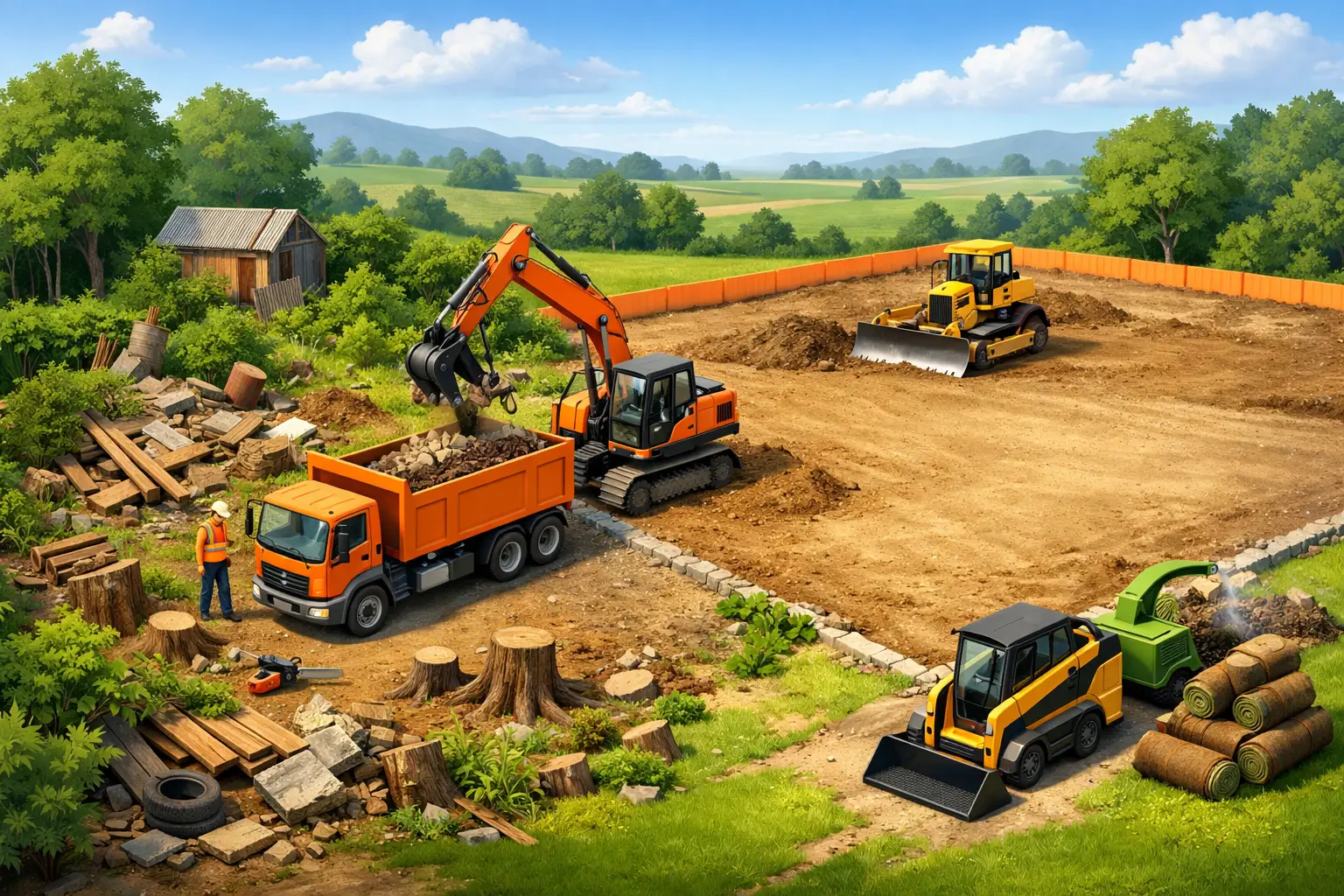
Tree removal becomes necessary when a tree is dead, dangerous, unsuitable for the location or blocking essential development or access work. On commercial sites, dismantling often needs careful sectional work, traffic management or specialist access equipment.
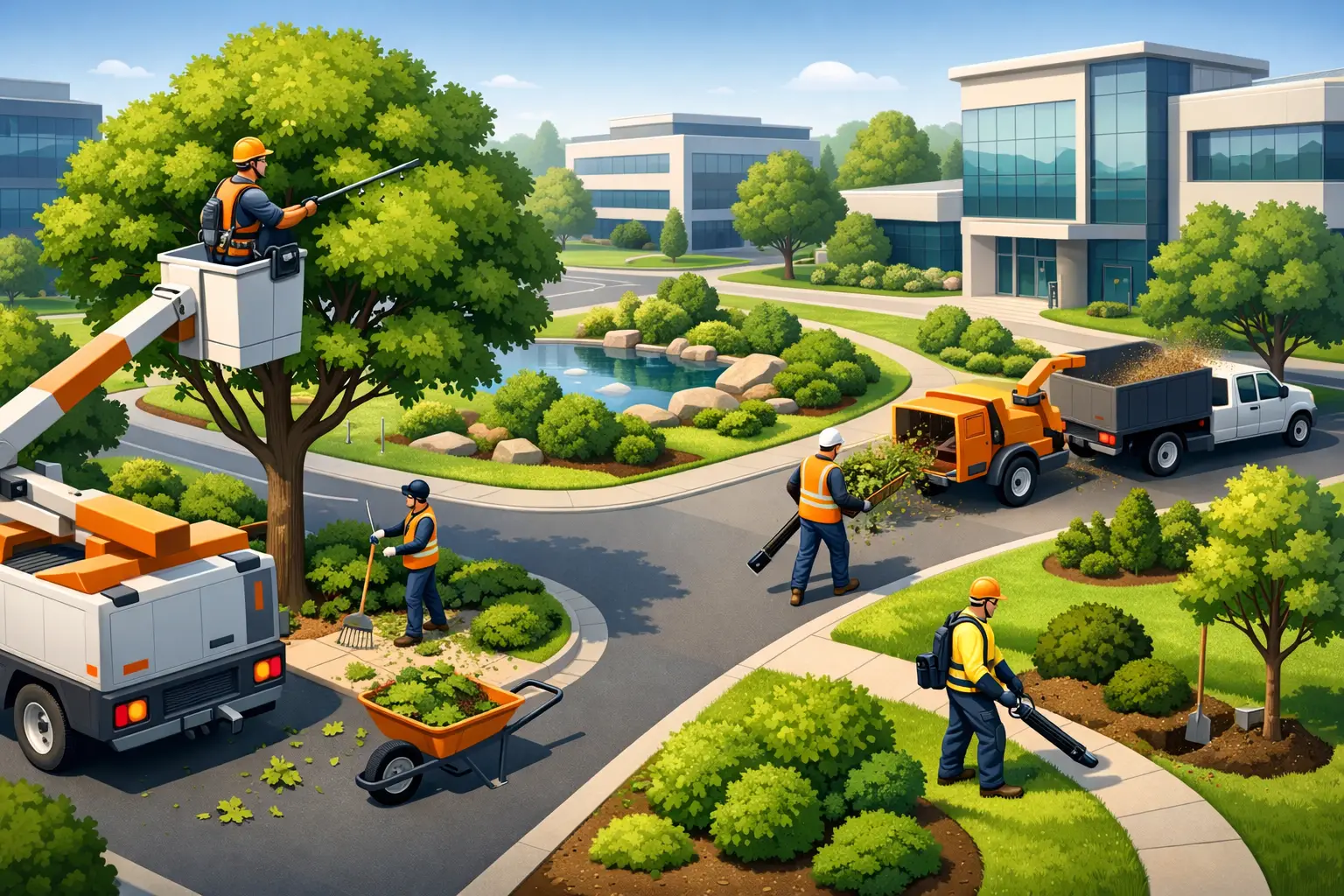
Stump grinding, hedge maintenance, site clearance and replacement planting may also form part of the wider plan, especially on managed estates, housing grounds or business parks where presentation matters as much as safety.
Compliance, permissions and duty of care
Commercial tree work is rarely just about getting saws on site. Before work starts, it is worth checking whether trees are protected by a Tree Preservation Order or sit within a conservation area. If they do, consent may be required before pruning or removal.
There is also the wider duty of care that applies to those responsible for land. If a foreseeable tree defect causes injury or damage, questions will be asked about inspection, records and whether reasonable action was taken. That does not mean every tree is a legal risk waiting to happen. It means a documented, sensible management process is part of responsible site operation.
For commercial clients, that usually means working with a contractor who understands safe systems of work, access constraints, public protection, waste removal and the standard of paperwork expected on managed premises.
Why timing matters more than many people think
A good commercial tree maintenance guide should also account for timing. Not every task should be done at the same point in the year.
Some pruning works are better suited to dormant periods, while others depend on species, condition and the reason for the work. Bird nesting season may limit what can proceed and when. Storm response is obviously less predictable, but planned maintenance is easier, cleaner and usually more cost-effective than emergency call-outs.
Timing also affects site operations. If works need to happen near customer entrances, shared access points or busy yards, planning around opening hours can reduce disruption. On larger or awkward sites, specialist equipment such as a cherry picker can make work safer and more efficient where climbing access is limited or ground conditions are difficult.
Tree health and site health are linked
Trees on commercial land do more than fill space. They soften hard landscaping, improve first impressions, support biodiversity and can add real value to a site. But they are often growing in tough conditions.
Compacted soil, repeated vehicle movement, restricted rooting space, poor drainage and construction pressure all affect tree health. A tree that appears stable above ground may be under long-term stress below ground. That is why a maintenance plan should look beyond the canopy.
Simple changes can make a difference. Protecting root zones during works, avoiding unnecessary grade changes, reducing mechanical damage and choosing sensible replacement species all support healthier, more manageable trees over time.
There is always a trade-off. Some commercial clients want very low-maintenance planting, while others want fast impact or screening. Those aims are not always compatible. Quick-growing species can create future pruning pressure, while tight spaces can limit what is suitable. Honest advice at the start usually saves money later.
Choosing the right contractor for commercial work
Commercial tree work needs more than someone who can cut branches. It needs a team that can assess risk properly, turn up when agreed, work safely around the public and leave the site clean.
That sounds basic, but it is where many problems start. Poor pruning, unclear communication, half-cleared brash or damage to surfaces and boundaries can turn a straightforward job into a complaint. For property managers and site operators, reliability matters as much as technical ability.
Look for a contractor with experience of larger, awkward or high-risk work, especially if your site has limited access, overhead constraints or busy working areas. The ability to handle routine maintenance and urgent storm damage with the same professional approach is a strong sign that the contractor understands commercial expectations.
In places such as Fife, Dundee and Perth, weather exposure can also shape tree management decisions. Coastal wind, saturated ground and winter storms all affect how quickly defects appear and how urgently they need to be dealt with.
Building a maintenance plan that actually works
The best commercial plans are realistic. They do not promise that every tree will be perfect all year round. They set priorities, reduce avoidable risk and keep the site presentable without unnecessary spend.
For some properties, that means annual inspections with follow-up works as needed. For others, it may mean seasonal hedge cutting, periodic crown management, emergency support after storms and occasional survey updates as the stock matures. If there are development phases, tenant changes or public realm upgrades, the plan may need to evolve with the site.
A practical contractor will not recommend the same package everywhere. They will look at occupancy, access, budget, tree condition and the standard your site needs to maintain. That is the difference between routine cutting and proper tree management.
HL Tree Services works with commercial clients who need that sort of clear, capable support – safe work, honest advice and a tidy finish that reflects well on the site.
Trees can be one of the strongest assets on a commercial property when they are looked after properly. A steady maintenance plan keeps them safer, healthier and easier to manage before small issues turn into urgent ones.