A block of overgrown land can look harmless from the gate. Then you step closer and find dense brambles, self-seeded trees, hidden stumps, old fencing, uneven ground and access problems that turn a simple tidy-up into a proper clearance job. That is why site clearance for overgrown land needs more than a mower and a free weekend.
Whether you are preparing a garden for use again, opening up a plot for landscaping, or getting a commercial site ready for the next stage of work, the first job is making the ground safe, manageable and fit for purpose. Done properly, clearance creates a clean starting point without causing unnecessary damage to the areas you want to keep.
What site clearance for overgrown land actually involves
Site clearance is not just cutting everything back and hauling it away. In most cases, it starts with assessing what is on the land, how dense the growth is, what hazards are hidden underneath, and what the end goal looks like.
Some sites need light vegetation removal and a few small trees taken down. Others involve mature trees, tangled hedging, invasive growth, buried debris, old timber, stumps and restricted access for machinery. The right approach depends on the land itself and what comes next.
For example, a homeowner reclaiming a badly neglected garden may want selective clearance that keeps healthy boundary trees and removes scrub, brambles and dead growth. A developer or property manager may need a wider strip-out to prepare for fencing, surveys, groundworks or construction access. The method changes, but the priority stays the same – safe, controlled work with a tidy finish.
Why overgrown land is often riskier than it looks
One of the biggest mistakes people make is assuming overgrowth is mainly a cosmetic issue. In reality, neglected land often hides practical and safety problems.
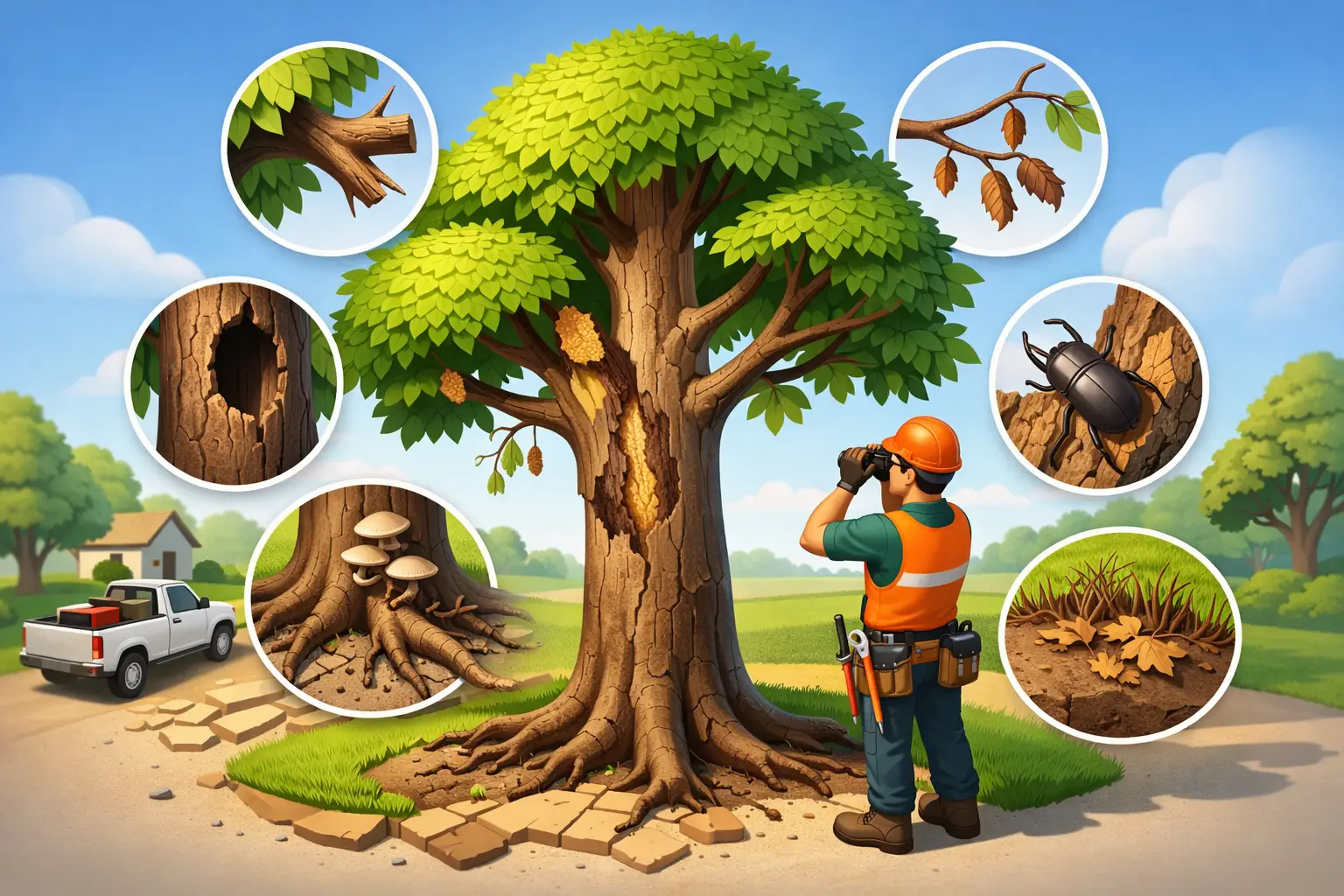
Heavy vegetation can conceal broken branches, unstable trees, discarded materials, wire, rubble, sharp metal, holes in the ground and old stumps. Thick ivy can mask the condition of trunks, walls and fences. Dense scrub may also limit visibility, making it harder to work safely with cutting equipment.
There is also the issue of tree condition. Self-seeded or unmanaged trees may be poorly formed, dead, storm-damaged or growing too close together. Some can be safely removed in sections. Others need more technical dismantling, especially near buildings, roads, neighbouring gardens or overhead lines.
That is where experience matters. A proper arboricultural team does not just clear growth – they assess risk, plan the work and use the right equipment for the site.
The main stages of a professional clearance job
Every site is different, but most clearance work follows a clear process. First comes the survey of the land, access points and surrounding features. This helps establish what can be removed, what should be retained, where waste can be processed, and whether specialist access equipment is required.
The next stage is usually vegetation reduction. That might include cutting back brambles, scrub, long grass, saplings and overgrown hedges to expose the ground and reveal obstacles. Once the site is opened up, larger trees or unwanted woody growth can be dealt with more safely.
After that comes tree work, stump removal if needed, and clearance of arisings. On some jobs, timber can be logged and left in agreed sections. On others, everything is removed to leave the site ready for the next contractor or for the client to use immediately.
The final finish matters. A professional job should leave the land visibly clearer, safer to access and free from the bulk of waste, not simply flattened with debris left behind.
When selective clearance is better than full removal
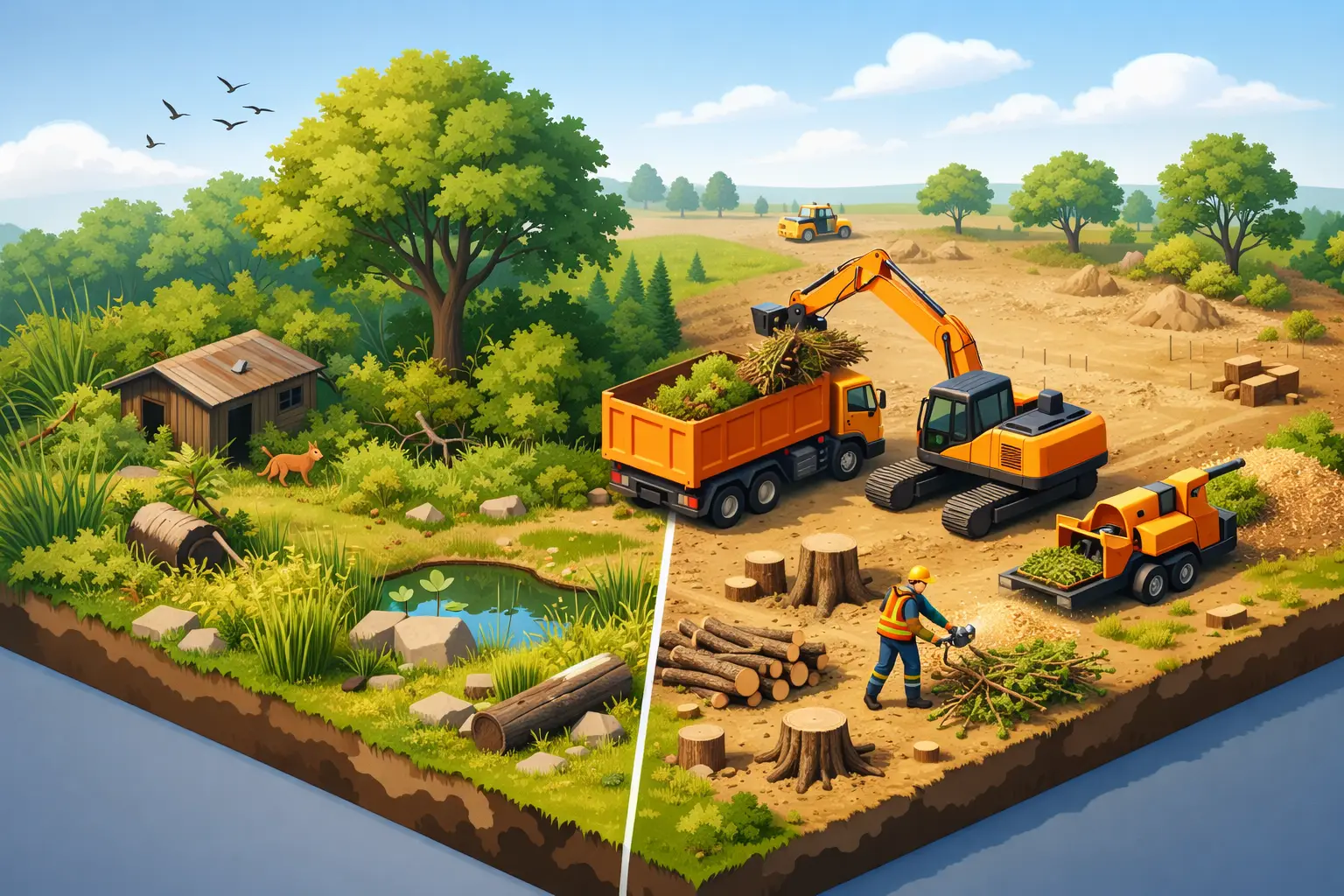
Not every overgrown plot needs to be stripped bare. In fact, full clearance can be the wrong choice if the site contains healthy trees, useful screening, established boundaries or features that add value to the land.
Selective clearance allows you to remove the problem growth while keeping the structure that works. That could mean retaining mature trees, thinning dense saplings, reducing overgrown hedges, removing deadwood and opening up sightlines without erasing the character of the site.
This is often the better option for domestic gardens, estates and boundary planting where privacy, appearance and long-term tree health matter. It can also make better financial sense. Clearing only what needs to go avoids unnecessary work and helps preserve the parts of the landscape worth keeping.
Equipment makes a real difference
Overgrown land is not always easy to reach. Narrow entrances, sloping ground, awkward corners and built-up surroundings can limit what machinery can get in. That is why clearance work often needs a mix of tools, climbing expertise and specialist equipment.
On some sites, handheld cutting equipment and chippers are enough. On others, access platforms such as a cherry picker make the job safer and more efficient, particularly for large or awkward tree work. The advantage of using the right equipment is not just speed. It improves control, reduces risk and helps protect nearby structures, lawns, paving and retained planting.
There is always a balance to strike. Larger machinery can speed up clearance on open ground, but it may not suit delicate gardens or areas with limited access. A good contractor will match the method to the site rather than forcing the site to fit the equipment.
Timescales and what affects them
Clients often ask how long site clearance for overgrown land will take. The honest answer is that it depends on density, size, access, weather, waste volume and the type of vegetation present.
A small neglected garden might be cleared in a day. A larger plot with heavy scrub, multiple trees and stump work can take several days or more, especially if there are access restrictions or careful dismantling is required.
Weather can also slow things down. Wet ground may affect machinery use, and strong winds can limit safe aerial tree work. If the site is near neighbouring properties, roads or public spaces, additional control measures may also be needed. That does not mean delay for the sake of it. It means carrying out the work properly, with safety and finish still at the centre of the job.
What homeowners and commercial clients should ask before work starts
The right questions at the start usually prevent problems later. You want to know exactly what is being removed, what is being retained, whether waste is included, how the site will be left, and whether stump removal is part of the price.
It also helps to discuss access early. Gates, driveways, shared routes and parking all affect how the work is planned. On commercial sites, timing may need to fit around other trades or public access. On domestic properties, protecting lawns, sheds, fences and neighbouring boundaries is often just as important as the cutting itself.
A clear quote should reflect the actual condition of the land, not a rough guess from a description over the phone. Overgrown sites can hide plenty of surprises, so a proper look at the job is always the sensible starting point.
Why professional clearance usually saves time and money
DIY clearance can sound like a cheaper option until the work starts. Thick bramble, woody regrowth, hidden stumps and unmanaged trees take far longer to remove than most people expect. Waste removal is another major factor. Once the cutting starts, the volume of material builds quickly.
There is also the question of safety. Chainsaws, chippers, climbing work and tree dismantling should not be improvised. Even at ground level, uneven surfaces and hidden debris create avoidable risk.
Professional clearance brings planning, trained operators, proper equipment and an efficient waste process. It also gives you a better end result. Instead of spending weekends battling regrowth and piles of cuttings, you get a site that is ready for its next use.
For landowners and property managers across Fife and the surrounding area, that reliability matters. HL Tree Services carries out clearance work with the same focus we bring to all tree work – safety first, tidy workmanship and honest advice on the best way forward for the site.
Aftercare matters more than people think
Once land has been cleared, the next step should be considered straight away. If the ground is left untouched for too long, fast regrowth can undo a lot of the benefit. Brambles, saplings and vigorous weeds do not need much time to come back.
In some cases, that means arranging stump grinding, hedge maintenance or follow-up tree work. In others, it means moving quickly into fencing, planting, landscaping or development. Clearance is the start of making land usable again, not always the end of the process.
The best result comes from looking at the whole site, not just the first cut. Clear it properly, keep what adds value, remove what creates risk, and you give yourself solid ground to work from.