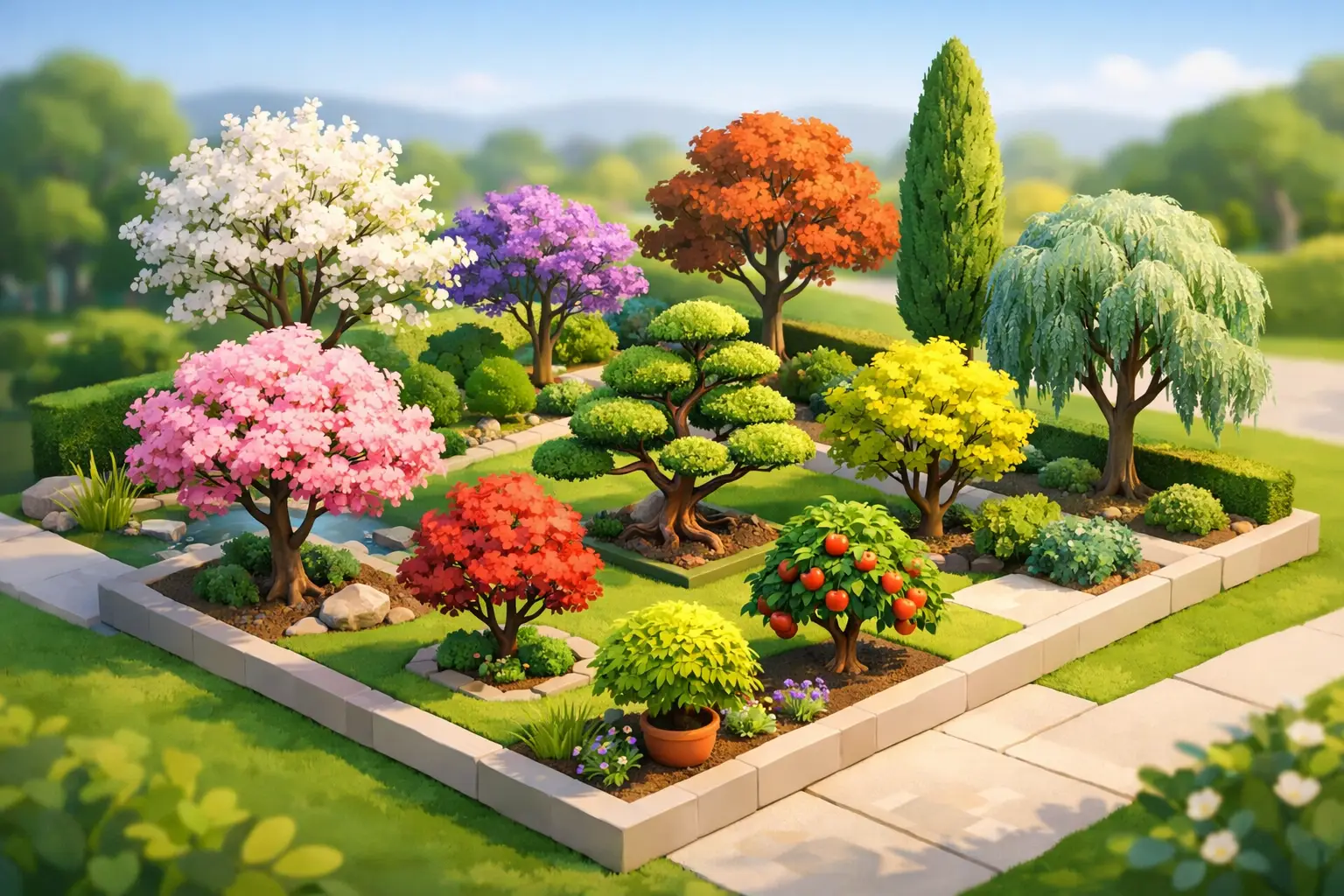
A small garden can feel finished the moment the right tree goes in. It gives height, structure and a sense of permanence that borders and pots cannot quite match. The challenge is choosing from the best trees for small gardens without ending up with something that outgrows the space, blocks the light or creates more maintenance than you bargained for.
In our experience, the best choice is rarely the fastest-growing or the most dramatic at the garden centre. It is the tree that suits the size of the plot, the soil, the amount of sun, and how much upkeep you are realistically happy to do. A good small-garden tree should earn its place all year, not just for a couple of weeks in spring.
What makes the best trees for small gardens?
Size matters, but not just height. Spread is often the bigger issue in compact gardens, especially near fences, sheds, patios and neighbouring properties. A tree that tops out at 5 metres but spreads just as wide can quickly dominate a modest space.
Root behaviour matters too. People often worry about roots more than they need to, but it is still sensible to avoid planting too close to walls, drains and paved areas. Slow to moderate growers with a tidy habit are usually easier to live with in smaller plots.
Shape is another factor that gets overlooked. Upright trees work well where space is tight, while rounded canopies suit gardens with a bit more breathing room. If you want light to reach lawns or borders, a tree with an airy crown is often a better choice than something dense and heavy.
Then there is maintenance. Some trees are tidy and predictable. Others drop fruit, seed freely, or need regular pruning to stay in scale. There is nothing wrong with a higher-maintenance tree if you love it, but it is better to know that going in.
10 of the best trees for small gardens
Japanese maple
For many gardens, Japanese maple is hard to beat. It stays relatively compact, has a refined shape, and brings strong autumn colour without becoming overpowering. Many varieties also have beautiful leaf colour through spring and summer, from fresh green to deep red.
It does best in a sheltered spot, especially away from harsh winds. In very exposed parts of Fife and the east coast, leaf scorch can be an issue, so placement matters. It is ideal near patios or where you want a focal point rather than a large shade tree.
Amelanchier
Amelanchier gives you a lot without demanding too much space. It has delicate spring blossom, fresh green leaves, good autumn colour and a light, elegant form. It can be grown as a small tree or large multi-stem specimen, depending on the look you want.
This is a good option if you want something natural-looking rather than overly formal. It works particularly well in gardens where you want seasonal interest without a heavy canopy.
Crab apple
A well-chosen crab apple is one of the most reliable small trees around. Spring blossom is the main attraction, but many varieties also hold small colourful fruits well into autumn, which adds interest after flowering has finished.
The key is choosing the right cultivar. Some stay compact and neat, while others become broader than expected. If you are planting near a driveway or seating area, think about fruit drop before you decide.
Rowan
Rowan is a strong choice for smaller British gardens, especially where conditions are a bit tougher. It copes well with cooler climates, offers spring flowers, bright berries and attractive foliage, and tends to keep a manageable shape.
It is also a sensible option if you want a tree that feels at home in the local landscape. For homeowners wanting something hardy rather than fussy, rowan often ticks the right boxes.
Ornamental cherry
If spring blossom is your priority, ornamental cherry deserves a place on the shortlist. There are compact forms suitable for small gardens, and when they flower, they make an immediate impact.
That said, this is a tree you choose for a season of real beauty rather than year-round subtlety. Some have decent autumn colour, but blossom is the main event. In tight spaces, look carefully at the eventual spread because some cherries become wider than people expect.
Birch
Not every birch belongs in a small garden, but the right variety can work very well. Birch has light canopy cover, attractive bark and a graceful habit, which makes it useful where you want height without too much heaviness.
Multi-stem birch can be particularly effective as a feature. The trade-off is that some birches grow faster than people realise, so they may need monitoring and occasional pruning to keep the balance right.
Hawthorn
Hawthorn is often overlooked, which is a shame. It has blossom, wildlife value, and a characterful shape that suits many traditional gardens. Smaller ornamental forms can fit neatly into compact spaces.
It is not as polished-looking as a Japanese maple or ornamental cherry, but that is part of its appeal. If you want something sturdy, useful for wildlife and in keeping with the wider countryside, hawthorn is worth serious consideration.
Acer campestre ‘Elsrijk’
For a more formal look, this field maple cultivar is a solid option. It stays smaller than many maples, has a tidy rounded crown and copes well with urban conditions. That makes it useful near roads, drives and more structured planting schemes.
It does not have the delicate charm of a Japanese maple, but it is tougher and often more forgiving. For homeowners who want a dependable tree with less fuss, that can be a better trade.
Snowy mespilus
Snowy mespilus is a very good all-rounder for compact gardens. It brings spring flowers, berries and autumn colour, all on a neat framework that does not usually feel oversized.
It is one of those trees that rarely shouts for attention but consistently performs well. If you want a balanced choice that gives something in several seasons, it is a smart pick.
Magnolia
A compact magnolia can be spectacular in the right spot. The flowers are impressive, and the tree itself often has a strong architectural quality. In a small garden, that can give the whole space a lift.
The caution is that magnolias do not like every site. Cold winds, poor soil and cramped planting holes can all hold them back. They are worth planting, but only where conditions suit them.
Choosing the right tree for your garden, not just a good tree on paper
The best trees for small gardens are not the same for every property. A sheltered town garden can support more delicate choices, while a more exposed site may need something tougher and more wind-tolerant. Soil type also changes the picture. Heavy clay, thin soil, or poor drainage can all limit what will thrive.
Think about what you want the tree to do. If it is there for privacy, a narrow upright form may make sense. If it is meant to anchor a lawn or break up fencing, a rounded specimen might work better. If your main goal is blossom, fruit or autumn colour, that naturally narrows the options.
It is also worth being honest about scale. In a very small garden, even a so-called compact tree can be too much if it is planted in the wrong place. A professional planting plan can save a lot of future pruning, and in some cases it can prevent the need for removal years down the line.
Common mistakes with small-garden trees
The biggest mistake is planting too close to structures or boundaries. Trees may look tiny at purchase, but their mature size is what matters. A poor position can create shading issues, overhanging growth and neighbour disputes that were entirely avoidable.
Another common problem is chasing quick results. Fast-growing trees can seem appealing when a garden is bare, but they often become the wrong tree in the wrong place. Slower-growing species usually reward patience with better shape and less aggressive maintenance.
People also underestimate aftercare. Watering in the first few growing seasons, mulching properly and formative pruning all make a difference. Even the right tree can struggle if it is badly planted or simply left to get on with it.
When expert advice is worth it
If you are planting near a house, retaining wall, driveway or drain run, it is sensible to get advice before anything goes in the ground. The same applies if there are existing mature trees nearby, or if you are trying to balance privacy, light and usable garden space.
For homeowners across Fife, Dundee and Perth, this is often where practical arboricultural advice pays for itself. A tree should improve your property, not create long-term problems. Choosing well at the start is far easier than correcting mistakes once a tree is established.
A small garden does not need a small idea. It just needs the right tree, in the right place, with enough room to look like it belongs there for years to come.