A branch can look manageable from the ground, then feel very different once you are halfway up a ladder with a saw in hand. That is why professional tree surgery is safer than DIY tree work: the risk is not only in cutting the wood. It is in judging the tree, controlling where material falls, working at height and protecting everyone and everything below.
For homeowners and property managers, the appeal of doing the job yourself is understandable. A quick prune may seem like a straightforward way to save money or tidy an overgrown garden. But mature, damaged or awkwardly positioned trees need more than enthusiasm and a chainsaw. They need a planned approach, suitable equipment and people who know how a tree can react under load.
Why professional tree surgery is safer than DIY tree work
Tree surgery is a specialist job because every tree presents a different set of hazards. Its species, age, condition, height, lean, root stability and proximity to buildings all affect how it should be worked on. A dead limb can fail without warning. A seemingly solid branch may be weakened by decay. Even a healthy tree can behave unpredictably when weight is removed from one side of the crown.
A professional tree surgeon assesses these factors before climbing or cutting begins. The team can decide whether a tree needs careful sectional dismantling, crown reduction, selective pruning, a cherry picker or, in some cases, urgent removal. That assessment is what turns a risky guess into controlled work.
DIY work often starts with the cut itself. Professional work starts with the question: what could go wrong, and how do we prevent it?
Working at height is a serious risk
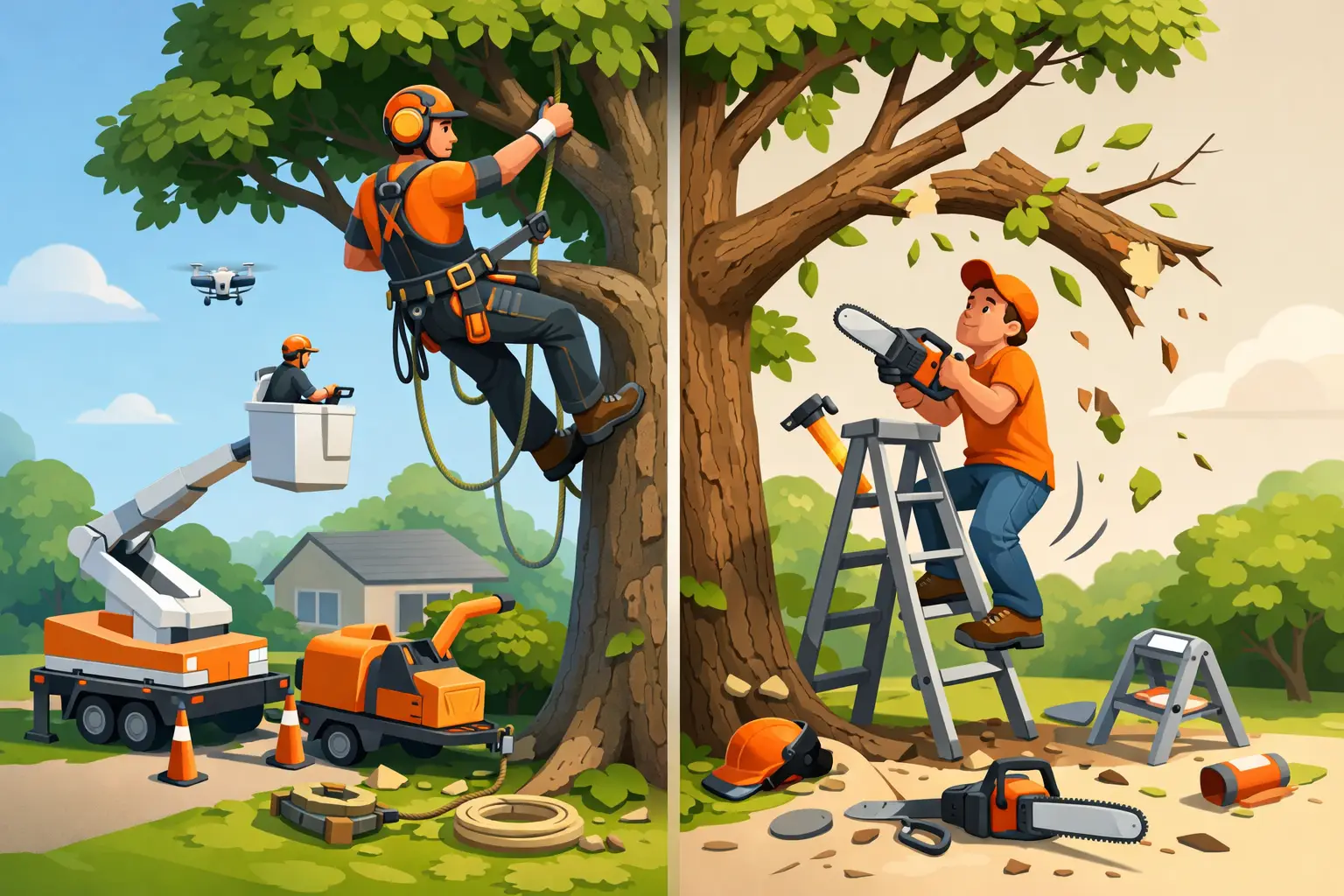
Ladders and trees are a poor combination. Ladders need firm, level ground and a secure point of contact, while tree trunks are uneven and branches move in the wind. Reaching sideways with a cutting tool, carrying equipment or trying to manage a falling limb can quickly unbalance even a confident person.
Professional climbers use appropriate climbing systems, harnesses, ropes and positioning techniques designed for tree work. Where climbing is not the safest option, specialist access equipment such as a cherry picker may be used. This gives the operator a stable working position and can reduce the need to climb a compromised, storm-damaged or difficult tree.
The aim is not simply to reach the branch. It is to reach it safely, stay secure while cutting and leave a reliable route out of the tree if conditions change.
Chainsaws need more than care and confidence
A chainsaw is highly effective in trained hands, but it is not forgiving. Kickback, poor footing, blunt chains, awkward cuts and fatigue can all cause serious injury in seconds. Cutting above shoulder height, one-handed cutting or attempting to steady a branch while operating a saw are particularly dangerous practices.
Tree surgeons use suitable saws for the job and wear the correct personal protective equipment, including chainsaw trousers, boots, helmets, eye protection and hearing protection. Just as importantly, they understand cutting techniques. They know how to avoid trapping a bar, how tension and compression affect a branch, and when a cut needs to be made in stages rather than all at once.
That knowledge matters because branches do not always drop straight down. They can swing, twist, roll, split or strike another limb on the way down. A professional plans for that movement rather than hoping for the best.
Controlled lowering protects people and property
The biggest danger is often not the person doing the cutting. It can be a family member, neighbour, passer-by, parked car, greenhouse, fence or roof beneath the tree.
With professional tree surgery, the work area is assessed and controlled before cutting starts. Access can be restricted, the drop zone can be kept clear and sections can be lowered by rope rather than allowed to fall freely. This is essential where trees overhang gardens, roads, sheds, conservatories or shared boundaries.
For large removals, a tree may be dismantled piece by piece from the top down. Each section is cut to a manageable size and lowered with rigging equipment. It takes more time than dropping large limbs into the garden, but it offers far greater control and reduces the chance of costly damage.
There is a trade-off here. Professional work can appear more expensive than hiring a saw for the weekend. Yet one broken roof tile, damaged fence panel, smashed greenhouse or injury can cost far more than having the job completed properly from the outset.
Trees can hide defects that are easy to miss
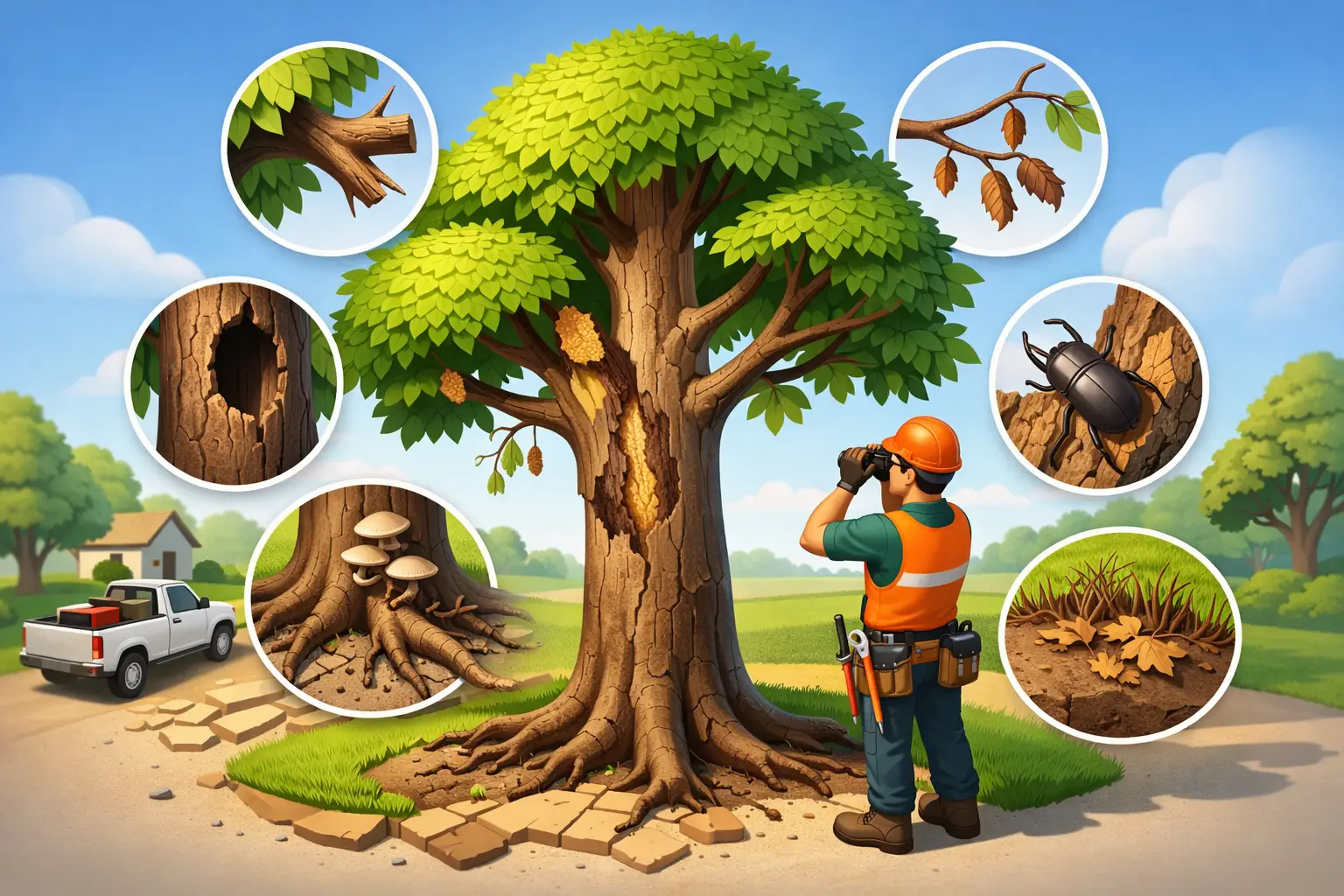
A tree does not need to look obviously unhealthy to be unsafe to climb or cut. Internal decay, fungal infection, cracks, weak unions and root problems can be hidden from view. Storms can also leave hanging branches and partially failed limbs that are under tension.
An experienced arborist looks for warning signs before deciding how to approach the work. That may include checking the trunk, branch structure, surrounding ground and any visible signs of disease or decay. If a tree is unstable, the safest solution may be to use access equipment, change the dismantling method or keep people well away while the work is carried out.
This is especially relevant after high winds, when a branch may appear to be resting safely but is actually caught in the canopy and ready to fall. Emergency tree work should never become a hurried DIY rescue job.
Safe tree work also protects the tree
Safety is about more than preventing accidents. Poor pruning can leave a tree vulnerable to decay, disease and future branch failure. Topping a tree, removing too much live growth at once or making incorrect cuts can create a long-term problem instead of solving a short-term one.
Professional pruning is based on the tree’s structure and future health. A crown reduction, for example, should retain a natural shape and reduce weight without leaving large wounds or weak regrowth. Deadwood removal should be selective, while clearance pruning should account for the tree’s balance as well as the space around it.
For some trees, the right advice is to do less. A skilled tree surgeon will not recommend unnecessary work simply because a tree is large. They will explain what is needed to manage risk, improve light, maintain clearance or support the tree’s condition.
Legal and site responsibilities need checking
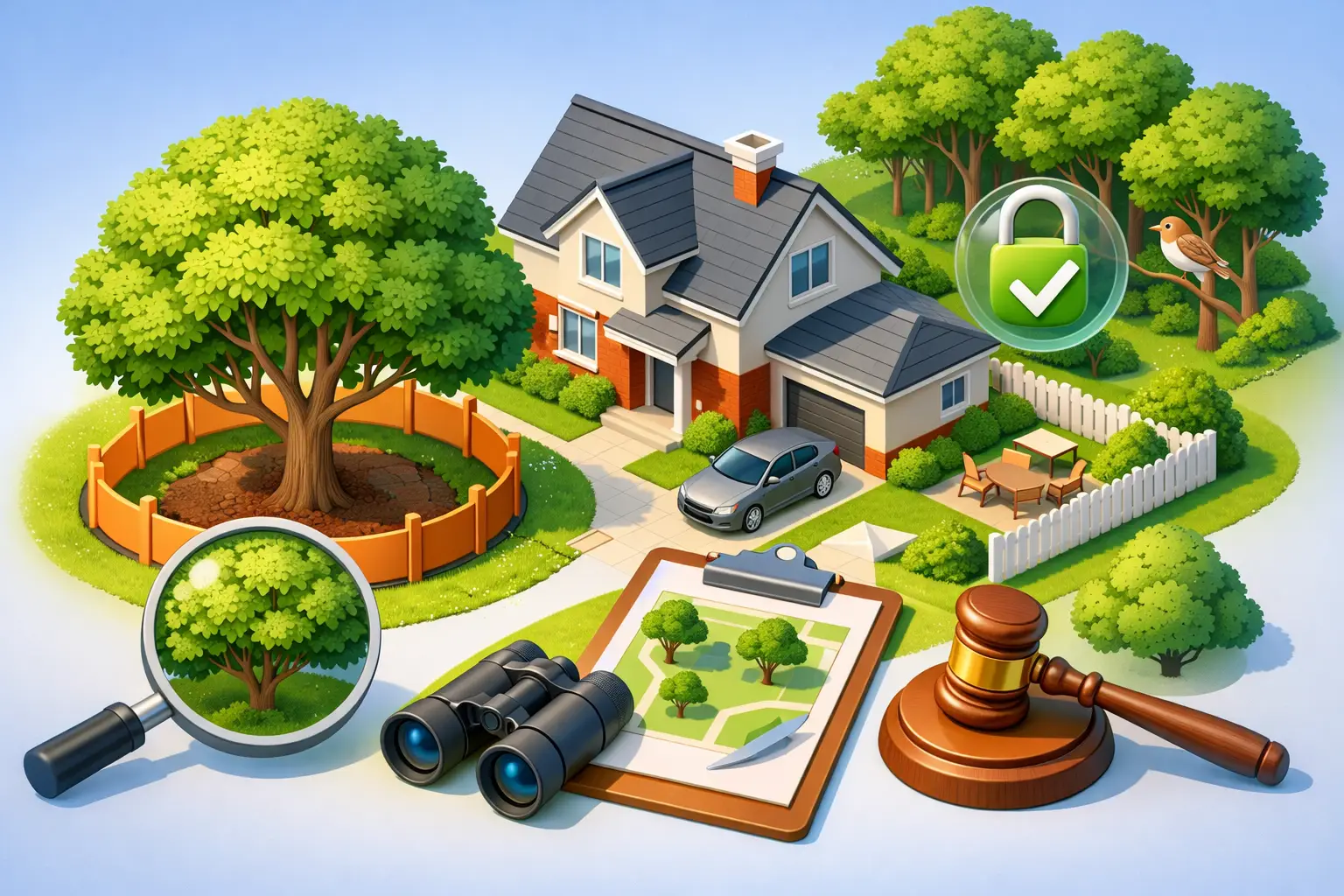
Before significant tree work begins, it is sensible to establish whether the tree is protected by a Tree Preservation Order or stands within a conservation area. Permission or formal notice may be required, and the responsibility usually rests with the property owner. Trees near public roads, neighbouring land or overhead services also need additional care and planning.
Professional contractors are used to identifying when these issues may apply and can advise on the sensible next step. This is valuable for landlords, estates and commercial sites, where an unplanned or poorly managed job can create liability as well as disruption.
Overhead power lines deserve particular caution. Never attempt to prune, fell or pull a tree near electrical lines without specialist advice. A branch does not need to touch a cable directly for the situation to become dangerous.
The right equipment makes the job cleaner as well as safer
A tidy finish is part of a professional job, not an afterthought. Branches, brash and timber can quickly block driveways, damage lawns and create trip hazards if they are not managed properly. Specialist chippers, lowering equipment, stump grinders and access machinery allow the team to handle waste efficiently and leave the site clear.
This matters on tight residential plots as much as on larger commercial grounds. A carefully organised work site keeps access open where possible, protects surrounding features and makes it easier to complete the job without unnecessary disturbance.
At HL Tree Services, this practical approach is central to how we work: assess the risk, use the right equipment, carry out the work with care and leave the area clean and safe.
When DIY can be reasonable
Not every bit of garden maintenance requires a tree surgeon. Picking up small fallen twigs, trimming a low hedge or removing light growth that can be reached safely from the ground may be suitable for a capable homeowner using hand tools.
The line is crossed when ladders, chainsaws, heavy limbs, unstable trees, overhead obstacles or limited drop space are involved. If you are unsure whether a branch will clear a shed, whether a tree is sound enough to climb, or where a cut section will land, it is time to call a professional.
A sensible decision before work starts protects your home, your neighbours and the tree itself. For anything beyond simple ground-level maintenance, choosing trained tree surgeons is the safest way to get the result you want without turning a garden job into an emergency.