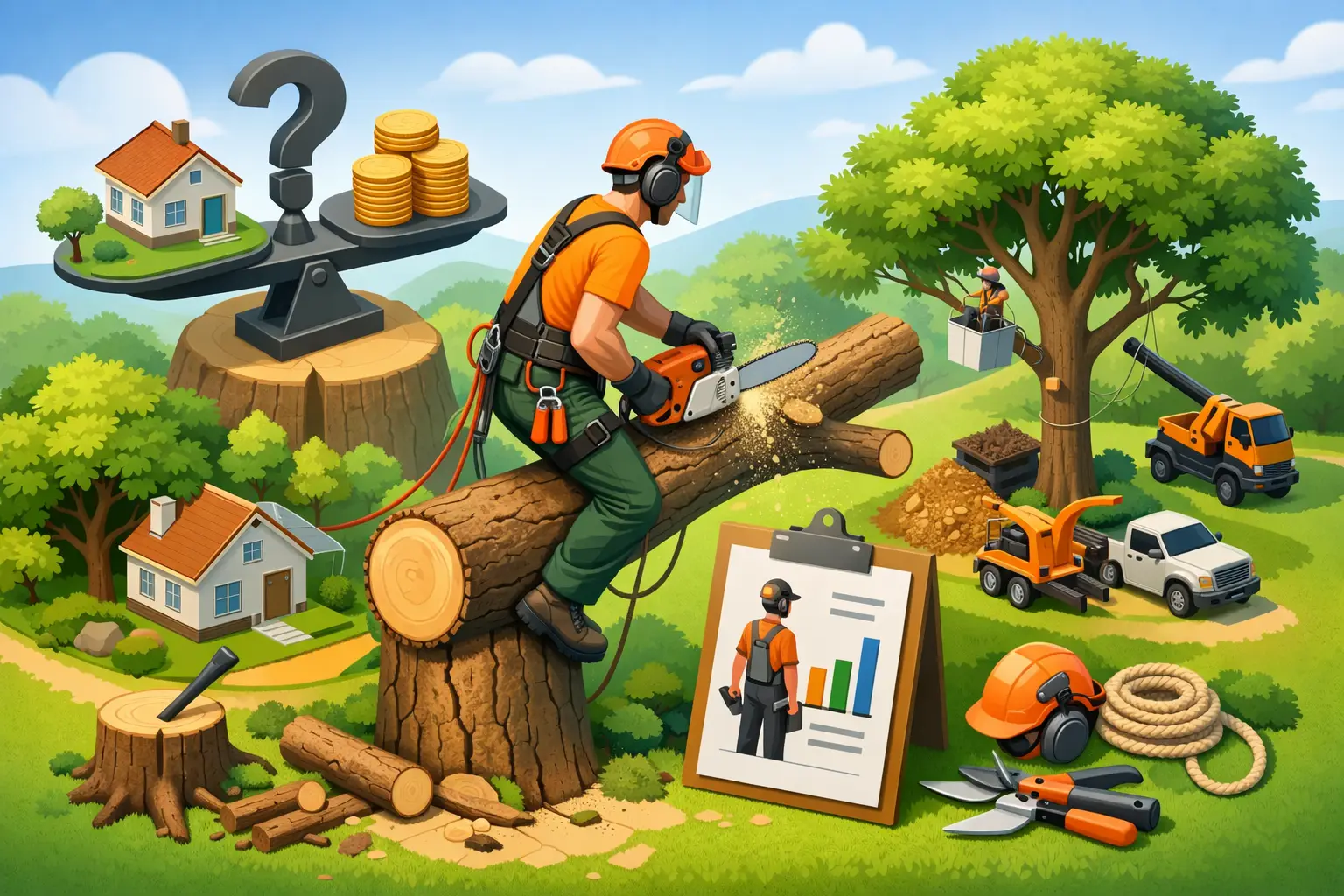
When a tree starts overhanging a roof, blocking light, or shedding limbs after a storm, one of the first questions is usually the same – what is the tree surgeon cost likely to be? It is a fair question, but the honest answer is that tree work is priced on risk, time, access, equipment, and the amount of material to remove, not just on the tree itself.
That is why two jobs that sound similar on paper can come out very differently in price. A small fruit tree in an open back garden is a very different prospect from a mature beech leaning over a garage with limited access and no safe drop zone underneath. Good tree work is not just about cutting. It is about planning, safety, control, and leaving the site tidy when the job is done.
Why tree surgeon cost can vary so much
The biggest factor is usually the size and condition of the tree. Taller, broader, heavier trees take longer to climb or dismantle, create more waste, and often need more than one member of staff on site. If the tree is dead, storm-damaged, split, or unstable, the job becomes more technical and the risk level rises.
Access matters just as much. If a team can get equipment close to the work area, the job is generally quicker and more straightforward. If everything has to be carried through a narrow gate, over steps, or across delicate landscaping, the labour goes up. In some cases, specialist access equipment such as a cherry picker may be the safest and most efficient option, but that also affects cost.
Location on the property also plays a part. Trees near roads, greenhouses, fences, conservatories, power lines, sheds, or neighbouring gardens need careful sectional dismantling rather than a quick fell. That means more rigging, more controlled cuts, and more time.
The type of work makes a big difference
Not all tree jobs are priced in the same way, even when they involve the same tree. Pruning, crown lifting, crown reduction, deadwood removal, felling, stump grinding, hedge cutting, and emergency make-safe work all involve different methods and time on site.
Pruning and crown work
Pruning is often less expensive than full removal, but it still depends on the shape and height of the tree, the amount being removed, and whether climbing or access equipment is needed. Careful crown reduction on a mature tree can be quite technical, especially if the aim is to improve shape while keeping the tree healthy and balanced.
Tree felling and sectional dismantling
Straight felling in an open area is usually simpler than dismantling a tree in sections. If there is space to bring the tree down safely in one go, the labour and equipment required may be lower. If it has to be dismantled piece by piece over buildings or boundaries, expect the price to reflect the extra skill and time involved.
Stump grinding
Some customers are surprised that stump removal is usually separate from tree felling. Grinding out a stump needs different machinery and depends on stump size, root spread, access width, and ground conditions. If the route to the stump is awkward, that can affect the quote.
Emergency work
Emergency call-outs often cost more than planned work. That is not just because of timing. Storm-damaged trees can be under tension, tangled in structures, or unsafe to approach without specialist equipment and careful assessment. If a tree has failed overnight or is threatening a road, driveway, or building, speed and safety become the priority.
What is usually included in the quote
A professional quote should be clear about what you are paying for. In most cases, the price will include labour, climbing or access equipment, cutting, lowering, chipping, removal of timber or brash if agreed, and a proper clean-up afterwards.
This is worth checking because the cheapest quote is not always like-for-like. One contractor may price for cutting only, leaving timber on site. Another may include full waste removal and site clearance. One may allow for traffic management or neighbour protection where needed, while another may not. If you are comparing prices, make sure you are comparing the same scope of work.
For many homeowners and property managers, tidy completion matters just as much as the cutting itself. A professional team should leave the area safe, clean, and usable, not covered in sawdust, branches, and ruts.
Hidden factors that push costs up
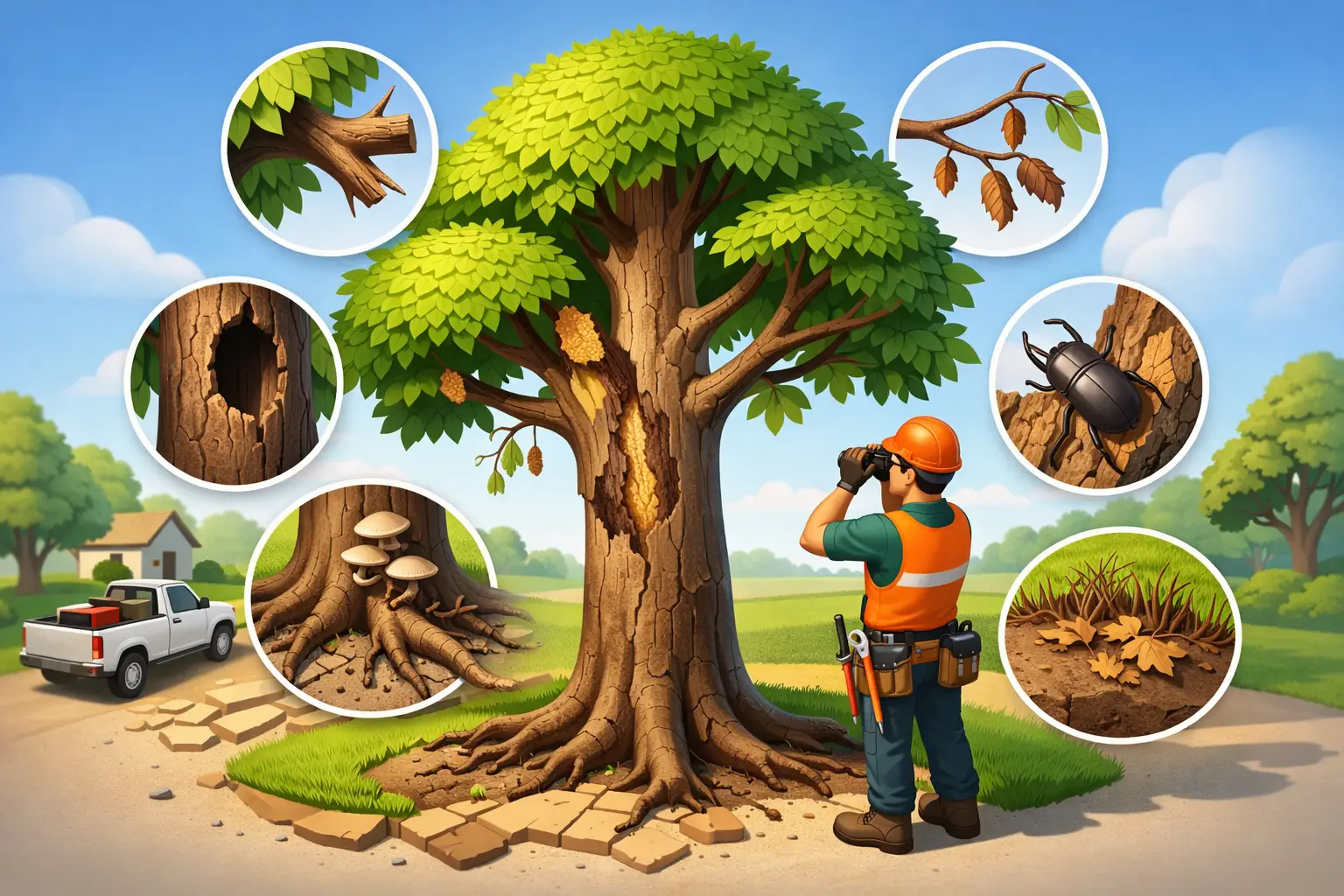
Some of the biggest price differences come from details customers cannot always see at first glance. A tree might look manageable from one angle, but once assessed properly, there may be decay pockets, poor weight distribution, included bark unions, unstable limbs, or signs of disease. These issues change how the work needs to be carried out.
Ground conditions can also affect the plan. Soft lawns, steep banks, raised beds, and limited parking all slow a job down. If there is no room for chipper access or timber loading nearby, the team may need significantly more handling time.
Waste volume is another common factor. Tree surgery creates a lot of material very quickly. A light prune may produce a small amount of arisings. A full dismantle of a mature conifer or broadleaf tree can fill a large vehicle more than once. Disposal takes time and cost, particularly where logs, brash, and stump grindings all need to be removed.
How to judge whether a price is fair
A fair quote should reflect the real difficulty of the job, not just aim to be the lowest number. Tree work is high-risk by nature. You are paying for trained people, proper insurance, safe working practices, specialist equipment, and the judgement to carry out the work without damaging property or harming the tree unnecessarily.
If a price seems unusually low, it is sensible to ask what is included and how the job will be done. Will the waste be removed? Is the site being left tidy? Is the contractor insured? Are they allowing enough time and manpower to do the job safely? Cutting corners in tree work can become expensive very quickly if fences, roofs, driveways, or neighbouring gardens are damaged.
By the same token, the highest quote is not automatically the best one either. What you are looking for is a clear explanation, a sensible method, and confidence that the contractor understands the work properly.
Getting an accurate tree surgeon cost estimate
Photos can help, but they rarely tell the whole story. The most reliable quotes usually come after a site visit, especially for larger, awkward, or high-risk trees. Seeing the access, nearby structures, ground levels, and actual tree condition makes a big difference.
When asking for a quote, it helps to be clear about what you want. Are you trying to reduce shade, improve clearance, remove a safety concern, or remove the tree entirely? Do you want all waste taken away? Do you want the stump dealt with too? The clearer the brief, the easier it is to price the work properly.
For customers across Fife, Dundee and Perthshire, local knowledge can also help. A team that regularly works in the area will already understand the range of property types, access issues, weather exposure, and common tree species that affect planning and pricing.
When paying more is worth it
There are times when a slightly higher tree surgeon cost makes complete sense. If the job involves restricted access, lifting over structures, emergency damage, or trees close to public spaces, experience matters. So does having the right equipment available rather than trying to improvise.
It is also worth paying for good judgement. Not every tree needs to come down. Sometimes skilled pruning is enough to reduce risk, improve light, and keep the tree healthy. A contractor who gives honest advice, rather than defaulting to the biggest job, is usually one worth listening to.
At HL Tree Services, that practical approach is part of the job. Customers want straight answers, safe work, and a tidy result, whether it is a small garden tree or a large dismantle in a difficult spot.
A sensible way to approach cost
If you need tree work done, think less about finding a rough average online and more about getting a proper assessment of your specific job. Tree surgeon cost is never just about height or how many branches need cut. It comes down to safety, access, method, equipment, waste, and the standard of finish.
A good quote should leave you feeling clear on what is being done and why it costs what it does. That peace of mind matters, especially when the work is close to your home, your business, or the people using the space every day. If the advice is honest and the job is planned properly, the right price is usually the one that gets the work done safely and properly the first time.