When a garden has been left for years, the problem is rarely just “a bit overgrown”. What looks like dense shrubs and long grass from the gate can hide self-seeded trees, rotten fencing, buried waste, unstable limbs and limited access for machinery. That is exactly why a large garden clearance project example is useful. It shows what the work actually involves, where the risks sit, and why proper planning matters just as much as the cutting and clearing.
For property owners, landlords and site managers, large-scale clearance is usually tied to a bigger goal. It might be making a garden usable again, preparing for landscaping, dealing with a sale, opening access around a building or bringing a neglected site back under control. The right approach depends on what needs to stay, what needs to go, and how safely the work can be carried out without unnecessary damage to the rest of the ground.
A realistic large garden clearance project example
A typical project starts with a site that has not been maintained for several seasons. In this example, the garden was at the rear of a sizeable property with mature boundary trees, heavily overgrown hedges, bramble spread across most of the ground, several small self-seeded sycamores and ash, and an old stump line near the fence. Access was tight through a side entrance, so everything had to be planned around restricted movement, safe loading and careful use of equipment.
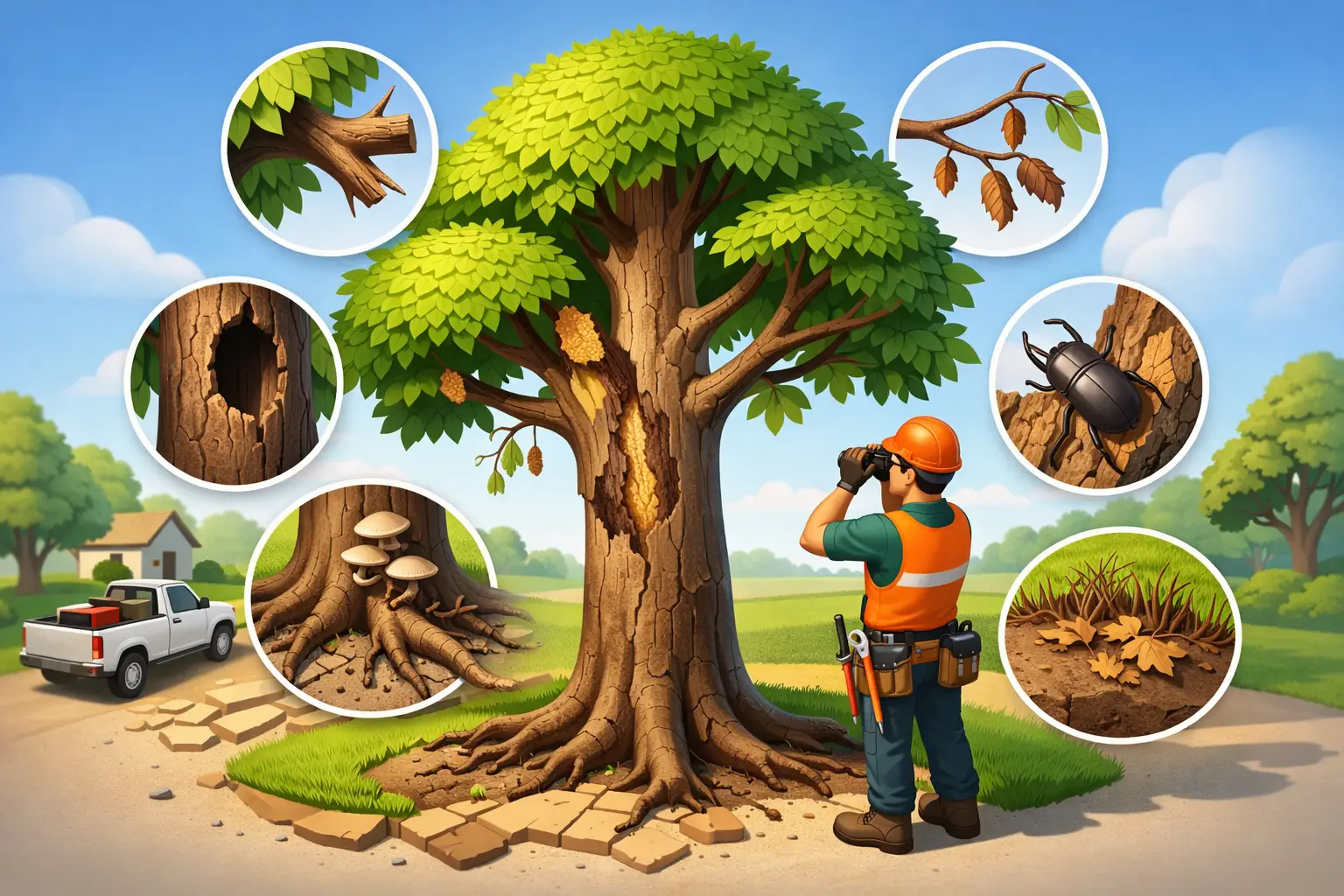
Before any cutting started, the first job was a proper site assessment. That means looking at tree condition, checking for deadwood, spotting tension in leaning stems, identifying what vegetation should be retained and deciding how waste would be removed. On larger jobs, this stage saves time and prevents avoidable problems. It also gives the client a clearer picture of the work, rather than a vague promise to “tidy it up”.
The customer in this case wanted three things. First, they needed the garden cleared back to a manageable condition. Second, they wanted selected mature trees retained for privacy. Third, they needed the site left clean enough for the next contractor to come in and repair fencing and reshape the ground. That mix is common. Full clearance is not always the aim. Often it is controlled clearance, with some structure and value preserved.
What happens first on a big clearance job
On a neglected site, the early stage is about creating safe working space. Brambles, long grass and low scrub are usually cleared first so the team can see the ground properly. Hidden obstacles are common – old wire, broken slabs, timber, discarded garden materials and uneven surfaces all affect how safely the rest of the work can be done.
Once the lower growth was cut back in this example, the actual shape of the site became clear. Several young trees were crowding boundary lines and pushing into established shrubs. One conifer had grown heavily to one side and was starting to affect both light and access. A few larger limbs overhung an outbuilding and had to be dismantled carefully rather than simply dropped.
This is where experience counts. Large garden clearance is not just fast cutting. It involves deciding what can be felled straight to ground level, what needs sectional dismantling, and where equipment can be used without damaging walls, fences or neighbouring property. If a site is awkward, high-risk or enclosed, the method matters as much as the manpower.
Separating clearance from tree work
One mistake people make is assuming every overgrown garden is just a clearance job. In reality, there is often a crossover with proper arboricultural work. A mature tree with dead branches over a shed or public footpath needs a different approach from a patch of scrub at the bottom of the garden. Likewise, a hedge that can be reduced and recovered should not be treated the same as invasive self-seeded growth that needs full removal.
In this example, the retained trees were crown lifted to improve access and let more light into the garden, while low-value self-seeded trees were removed altogether. That gave the client a more usable space without stripping the whole boundary bare.
Equipment, access and site protection
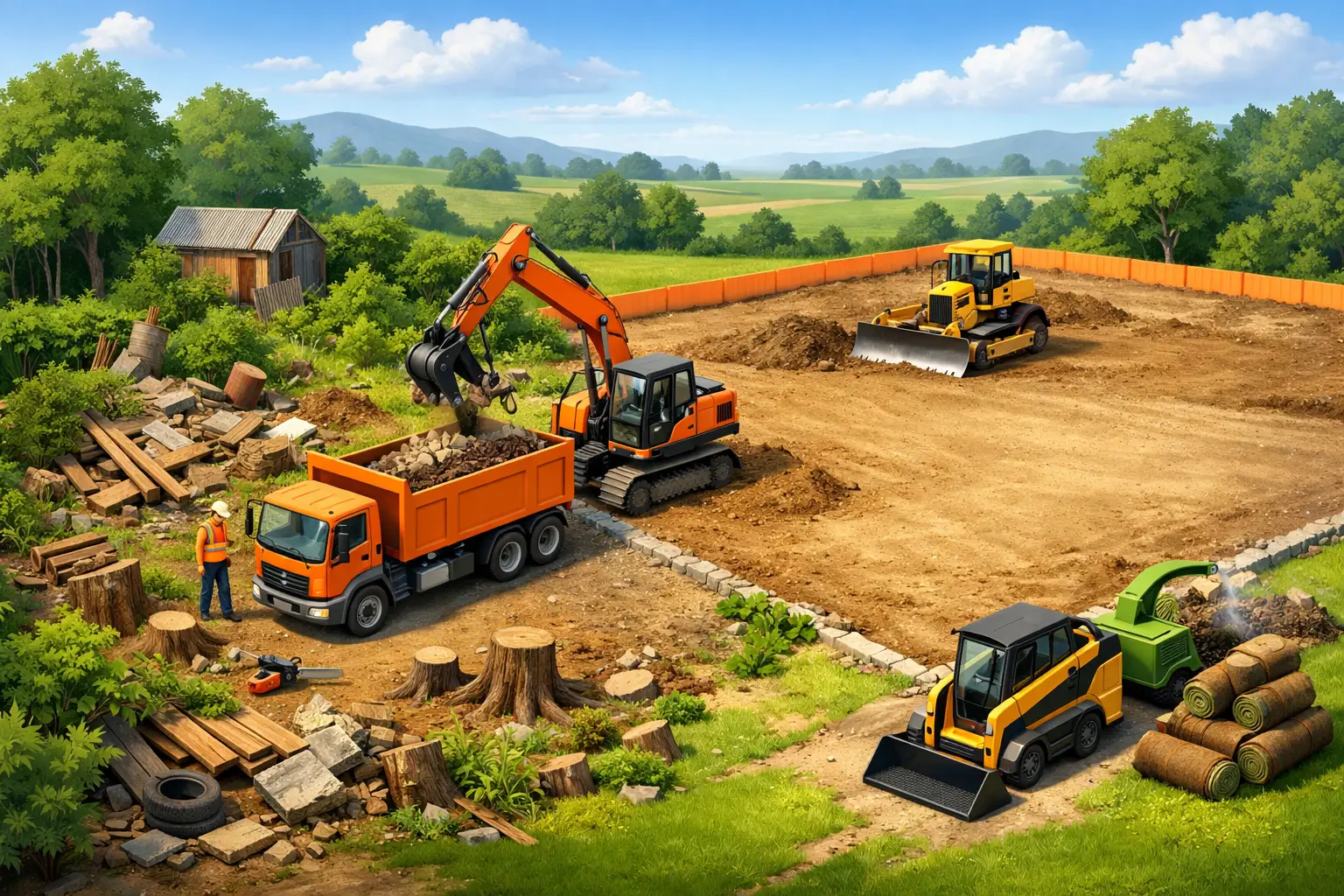
Restricted access changes everything on a larger garden project. If machines cannot get straight into the work area, the job becomes more labour-intensive and waste handling takes longer. Branches may need to be dragged by hand to a chipper positioned at the front, and timber may need to be cut into manageable lengths before removal.
That does not mean the work cannot be done efficiently. It means the clearance has to be organised properly. On some jobs, specialist access equipment or a cherry picker makes the safest method possible. On others, compact machinery is enough. The right choice depends on ground conditions, working height, nearby structures and how much material is coming out.
Ground protection also matters more than many people realise. If the garden is already soft, waterlogged or uneven, heavy traffic can leave deep ruts and create another repair bill afterwards. In this project, care was taken to control traffic routes and stack arisings in stages so the site stayed workable from start to finish.
Waste removal is a major part of the job
One of the biggest differences between a proper clearance contractor and a cheap quick fix is what the site looks like when the work is done. On a large project, cutting is only half the story. The rest is processing, removing and leaving the area tidy.
In this example, green waste was chipped and taken away, heavier timber was sectioned and removed separately, and the remaining stump line was ground out where needed to allow future fencing work. That last point is often overlooked. If stumps are left in the wrong places, they delay whatever comes next, whether that is replanting, turfing, paving or construction.
Clean-up should be planned into the job from the beginning, not treated as an afterthought. A professional team will think about loading points, waste volumes and final presentation before the first cut is made. That is how you avoid a site that looks “cleared” but still feels unfinished.
What clients usually learn from a large garden clearance project example
Most customers are surprised by two things. The first is how much hidden material comes out of a neglected garden. The second is how quickly a site can improve once the work is tackled in the right order.
They also tend to see that not every part of the garden needs the same treatment. Some areas benefit from hard reduction or complete removal. Others only need selective pruning, lifting or thinning to become manageable again. That balance is important if you want the space to look better, function better and still keep some maturity and privacy.
There is also a cost trade-off to consider. A full strip-out may seem simpler, but it is not always the best value if good trees or established screening can be retained. Equally, trying to save everything can increase labour and leave the garden still too congested to use. The right answer depends on the site and the client’s plans for it.
When to bring in a professional team
If a garden includes mature trees, storm damage, unstable limbs, difficult access or a large volume of overgrowth, this is not a weekend tidy-up. It needs proper assessment, the right equipment and a team that can work safely and leave the site clean. That is especially true if neighbours, outbuildings, roads or public areas are close by.
For homeowners, a professional clearance removes the guesswork and the risk. For estates, landlords and commercial clients, it also means the job is done to a standard that keeps the site moving, whether the next step is sale, maintenance, redevelopment or replanting. A company such as HL Tree Services brings that mix of practical tree work, site clearance knowledge and tidy execution that larger projects demand.
A good clearance should do more than remove a mess. It should give you a site you can actually work with afterwards, and that is the difference between cutting back growth and properly taking control of the space.