A hedge can make the whole garden look sharper or let it down completely. When it is cut well, it frames the space, keeps growth healthy and stays dense from top to bottom. If you are wondering how to trim a hedge properly, the key is not just cutting it back – it is trimming at the right time, in the right shape, with the right approach for the species and condition of the hedge.
A lot of problems start with rushing. People often take too much off in one go, cut at the wrong time of year, or leave the sides straight up and down so the base loses light and thins out. A proper trim is about control. You are guiding healthy growth, not simply making the hedge smaller.
Why proper hedge trimming matters
A hedge is a living structure, so every cut affects how it fills out next season. A neat finish obviously improves the look of the garden, but appearance is only part of it. Done properly, trimming encourages thicker coverage, helps keep boundaries manageable and reduces the risk of weak, leggy growth.
It also prevents a hedge from becoming a bigger job later. Light, regular maintenance is usually far easier than dealing with several years of unchecked growth. Once a hedge gets too tall, too wide or too woody, bringing it back into shape can take more than a routine cut and, in some cases, needs professional equipment and a more careful staged reduction.
There is also a safety side to consider. Tall hedges, uneven ground, roadside boundaries and hidden obstacles such as wire, old fencing and stems under tension can all make hedge work more awkward than it first appears.
When to trim a hedge properly
Timing depends on the type of hedge and what you want from it. Formal hedges such as privet, yew and box usually benefit from regular trimming during the growing season to keep a crisp outline. Faster-growing species may need attention more than once between late spring and early autumn, while slower-growing hedges can often be maintained with less frequent cuts.
If the hedge flowers, timing matters more. Trim too early or too late and you may remove the next display of blooms. Wildlife matters too. In the UK, nesting birds are an important consideration during spring and summer, so always inspect the hedge carefully before starting work. If there is active nesting, the work should wait.
Weather plays a part as well. Very hot, dry spells can stress freshly cut hedges, while wet and windy conditions make trimming harder to control and less safe. A dry, mild day with good visibility is usually best.
The tools that make the job easier
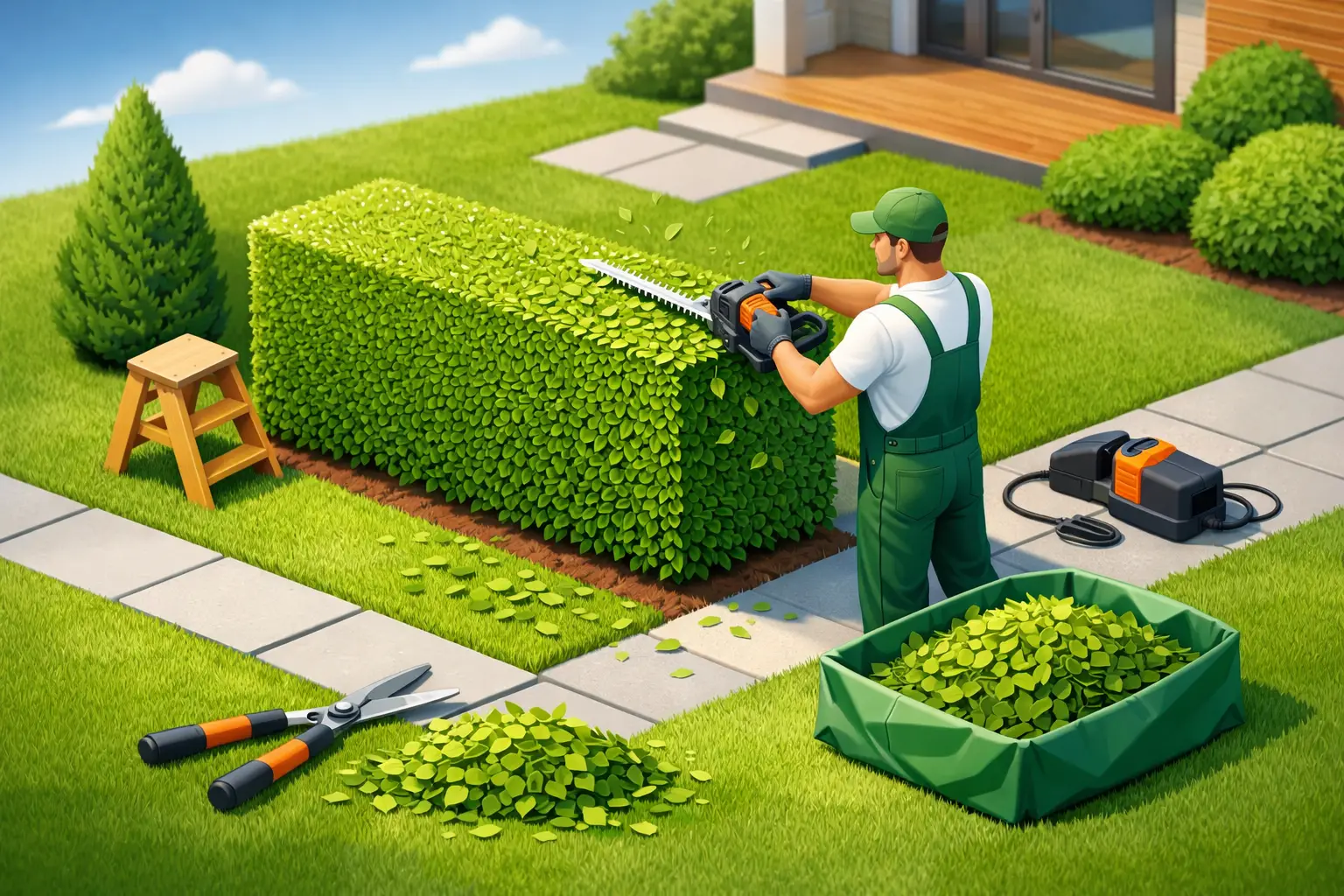
You do not need a huge kit, but the right tools make a visible difference. Sharp hand shears are useful for detail work and smaller formal hedges. Powered hedge trimmers save time on longer runs, but they still need a steady hand. For thicker stems, secateurs or loppers are often needed first.
Before you start, check that blades are clean and sharp. Blunt tools tear growth rather than cutting it cleanly, which leaves a rougher finish and can put more stress on the plant. It is also worth using a rake or sheet to gather clippings as you go, especially if you want to keep the area tidy and avoid mulch building up around the base where it should not.
For taller hedges, be realistic. Ladders and hedge trimmers are a poor combination if the footing is uneven or you are stretching to reach the top. That is often the point where a professional contractor is the safer option.
How to trim a hedge properly without scalping it
The best way to approach most hedges is gradually. Start by standing back and checking the line. If the hedge has drifted out of shape, decide where the finished height and width should be before making the first cut. It is much easier to take a little more off than to put it back.
Trim the sides first, using smooth, controlled passes. Avoid hacking in and out. The aim is an even plane rather than a series of dips and bumps. Once both sides are in, move on to the top. Keeping the top level can be harder than it sounds, so for long formal hedges it often helps to use a guide line.
One of the most important points is shape. A hedge should usually be slightly narrower at the top than at the base. That slight taper allows light to reach the lower growth, which helps keep the hedge full all the way down. If the sides are cut dead vertical or wider at the top, the bottom can become bare over time.
Do not cut back too harshly unless you know the species will tolerate it. Some hedges recover well from harder renovation, while others respond badly to being cut into old wood. If the hedge is badly overgrown, it may need staged work over more than one season.
Getting a straight, even finish
A tidy hedge is mostly about consistency. Keep your eye on the overall line rather than focusing only on the blades. Step back every few minutes and check the shape from different angles. What looks even close up can appear wavy from a distance.
It helps to work methodically from one end to the other. If you jump around, you are more likely to miss sections or create uneven depth. On formal hedges, a string line can help with the top and face. On informal hedges, a softer outline may be more suitable, but it still needs balance.
Different hedges need different treatment
This is where a lot of general advice falls short. There is no single method that suits every hedge.
Conifer hedges need particular care. Many do not regenerate well from old brown wood, so if you cut beyond the green growth, the bare patches may not fill back in. That is why regular maintenance is far better than letting them get out of hand.
Deciduous hedges are often more forgiving, especially species used for boundary screening and shelter. Even so, hard reduction should still be judged carefully. Younger hedges need formative trimming to encourage dense branching, while mature hedges often need maintenance that preserves shape without removing too much live growth.
Flowering hedges sit somewhere else again. If blossom is part of the reason you keep the hedge, the pruning schedule should suit the flowering cycle, not just the calendar.
Young hedges versus established hedges
A young hedge should not just be left to race upwards. Early trimming helps it thicken and form a proper structure. That can feel counterintuitive, but light formative cuts now usually produce a much better hedge later.
An established hedge is more about control and consistency. If it has been maintained well, it should only need selective trimming to hold its shape. If it has been neglected, the right solution depends on species, access, height and how much change the hedge can tolerate in one go.
Safety, access and knowing when to call in a professional
Small hedges at ground level are one thing. A tall boundary hedge next to a road, driveway, public footpath or sloping bank is something else entirely. The risk goes up quickly when height, traffic, power tools and awkward access are involved.
There is also the issue of waste. Hedge cuttings can be bulky, messy and time-consuming to clear properly. A professional team will usually not only carry out the cut safely, but also remove the arisings and leave the site tidy.
For many homeowners and property managers, the deciding factor is not whether they could trim the hedge themselves, but whether they can do it safely and to a good standard. If the hedge is very tall, badly overgrown or needs reshaping rather than a light trim, getting expert help often saves time, reduces risk and gives a cleaner result. That is especially true for larger properties and commercial sites where appearance, access and public safety all matter.
Aftercare makes a difference
Once the hedge is trimmed, clear the cuttings properly and check the finished shape again. If conditions are very dry, the hedge may benefit from watering, especially if it is young or recently planted. Healthy roots recover from trimming better than stressed ones.
It is also worth keeping an eye on the hedge over the following weeks. Uneven regrowth, thin spots or dead sections can point to a deeper issue such as poor light, water stress, disease or previous overcutting. The trim itself may not be the full problem.
A well-kept hedge rarely happens by accident. It comes from regular attention, sensible timing and understanding what the plant can cope with. If you keep those basics in mind, you will get a hedge that looks better, stays healthier and remains easier to manage year after year. And if the job is beyond a safe DIY trim, it is always better to bring in a skilled team than turn a routine cut into a bigger problem.