A fallen limb over a staff car park, overgrown trees blocking site lighting, or a development plot that needs clearing before work can start – commercial tree work rarely arrives at a convenient moment. That is why commercial tree services Scotland businesses rely on need to be practical, safe and properly planned from the start.
For commercial sites, tree work is not just about appearance. It affects public safety, access, liability, schedules and the day-to-day running of a property. Whether you manage an industrial unit, retail site, housing development, estate, school grounds or commercial land, the right arboricultural contractor helps you deal with the immediate issue while protecting the wider site.
What commercial tree services in Scotland usually involve
Commercial tree work tends to be broader than domestic jobs. On one site, it might mean routine pruning to keep roads, paths and buildings clear. On another, it could involve large-scale site clearance, tree surveys, emergency storm response or removing awkward trees in tight spaces near structures, vehicles or public areas.
The key difference is that commercial work often carries more risk and more moving parts. You may need traffic and pedestrian management, careful scheduling around staff or residents, specialist access equipment, and a clear method for leaving the site clean and usable afterwards. A contractor needs to be comfortable dealing with mature trees, restricted access, high-risk dismantling and the practical demands of a working site.
That is where experience matters. A tidy finish, sensible planning and the right equipment can make the difference between a smooth operation and unnecessary disruption.
Why commercial tree services Scotland clients need are different
A homeowner might want more light in the garden or a hedge reduced before summer. Commercial clients are usually balancing safety, compliance, budgets and deadlines. The question is often not simply, “Can this tree be cut back?” but “What is the safest, most cost-effective option for the site?”
Sometimes pruning is enough to reduce risk and maintain clearance from buildings, signs or access routes. Sometimes a tree has declined to the point where removal is the responsible option. In other cases, especially on development land or managed estates, surveys and forward planning are just as important as the physical work.
It also depends on the type of site. A facilities manager for a business park will have different priorities from a landowner managing boundaries and access tracks. A housing factor may need minimal disruption to residents, while a commercial developer may need a quick, coordinated clearance programme to keep a project moving.
Safety is not a sales line – it is the job
Tree work becomes commercial-grade the moment people, property and operations are at risk. Deadwood above a public footpath, unstable trees after high winds, branches fouling roofs or service routes – these are not jobs for guesswork.
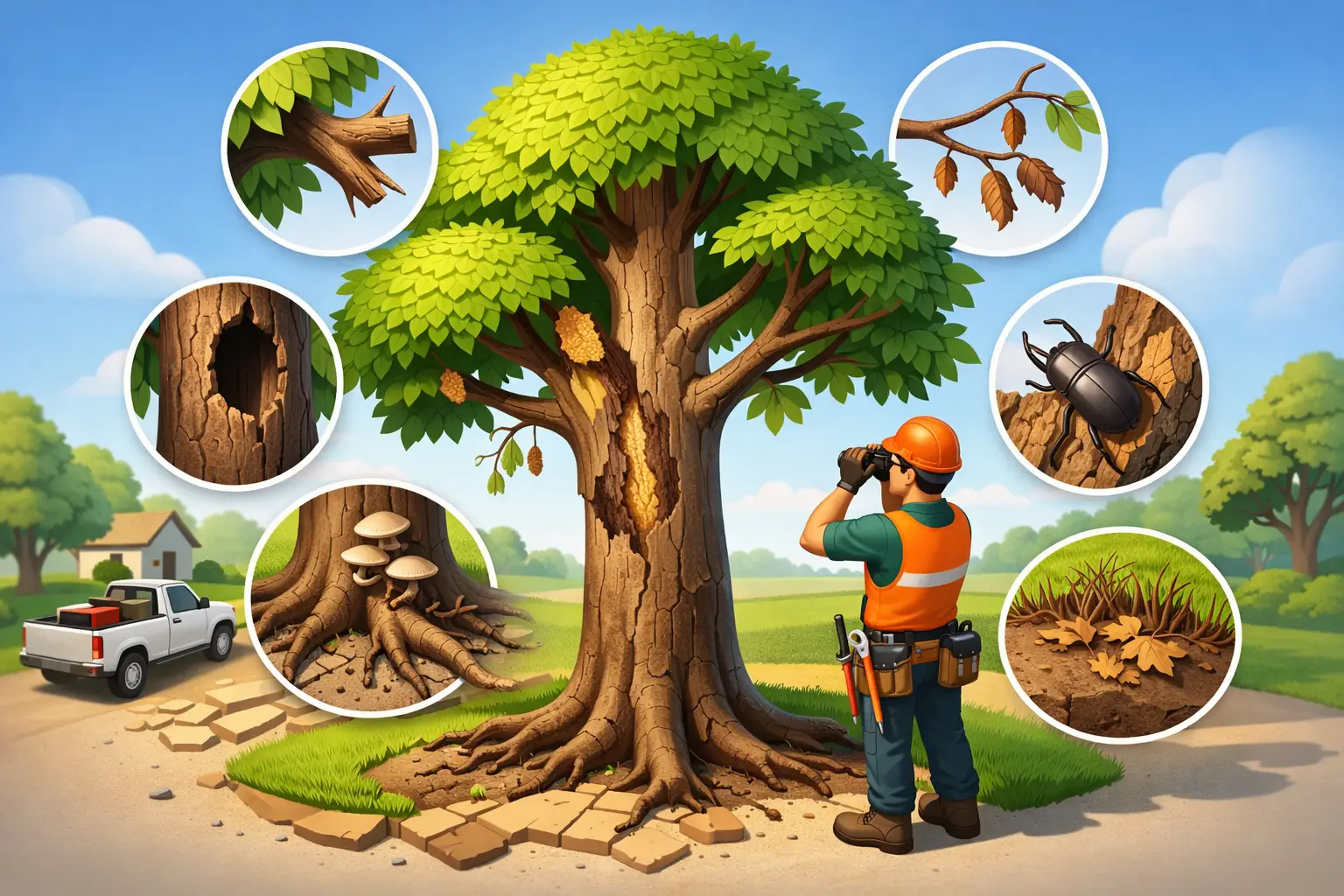
A professional team should assess the site properly before a saw is started. That includes the condition of the tree, its spread, nearby structures, access limitations and how to carry out the work without creating new hazards. On many jobs, the safest method is not the fastest-looking one. Careful sectional dismantling may take longer than straightforward felling, but when a tree sits over fencing, parked cars, buildings or utility areas, control matters more than speed.
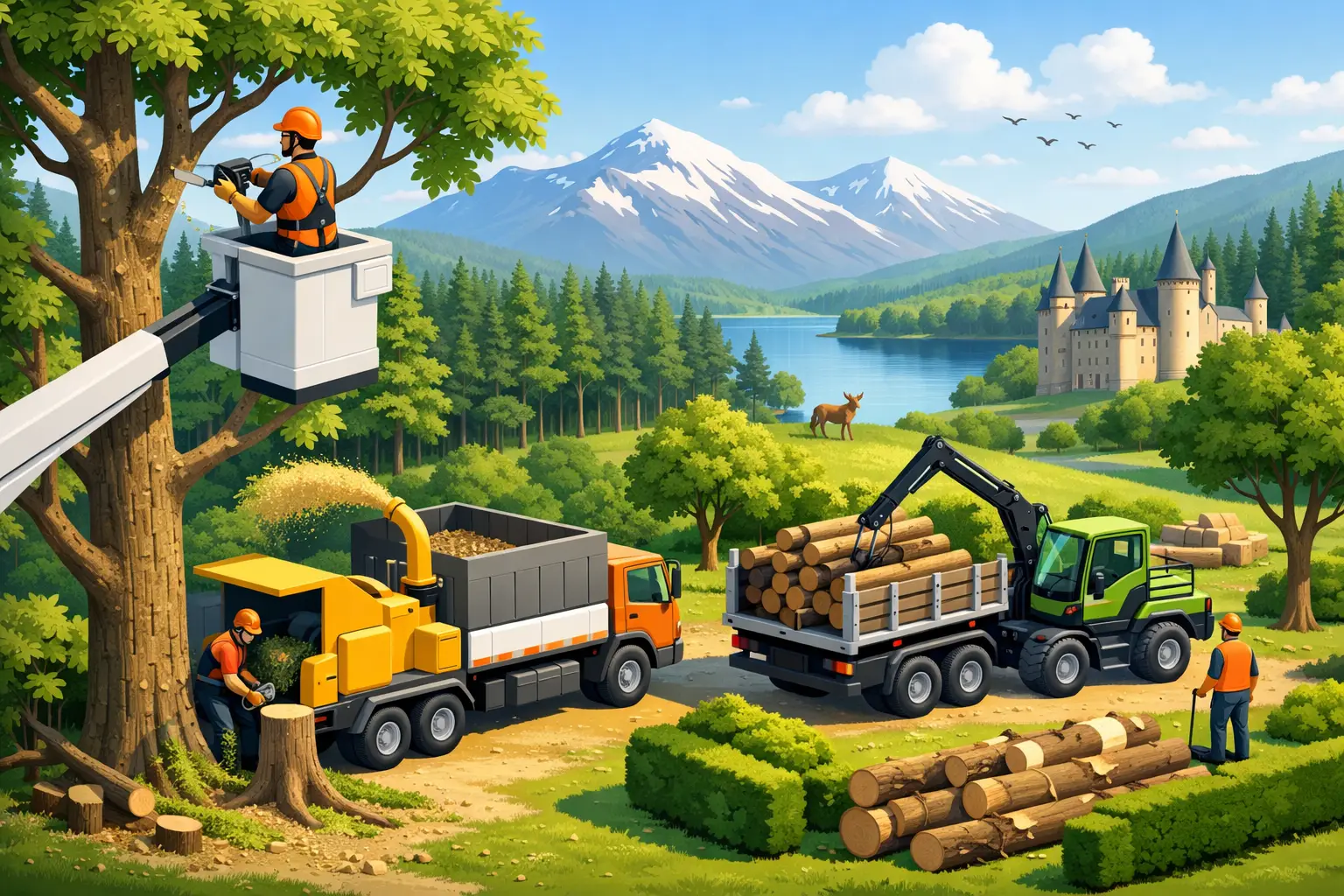
Specialist equipment can also be crucial. On larger or more awkward commercial jobs, access tools such as a cherry picker can improve both safety and efficiency. Not every tree can or should be climbed in the same way, and not every site gives enough room for simple removal methods. The right equipment allows work to be carried out with better control, particularly where height, spread or difficult positioning are involved.
Common services for commercial sites
Most commercial clients need a mix of reactive and planned work. Routine pruning and crown management help maintain clearance from roads, lighting columns, signage and buildings. Tree felling is often required where trees are dead, diseased, structurally unsound or unsuitable for the site. Stump grinding may be needed where replanting, resurfacing or redevelopment is planned.
Site clearance is another major part of commercial arboriculture. This can range from clearing self-seeded growth and scrub on neglected land to removing substantial tree cover as part of a wider site preparation programme. The right approach depends on the scale of the site, access conditions, environmental considerations and the programme of works.
Tree surveys are equally valuable, particularly for developments, estates and managed grounds. A survey provides a clearer picture of what is on site, what condition those trees are in, and what should happen next. That can save time and cost later, especially where planning, retention or safety management is involved.
Emergency call-outs matter too. Scotland’s weather can change quickly, and storm damage does not wait for business hours. A cracked stem, hanging limb or uprooted tree can shut down access and create immediate risk. Fast attendance and a calm, methodical response are what commercial clients need in those situations.
Planning work around a live site
One of the biggest challenges in commercial tree work is carrying out the job without bringing the whole site to a standstill. A good contractor will think beyond the tree itself. When are people arriving and leaving? Which access points must stay open? Are there deliveries, residents, customers or staff to consider? Can the work be phased to reduce disruption?
This is where local knowledge and hands-on experience help. Teams used to working across places such as Fife, Dundee and Perth understand the variety of sites in the area, from tight urban spaces to rural estates and roadside locations. They are also used to the practical realities of working in busy, lived-in environments where safety barriers, communication and clean-up all matter.
Cleanliness should not be treated as an extra. On commercial work, leaving timber, brash or sawdust scattered across a site is not just untidy – it can create hazards and complaints. Professional tree work includes proper disposal, a disciplined site set-up and a finish that reflects well on the property manager or owner.
Choosing the right contractor
Price always matters, but on commercial tree work it should not be the only filter. Cheap work can become expensive very quickly if it causes damage, delays or repeat visits. What matters more is whether the contractor understands risk, turns up when agreed, communicates clearly and carries out the work to a high standard.
Look for a team that can handle both routine maintenance and more demanding jobs. Commercial clients often need continuity. If the same contractor can manage pruning, dismantling, clearance, surveys and emergency response, that makes life easier and usually leads to better long-term site management.
It is also worth choosing a company that gives straightforward advice. Not every tree needs removed, and not every overgrown area needs a full clearance. Honest recommendations build trust and usually lead to better outcomes for the site and the budget.
When to act sooner rather than later
Many commercial tree problems start small. A branch begins to overhang a roofline. A line of trees gradually cuts out lighting and visibility. A neglected boundary becomes dense and difficult to inspect. Left alone, these issues usually become more expensive, not less.
Early intervention gives you more options. Light pruning is often simpler and cheaper than major reduction after years of growth. Removing one compromised tree can prevent wider disruption after the next storm. Clearing a site in a planned way is usually easier than dealing with unmanaged vegetation once a project is already under pressure.
For property managers and landowners, the real value of professional tree work is control. You know the condition of the site, you reduce avoidable risk, and you avoid the scramble that comes with emergency-only maintenance.
HL Tree Services works with commercial clients who need exactly that – safe, reliable tree work carried out properly, with specialist equipment where required and a clear focus on standards from start to finish.
If you are responsible for a commercial site, the best time to look at tree work is usually before it becomes urgent. A clear assessment, the right plan and a dependable team can keep your site safer, tidier and easier to manage all year round.