A row of conifers can go from useful screening to a serious garden problem sooner than expected. If they are blocking light, pressing against a fence, shading a driveway or growing close to cables, knowing how to manage overgrown conifers protects both your property and the trees themselves. The right approach depends on the species, its condition, the available space and, crucially, whether it can tolerate the type of pruning you have in mind.
Conifers are not all managed in the same way. A light annual trim can keep a hedge dense and smart, while a drastic cut into old brown growth can leave permanent bare patches. Before reaching for a hedge trimmer or arranging removal, it pays to understand what can be reduced safely and what needs professional assessment.
Start by deciding what the conifers need to do
The first question is not simply how much height to remove. Consider the job the trees are meant to perform. Are they a boundary hedge providing privacy, a windbreak for an exposed garden, or individual specimen trees that have outgrown their position? Your answer shapes the sensible level of work.
For a hedge, the aim is usually to restore a manageable height and width while retaining a green, even face. For individual trees, selective pruning may be enough to improve clearance from a building, path or neighbouring property. Where trees have become too tall for their setting, are leaning, heavily shaded on one side or have recurring storm damage, phased removal and replacement may be the better long-term choice.
It is worth being realistic about the result. Cutting a 6-metre conifer hedge down to 2 metres in one visit may look appealing on paper, but it is not always possible without leaving a thin or brown finish. A professional tree surgeon will explain the likely outcome before work begins, rather than promising a result the trees cannot deliver.
Know your conifer before you cut
Many fast-growing boundary hedges in Scotland are Leylandii or Lawson cypress. These are popular because they establish quickly and create dense screening, but they need regular maintenance from an early stage. Yew behaves differently: it is generally far more tolerant of hard pruning and can often regenerate from older wood. Thuja and other cypresses can be less forgiving.
The key rule for most conifer hedges is simple: keep cuts within green, leafy growth wherever possible. The brown interior growth on an overgrown conifer often has few or no live buds. Once exposed, it may not green up again. This is why an old hedge that has been allowed to widen for years can be difficult to bring back to a narrow shape.
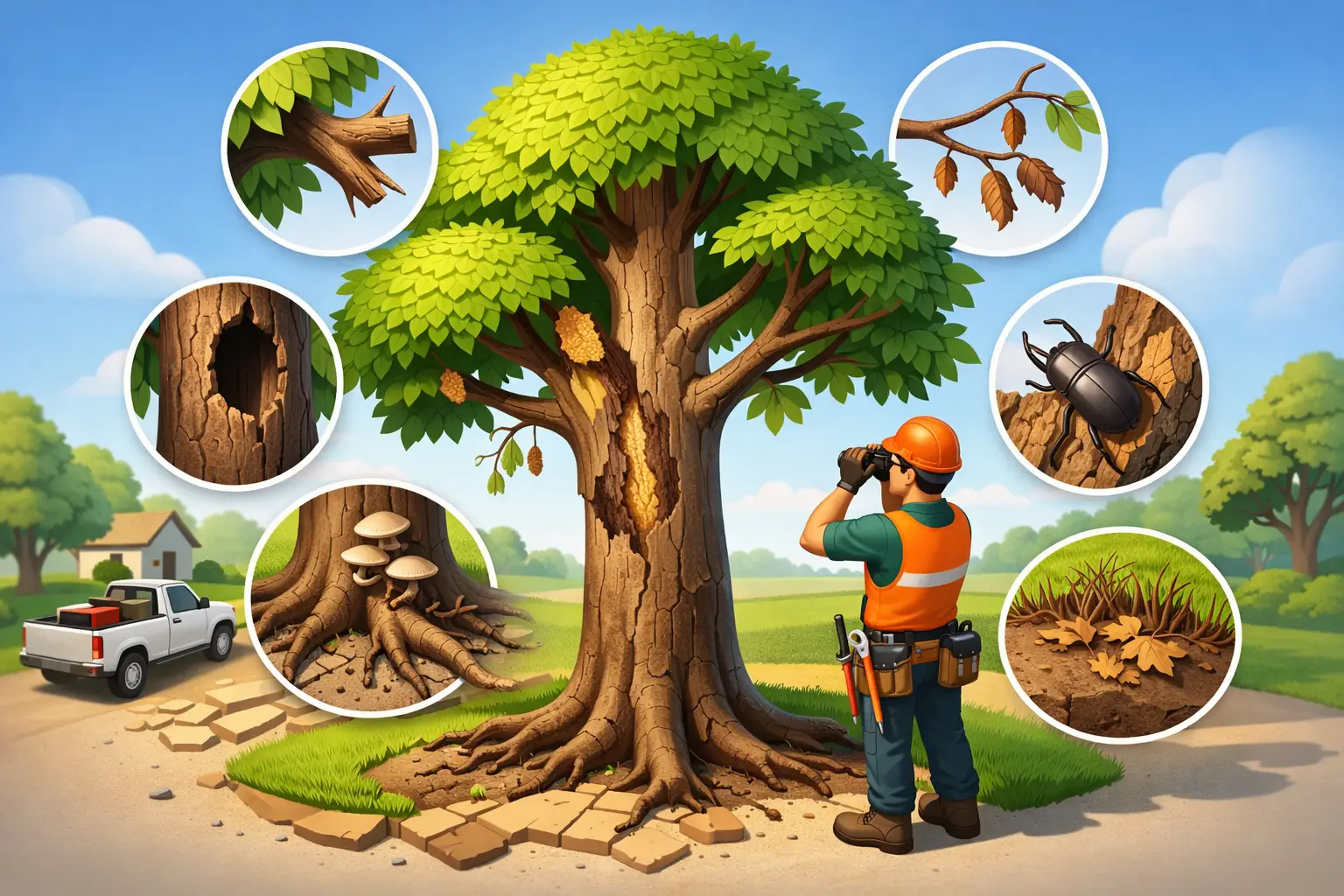
Look for dead branches, discoloured foliage, fungal growth at the base, split stems or areas that have turned brown beyond the usual seasonal shedding. These can point to disease, drought stress, root damage or structural weakness. Pruning a compromised tree without identifying the cause can make matters worse.
Check for space, services and access
Before any work is planned, assess what sits beneath and around the trees. Conservatories, sheds, greenhouses, fences, parked vehicles and overhead lines change the method required. So does restricted side access. A tall hedge overhanging a neighbouring garden cannot safely be tackled by leaning a ladder across a fence.
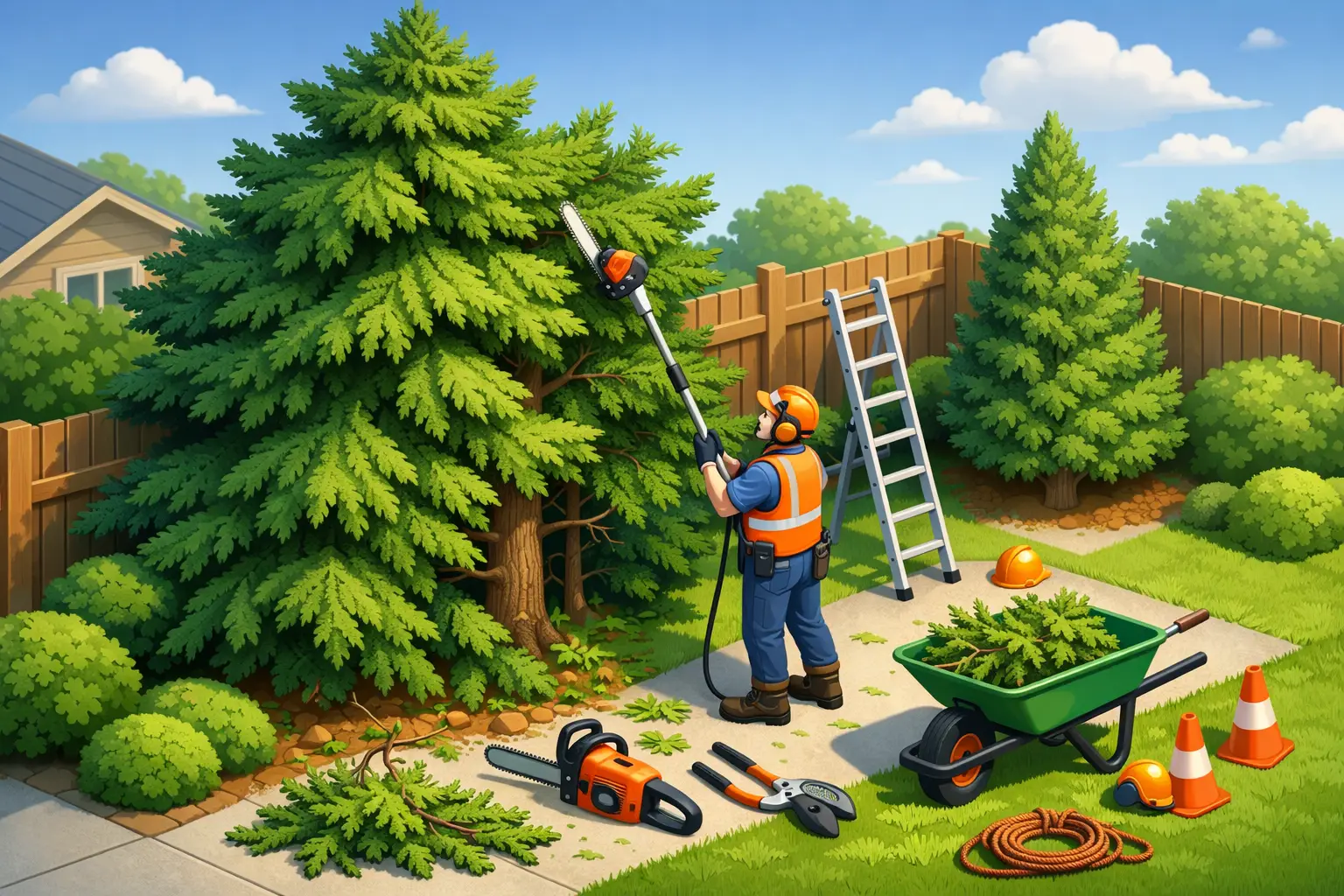
Access is often the deciding factor on larger jobs. Specialist equipment, including a cherry picker where suitable, can allow controlled work at height without risking people, buildings or the remaining hedge. It also helps ensure all arisings can be removed cleanly rather than left piled in the garden.
How to manage overgrown conifers with pruning
For healthy, established hedges, steady correction is normally safer than a dramatic one-off reduction. Start by reducing the sides modestly, keeping the base slightly wider than the top. This tapered profile allows light to reach lower growth and reduces the risk of the hedge becoming sparse at ground level.
Height reduction should be considered carefully. If the top is still green and there is enough foliage below the proposed cut line, it may be possible to reduce it and reshape the new top. If reducing the height would expose large areas of bare wood, a smaller reduction repeated over several seasons is usually the better option.
The best timing depends on the species and the scale of work. Light hedge trimming is commonly carried out during the growing season, avoiding very hot, dry conditions. Major work is often easier to assess outside the main growing period, but nesting birds must always be considered. Active nests are legally protected, and work must be postponed if birds are nesting in the hedge.
After pruning, keep the trees watered in dry spells, particularly if they have had a substantial reduction. Avoid piling grass cuttings, soil or heavy mulch against trunks, as this can trap moisture around the base. A gradual maintenance schedule is far easier and less costly than allowing a hedge to become unmanageable again.
When reducing is not the right answer
Some conifers have simply reached the end of their useful life in a particular location. If stems are pushing hard against a wall, roots are affecting paving, the hedge has become permanently bare at the bottom, or it requires repeated heavy cutting just to keep it within bounds, removal may be the practical solution.
Removal does not have to mean losing privacy. New planting can be planned with the mature size in mind, using a species that suits the available depth and the level of ongoing maintenance you can commit to. Mixed native hedging, yew and slower-growing evergreen options can all be considered depending on the site.
Stump grinding is often worthwhile where a replacement hedge, lawn or planting area is planned. In other places, a stump can be retained safely as a low feature, provided it is not creating a trip hazard or preventing the next stage of landscaping. The right choice depends on access, future use of the area and the root spread.
Do not overlook legal and neighbour considerations
A tree may be protected by a Tree Preservation Order, or stand within a conservation area. In those cases, permission or formal notice may be needed before significant work begins. Conservation area work generally requires six weeks’ notice to the local planning authority. Protection can apply even when a tree sits in a domestic garden, so it should always be checked first.
Boundary hedges also need a calm, practical conversation with neighbours. You can normally cut back growth that crosses into your property, but you must not damage the tree or trespass to carry out the work. Returning cut material is not always helpful, but it remains the neighbour’s property unless they agree otherwise. Where a hedge is shared, agreeing the height, timing and access arrangements upfront avoids unnecessary disputes.
If a tall evergreen hedge is affecting a neighbour’s reasonable enjoyment of their home, high hedge legislation may also become relevant. Early, sensible management is nearly always preferable to a formal complaint.
When to call a professional tree surgeon
DIY trimming may be suitable for a low, accessible hedge with a small amount of fresh growth to remove. It stops being a sensible home project when ladders, power tools, roads, overhead services, unstable ground or large sections of timber are involved. Working at height with a hedge trimmer is one of the most common ways garden jobs turn into serious accidents.
Professional help is particularly valuable where conifers are tall, close to buildings, affected by decay, overhanging a public area or need to be dismantled in sections. A trained team can assess the tree, choose the safest method, manage traffic or pedestrian risk where required, and remove the waste properly. A tidy finish matters too: conifer arisings are bulky, prickly and can quickly overwhelm a domestic garden.
For homeowners and property managers across Fife, Dundee and nearby areas, HL Tree Services can advise whether a conifer hedge needs careful reduction, regular cutting, removal or replacement planting. An on-site assessment gives a clearer answer than a guess from ground level, especially where height, access or tree condition is a concern.
Well-managed conifers should provide privacy and structure without taking over the garden. Acting while there is still healthy green growth to work with gives you more options, a better finish and a much easier maintenance routine for the years ahead.