A garden wall that begins to lean, crack or lift at one end can be worrying, particularly when a mature tree is growing nearby. Tree roots affecting garden walls are often blamed straight away, but the real cause is not always as simple as a root pushing through brickwork. The wall’s age, foundations, drainage, soil type and the condition of the mortar all matter. A careful assessment helps protect both your property and a tree that may still be healthy and worth retaining.
How tree roots affect garden walls
Tree roots do not usually smash through sound masonry in the way many people imagine. Roots naturally follow the easiest route through the soil, seeking moisture, oxygen and space. If a wall has shallow foundations, weakened mortar, existing cracks or poor drainage, roots can exploit those weaknesses and make movement more noticeable.
Older boundary walls are especially vulnerable. Many were built with minimal footings compared with modern standards, while changes in ground level, repeated frost, surface water and years of minor movement can leave them less stable. A nearby root may be part of the picture without being the only reason the wall is failing.
Clay soils deserve particular attention. Large trees can draw substantial moisture from clay during dry periods, causing the ground to shrink. When wetter weather returns, the clay expands again. This cycle can lead to ground movement beneath a wall, even where roots have not made direct contact with the foundations. In parts of Fife, this needs to be considered alongside the local ground conditions rather than assuming every crack is root damage.
Signs that need a closer look
A small hairline crack in old mortar is not automatically an emergency. However, changes that are getting worse, or signs that a wall is no longer stable, should not be ignored. Look for fresh diagonal cracking, loose or displaced bricks, a bulge in the wall face, sections leaning towards a path or neighbouring garden, and raised paving close to the base.
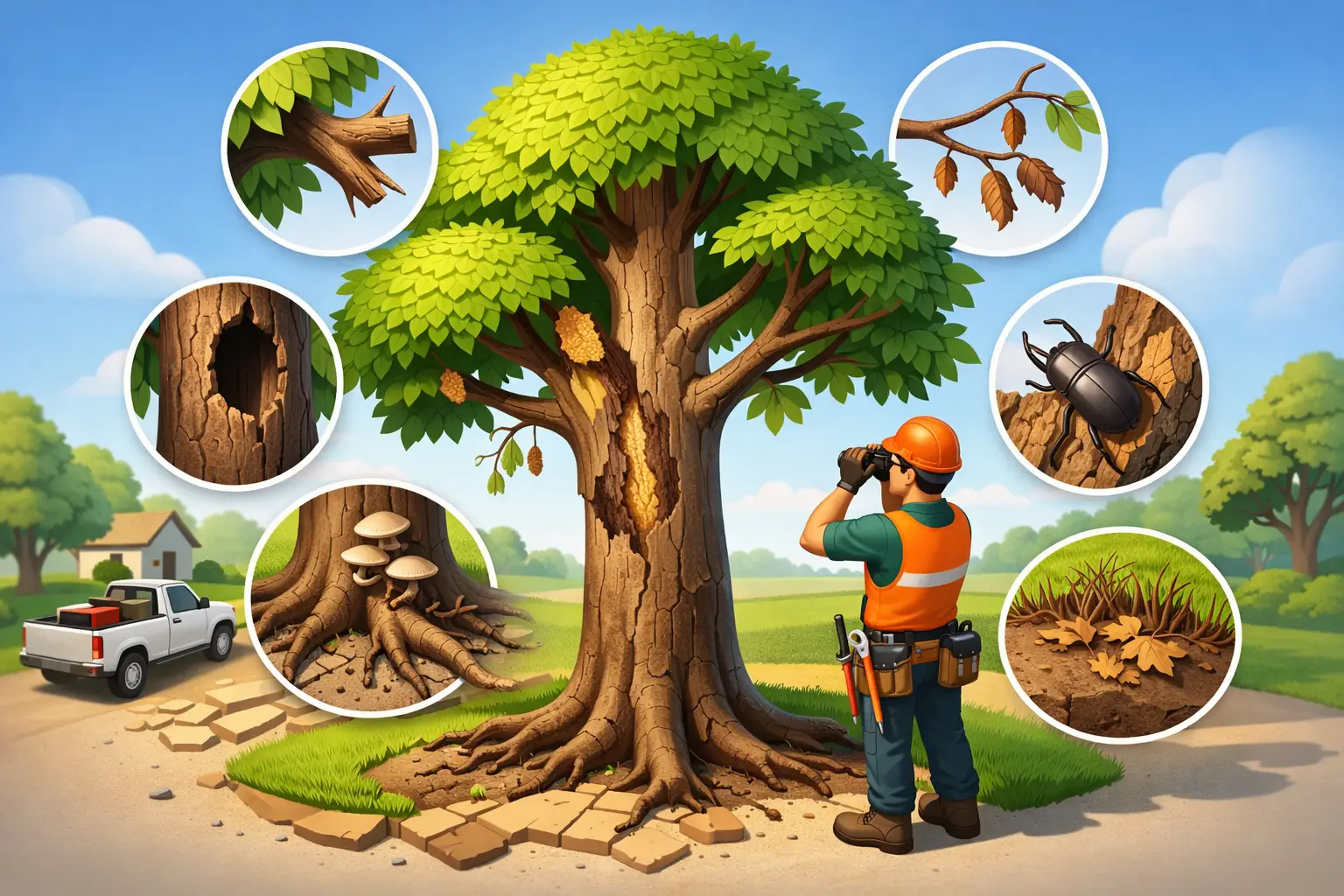
It is also worth looking at the tree itself. Surface roots spreading towards the wall, a large mature canopy, or a trunk positioned very close to the boundary may indicate an increased chance of interaction. That said, roots can extend well beyond the canopy, while a visible root does not prove it is responsible for structural movement.
If bricks are loose, a wall is leaning, or there is a risk of it falling onto a pavement, driveway or neighbouring land, keep people away from the area. A compromised wall can become dangerous quickly, particularly after heavy rain, strong winds or frost.
Trees most likely to create pressure or movement
Any established tree can have an extensive root system, but size, age, species and growing conditions make a difference. Fast-growing, moisture-hungry trees such as willow, poplar and some conifers can create challenges where they are close to lightweight structures or shallow foundations. Large broadleaf trees, including mature sycamore, ash and beech, can also have substantial root spreads.
There is no fixed distance that makes every tree safe or every wall at risk. A young tree planted a few metres away may be straightforward to manage, while an older specimen at the same distance may require a more considered approach. The condition and construction of the wall are just as relevant as the species of tree.
Why cutting roots is rarely the right first move
It can be tempting to expose and cut the roots nearest the wall. This is often the quickest way to create a larger problem. Major roots support the tree, transport water and nutrients, and help it withstand high winds. Removing them can destabilise the tree, reduce its health or leave it vulnerable to disease.
There is also a practical issue: cutting roots does not guarantee that the wall will stop moving. If the underlying issue is poor foundations, drainage or ground shrinkage, the damage may continue. In some cases, root pruning can result in a tree becoming unsafe while the original masonry problem remains unresolved.
Root work should only be considered after professional assessment. The location, diameter and function of roots, the tree’s condition, the wall’s stability and the likely effect on the surrounding ground all need to be weighed up. Excavation close to roots should be carried out carefully, not with a mini digger or spade used blindly beside a mature tree.
The right way to assess a wall and nearby tree
Start by recording what you can see. Take dated photographs of cracks, leaning sections and raised ground, then compare them over time. Check whether the cracks are new, whether they widen after prolonged dry weather, and whether water is collecting at the wall base. This gives useful context if an arborist, builder or structural professional needs to inspect the site.
A professional tree assessment can establish the species, health, size and likely rooting area of the tree. It can also identify defects such as decay, poor structure or root disturbance that may make the tree a separate safety concern. For a seriously cracked or leaning wall, a competent builder or structural engineer may be needed to determine whether repair, rebuilding or additional support is required.
The best outcome often comes from looking at the tree and wall together rather than treating them as separate problems. An arborist can advise on the impact of pruning or removal, while the person repairing the wall can confirm what foundation and drainage work will be needed. This avoids spending money on unnecessary tree work that does not solve the masonry issue.
Options when tree roots are affecting garden walls
The appropriate solution depends on the findings. If the wall is sound but roots are lifting a small section of paving beside it, localised paving repair and a carefully designed root barrier may be possible. Barriers are not suitable for every situation, particularly where installation would mean severing important roots or trapping water around the tree.
Where branches are adding excessive sail area to a tree near a weakened boundary, sympathetic crown reduction may reduce wind loading. This is not a cure for root-related movement, and it should never be treated as one, but it can form part of a wider risk-management plan. The work must retain a balanced, healthy canopy rather than leaving the tree over-pruned.
If a wall has failed because of shallow or deteriorated footings, rebuilding it with appropriate foundations may be the most durable answer. In some gardens, repositioning a replacement wall slightly further from the tree is more sensible than trying to force the tree and masonry to occupy the same limited space.
Tree removal is sometimes necessary, especially where a tree is structurally unsafe, in very poor health, or where no practical wall solution can be achieved without unacceptable risk. It should be a last-resort decision where the tree has value, as removal can alter drainage and ground moisture conditions. On clay soil, changes following removal can themselves cause movement, so it is not a guaranteed instant fix.
Check permissions before arranging work
Before pruning or felling a tree, check whether it is protected by a Tree Preservation Order or stands within a conservation area. These controls can apply to trees on private land, and permission may be required before work begins. If the wall is shared, speak to the neighbour early as well. Boundary responsibility, access for equipment and the cost of repairs can all become more difficult if they are left until after work has started.
For homeowners, landlords and site managers, clear records are useful. Keep photographs, reports, quotations and any correspondence about permissions or shared boundaries. This is particularly helpful where a wall sits beside public access, commercial premises or adjoining properties.
Protect the wall without harming the tree
Avoid piling soil, gravel or heavy materials against the wall and tree base, as this can change drainage and compact the root zone. Repair leaking gutters and broken drainage promptly, because regular water discharge can weaken foundations and encourage roots into the wettest ground. Do not build raised beds tight against a mature trunk or carry out deep digging in the area between the tree and wall.
Where a wall is showing meaningful movement, early advice is usually less disruptive and less costly than waiting for a collapse. HL Tree Services can assess the tree element of the problem and advise on safe, proportionate options, including careful pruning, root-zone considerations and removal where justified.
A mature tree and a secure garden wall can often coexist. The key is to avoid quick fixes, identify what is truly causing the movement, and choose work that keeps people safe while giving the tree and the property the right level of care.