The morning after a storm can make even a familiar garden look uncertain. A branch that seemed harmless the night before may now be hanging over a drive, tangled in a fence, or resting against a shed under tension. If you are wondering how to clear storm debris safely, the first step is not picking up a saw or dragging branches into a pile. It is slowing down long enough to judge what is stable, what is dangerous, and what should be left alone.
Storm clear-up is one of those jobs that looks straightforward from a distance. A few snapped limbs, some scattered timber, leaves across paths, maybe a tree leaning where it was not leaning before. The problem is that storm damage often hides risk. Timber can be twisted and loaded with pressure. Root plates can shift without fully failing. Power cables may be nearby. Wet ground can make access harder and lifting more awkward. That is why a careful approach matters.
How to clear storm debris safely without making it worse
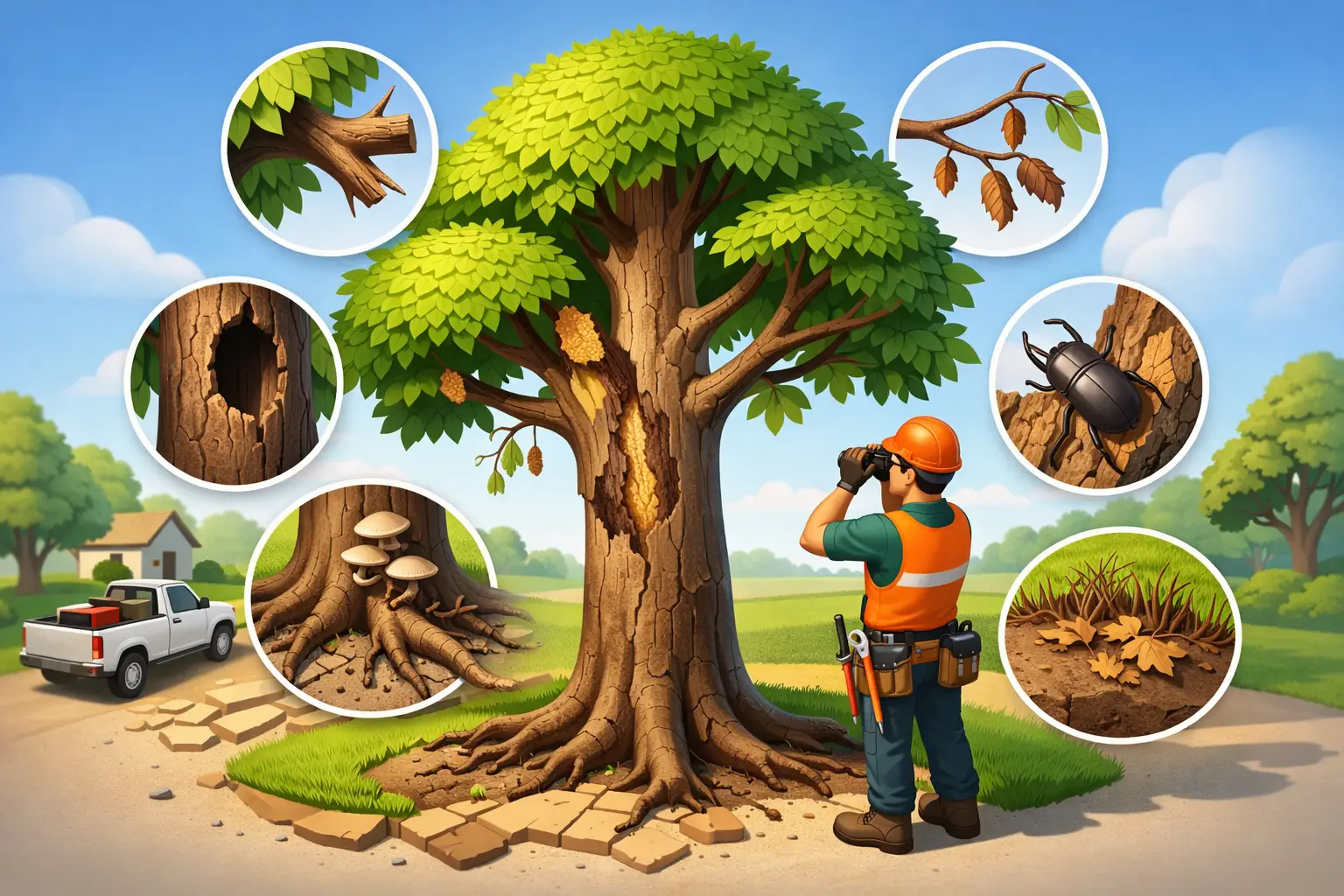
Before touching anything, take a proper walk around the area. Check from a distance first, then move closer only where the ground is stable and the route is clear. Look for suspended branches, cracked trunks, split stems, hung-up limbs in the canopy, and anything resting on garages, fences, vehicles, or outbuildings. If a tree is leaning more than usual, or the soil around the base looks lifted or cracked, treat it as unstable.
This early check helps you separate low-risk tidy-up from higher-risk tree work. Small twigs, leaves, and loose debris on open ground are one thing. Large limbs under tension, partially fallen trees, and broken tops caught in other branches are another. The second category is where people get hurt, usually because they assume the wood will move in a predictable way. It often does not.
If there are overhead lines involved, stop there. Keep everyone away and report it to the relevant utility provider. Do not attempt to move branches touching or even close to cables. Electricity does not need direct contact to create danger in damaged conditions.
Start with the safest parts of the site
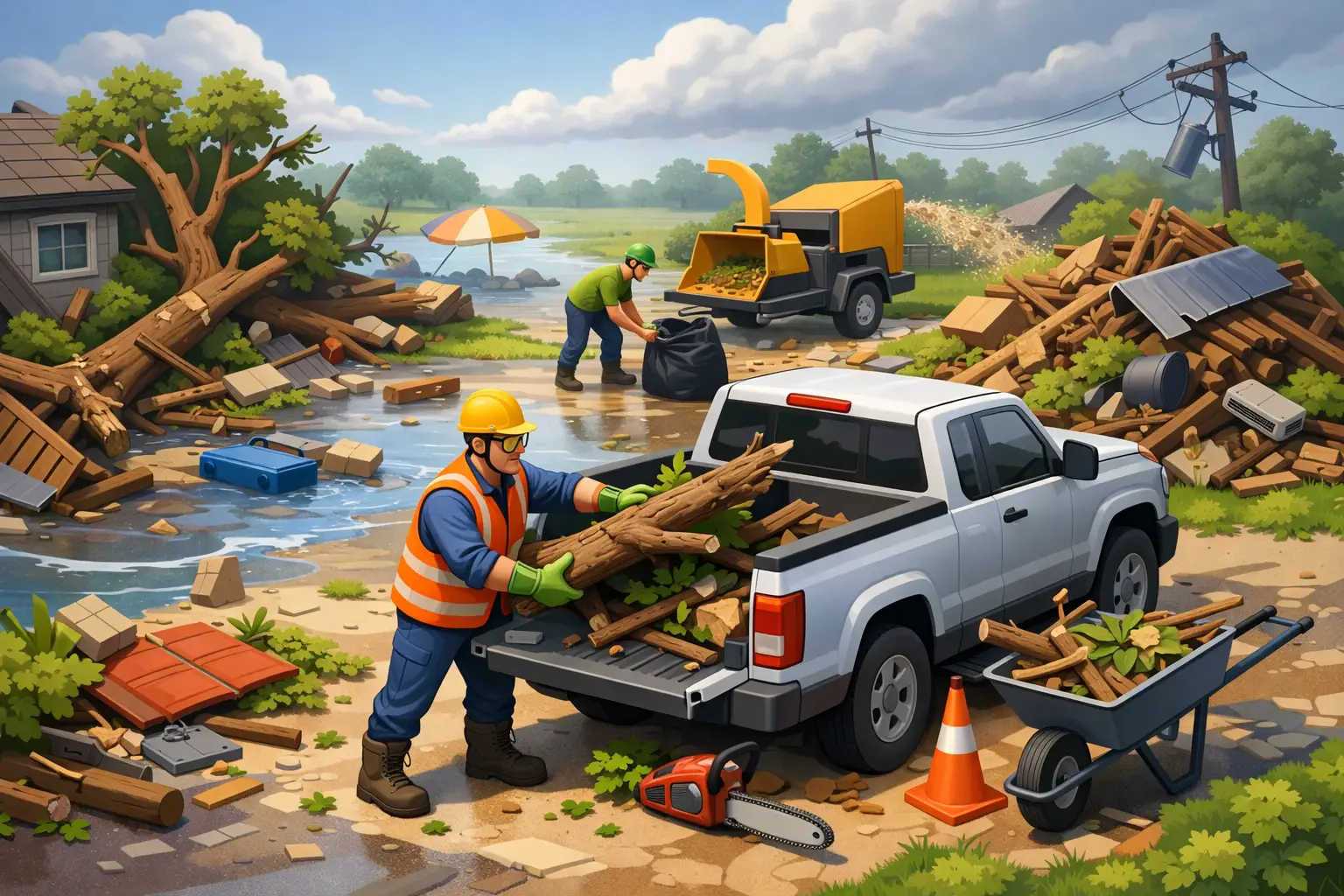
A sensible storm clean-up starts at ground level with the simplest material. Clear paths, entrances, and access routes first so you can move around safely. Remove light, loose debris by hand, wearing sturdy gloves and boots with good grip. If surfaces are slick with leaves, moss, or mud, take your time. Slips and strains are far more common than people think after bad weather.
It also helps to work in sections rather than trying to tackle the whole site at once. Create a clear area, stack manageable material neatly, and keep escape routes open. Dragging everything into one large heap too early can create trip hazards and make it harder to see what still needs attention.
For smaller branches already fully on the ground and not under pressure, hand tools may be enough. A bow saw or pruning saw can be safer and more controlled than reaching straight for powered equipment. If the wood shifts when you touch it, stop and reassess. A branch pinned under another limb may spring free suddenly when cut.
The hazards people miss most often
The biggest risks after a storm are not always the most obvious ones. A branch hanging overhead can be dangerous, but so can a large limb flat on the lawn if it is bent, trapped, or supporting weight from something else. Once a cut is made, pressure can release fast.
Another common issue is assuming a damaged tree is finished moving just because the wind has dropped. In reality, weakened trees may continue to settle for hours or days, particularly if the ground is saturated. A root plate can fail later. A cracked stem can split further. A hung-up branch can come down with very little warning.
There is also the question of equipment. Chainsaws are useful in the right hands, but storm-damaged timber is not beginner material. Awkward angles, unstable footing, compressed fibres, and hidden tension all increase the chance of kickback or trapped bars. For most property owners, if the job requires a chainsaw above ground level, near structures, or on damaged trees, it is already in professional territory.
When fallen branches are still under tension
Tension and compression are what make storm timber unpredictable. One side of a branch may be stretched while the other is compressed. Cut in the wrong place, and the wood can split, whip, roll, or trap the saw. That is why experienced tree teams assess the load path before any cut is made.
If you cannot clearly tell what is holding the timber in place, do not cut it. The same applies if a branch is twisted through another tree, resting on a roof, or wedged in a fork. These are not tidy-up jobs. They are controlled dismantling jobs.
Wet ground changes the job
After prolonged rain and wind, lawns, verges, and garden beds may not support ladders, vehicles, or even confident footing. That matters because unstable ground increases the risk of slips and poor lifting technique, but it can also point to root disturbance. If a tree has moved in soft ground, disturbing the area further may increase the chance of failure.
What you can usually deal with yourself
For many domestic properties, the safe part of the work is the basic clear-up. That generally means gathering leaves, twigs, bark, and small detached branches from open ground. It can also include moving light debris away from drains, paths, and entrances so water can run off properly and access is restored.
You may also be able to cut up smaller pieces of timber that are fully detached, lying flat, and easy to handle, provided you have the right gloves, eye protection, and suitable tools. Keep the work low, steady, and within your comfort level. If you have to brace, climb, stretch, or guess, the job has crossed the line from sensible to risky.
A good rule is this: if the debris is small enough to move easily, fully on the ground, and not connected to a damaged tree or structure, it may be suitable for DIY clearing. If it is heavy, elevated, trapped, leaning, split, or close to property, leave it.
When to call in a professional tree team
Some storm debris is really tree surgery by another name. If a tree has partially failed, if large limbs are still attached, or if the damage is above head height, specialist equipment and trained operators are the safe answer. The same goes for trees over roads, drives, conservatories, garages, greenhouses, and public spaces.
This is where local experience makes a real difference. In areas across Fife and nearby, storms often bring a mix of high wind, waterlogged ground, and mature garden trees in tight spaces. Access can be awkward, and damage is not always visible from one angle. A professional team can assess whether a tree can be made safe with selective removal, whether it needs sectional dismantling, or whether the site needs a more controlled clearance plan.
HL Tree Services handles this kind of work with the right equipment, trained staff, and a focus on leaving sites safe and tidy once the hazard is removed. For homeowners and site managers alike, that matters just as much as getting the timber down.
How to make the site safer while you wait
If professional help is needed, there are still sensible steps you can take. Keep children, pets, and visitors away from the area. Use bins, cones, rope, or garden furniture to mark off access if needed. Do not park beneath damaged trees or hanging limbs. If debris is blocking a driveway or entrance but the obstruction involves heavy timber or attached branches, avoid trying to force a way through.
Photographs can help too, especially for insurance records or when describing the situation to a contractor. Take them from a safe distance and from more than one angle. That gives a clearer picture of the scale and urgency without putting yourself at risk.
After the clear-up, check the trees that are left
Storm damage is not always limited to what has already fallen. Trees that look mostly intact may still have cracked unions, torn bark, broken crowns, or root disturbance. These issues can lead to later failure if they are not spotted early.
A post-storm inspection is worthwhile if you have mature trees, boundary trees, or specimens close to buildings, roads, or parking areas. Sometimes the right next step is pruning out damaged limbs. Sometimes it is bracing, monitoring, or removal. It depends on the species, the extent of damage, the condition before the storm, and the targets nearby.
The aim is not to remove every tree that has lost a branch. Healthy trees can often recover well with the right remedial work. But damaged trees do need honest assessment, especially where public or property safety is involved.
Storm debris can look like a simple clearing job until the wood starts moving, the ground gives way, or a hidden crack becomes obvious too late. The safest approach is a calm one: clear only what is clearly safe, protect the area, and bring in trained help for anything unstable, awkward, or overhead. A tidy site matters, but getting everyone through the clean-up without injury matters more.