A mature ash can look perfectly sound from the pavement while its crown is steadily thinning above a driveway, garden or public footpath. That is why recognising the most common tree diseases affecting trees in Dundee and Fife matters: early action can sometimes preserve a tree, while delayed action can turn a manageable issue into a safety concern.
Our local trees deal with wet ground, exposed coastal winds, compacted urban soils and occasional dry spells. Disease is not always the cause of poor growth, but changes in leaf colour, bark condition or branch health should never be dismissed without a closer look.
The most common tree diseases affecting trees in Dundee and Fife
Ash dieback
Ash dieback is one of the most significant tree health issues across Scotland. Caused by a fungus, it affects common ash trees and can progress at very different speeds depending on the tree’s age, condition and location.
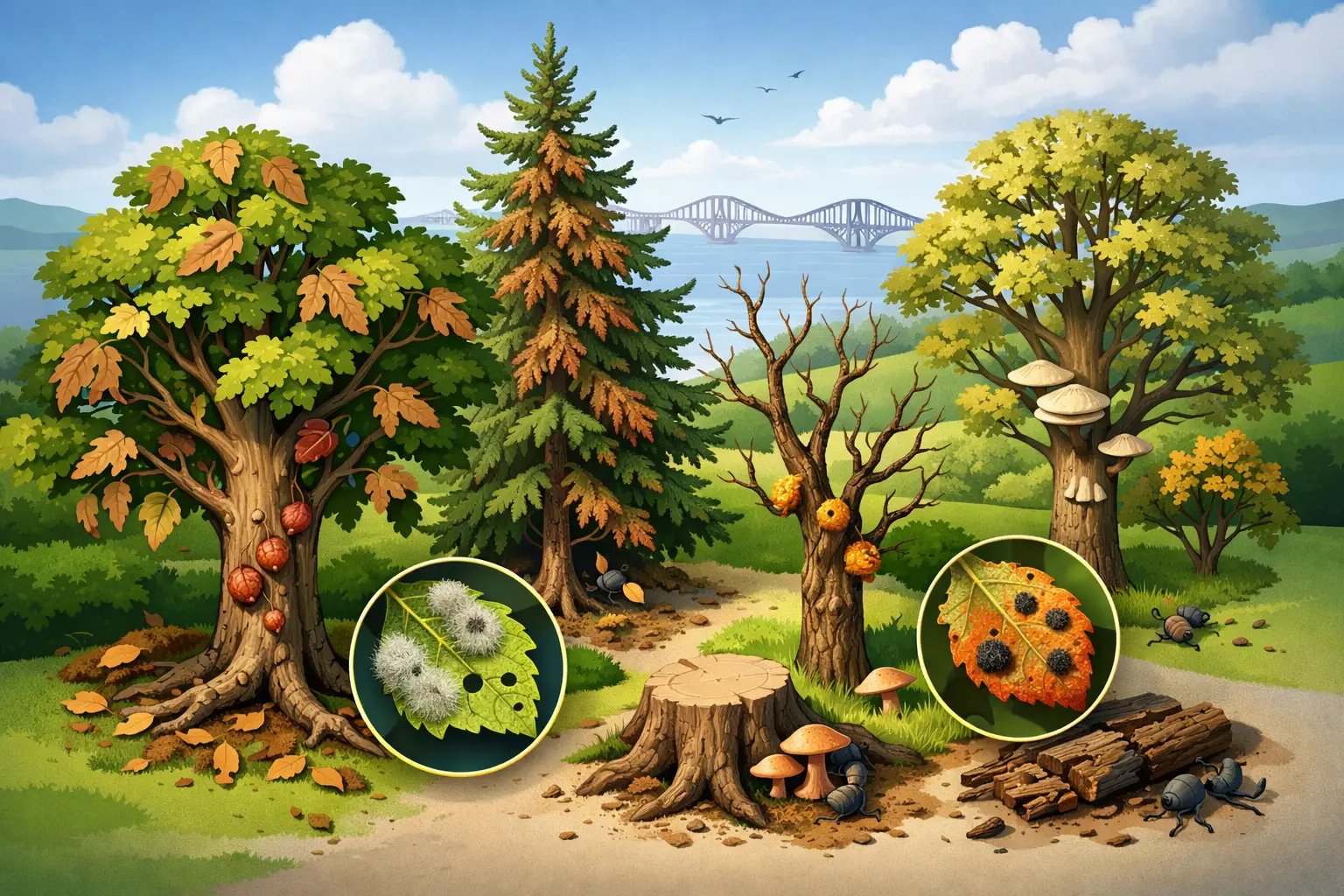
Early symptoms often appear in summer. Leaves may develop dark patches, wilt or fall prematurely, while the outer branches begin to die back. Look closely at younger shoots and you may see dark, diamond-shaped lesions where branches meet the main stem. In more advanced cases, the crown becomes thin and brittle deadwood develops throughout the tree.
Some ash trees can live with the disease for years, particularly where they have good growing conditions and limited secondary problems. Others decline quickly. The main concern is not simply the disease itself, but the loss of strength in dead or dying branches. An ash over a house, road, play area, parking space or neighbouring boundary needs a professional assessment before branches begin to fail.
Honey fungus
Honey fungus is a destructive root disease that can affect a wide range of trees and shrubs, including beech, birch, conifers, fruit trees and ornamental planting. It spreads through the soil and can move from old stumps or infected roots into nearby plants.
Signs above ground can be frustratingly vague at first. A tree may produce smaller leaves, suffer dieback in the crown or fail to make normal growth. In autumn, clusters of honey-coloured mushrooms may appear near the base, although their absence does not rule the disease out.
The strongest clue is often found beneath loose bark at the base of the tree. White fungal sheets and black, bootlace-like strands called rhizomorphs are characteristic of honey fungus. This is not a diagnosis to make from a photograph alone. Several fungi can grow around trees without causing serious damage, and the right management depends on identifying what is actually present.
Where honey fungus has seriously weakened the root system, retaining the tree may no longer be safe. Stump grinding and careful removal of infected material can be part of the solution, but replanting choices also matter. A replacement species should be chosen with the site and the disease history in mind.
Phytophthora root and collar rot
Phytophthora is a group of water moulds that thrive in persistently damp conditions. It can affect a broad range of trees, including larch, alder, beech, horse chestnut, rhododendron and many garden plants. Poor drainage, waterlogged ground and soil disturbance can all make a site more favourable to infection.
Affected trees may show yellowing foliage, reduced leaf size, dieback and poor vigour. At the base of the trunk, the bark can appear unusually dark, wet or sunken. Cutting through the outer bark may reveal discoloured tissue beneath.
Because these symptoms overlap with drought stress, root damage, compaction and nutrient problems, guessing can lead to the wrong treatment. Improving drainage may help a tree struggling with wet soil, but it will not reverse every infection. In some cases, removal and sensible replanting are the safest long-term option, particularly where the tree is close to people or property.
Dutch elm disease
Dutch elm disease has changed the appearance of towns and countryside across Britain, and elm remains vulnerable wherever surviving trees and regrowth are present. The disease is spread by elm bark beetles and blocks the tree’s water-carrying system.
A branch or section of crown may suddenly develop yellowing, curling or brown leaves during the growing season. The foliage often remains attached rather than dropping cleanly. Beneath the bark of affected twigs, dark streaking may be visible in the wood.
Not every sick elm has Dutch elm disease, and not every elm needs immediate removal. However, suspected cases need prompt assessment. Infected material should be handled carefully, as moving it unnecessarily can contribute to further spread. This is particularly relevant where mature elm is close to neighbouring gardens, roads or managed land.
Canker diseases on broadleaf trees
Canker is a general term for areas of dead bark caused by fungal or bacterial infection. It is commonly seen on fruit trees, but can also affect species such as willow, poplar, maple and horse chestnut. A canker may look like a sunken, cracked or swollen patch of bark, sometimes with oozing fluid or a raised edge around the wound.
Small cankers on a healthy tree can occasionally be managed by careful pruning of affected branches at the right time of year. Once infection reaches the main stem, the outlook is more variable. The tree may compartmentalise the damage and continue growing, or the weakened area may become a point of structural failure.
Pruning cuts, mower damage, poor previous work and storm wounds can all create entry points. This is one reason correct pruning matters. Removing too much live growth or leaving poor cuts can place extra stress on a tree already dealing with disease.
Needle cast and conifer decline
Brown or dropping needles are common concerns in gardens with spruce, pine, larch, leylandii and other conifers. Needle cast diseases can cause older needles to discolour and shed, leaving branches thin or bare. Larch may also suffer from more serious pathogens that require specialist attention.
Conifers can look worse than they are after a dry period, heavy shading, salt exposure or hedge-cutting at the wrong time. Equally, a dense brown patch in a mature conifer hedge can be a sign of disease spreading through the planting. The pattern is useful: natural shedding tends to affect older inner needles, while active disease may spread through fresh growth or particular sections of the tree.
Disease symptoms that need a closer inspection
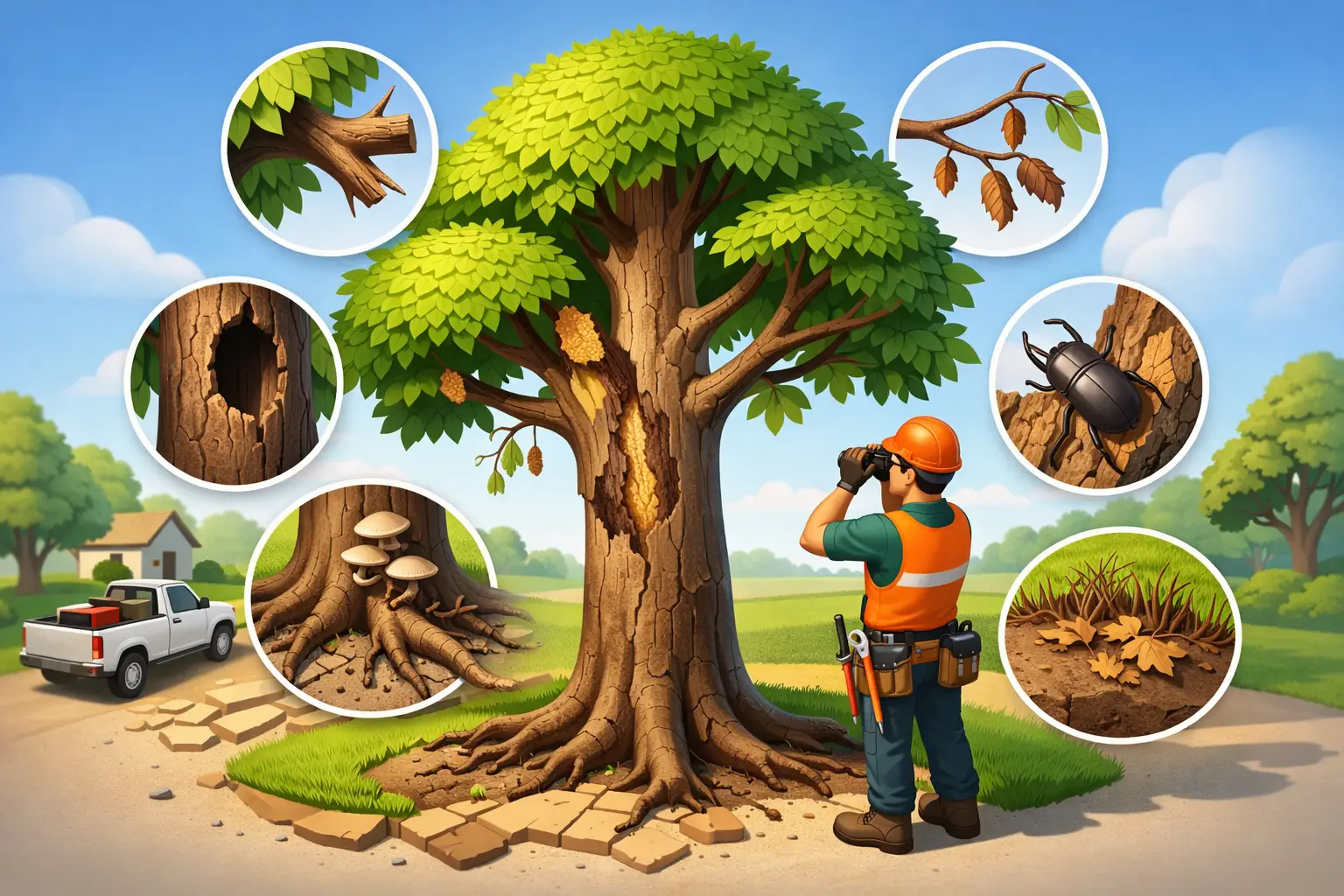
A single yellow leaf is rarely a reason to panic. A sudden change across a whole crown, especially during the growing season, is different. Dead branches, peeling bark, fungal growth at the base, cracks around major limbs, bleeding lesions and mushrooms appearing from roots or old stumps all justify a professional inspection.
It is also worth considering the tree’s position. A declining tree at the bottom of a large garden may be monitored differently from one leaning over a conservatory, footpath, neighbour’s garden or busy commercial entrance. The same disease can present a very different level of risk depending on the target beneath it.
Avoid cutting back heavily simply because a tree looks unwell. Severe pruning does not cure disease and can make some problems worse by removing the foliage a tree needs to recover. Likewise, fungicides bought for garden use are rarely a practical answer for mature trees. The first job is to identify the likely cause, assess stability and decide whether monitoring, targeted pruning, removal or replanting is the sensible route.
When tree surgery is the right response
Tree disease does not automatically mean felling. Deadwood removal, reduction work, crown cleaning and ongoing monitoring can often reduce risk while retaining a valuable tree. That approach can be especially worthwhile for established specimens with good form, wildlife value or importance to the setting of a property.
Felling may be recommended where infection has caused extensive decline, root failure is suspected, or brittle dead branches are likely to fall. Access, nearby buildings and whether a tree is protected will all affect how the work is planned. A proper assessment should explain the condition of the tree in plain terms, the risks involved and the realistic options available.
If a tree on your property in Dundee, Fife or the surrounding area is showing unexplained decline, act before the next high wind exposes the weakness. HL Tree Services can assess the symptoms, carry out safe remedial work where appropriate and leave the site clean and tidy. A timely inspection gives you clearer answers and gives the tree its best chance of being managed properly.