A tree can look perfectly fine from the ground and still have a problem that matters. Equally, a tree with a few dead twigs or a lean is not always dangerous. That is why the question of tree survey or visual inspection comes up so often. If you are managing a garden, an estate, a car park, a school site or land for development, choosing the right level of assessment saves time, avoids unnecessary work and helps you make sound decisions.
For many property owners, the main issue is simple – do you need a quick professional check, or do you need a more formal report? The answer depends on the tree, the site and what you need the assessment to achieve.
Tree survey or visual inspection – what is the difference?
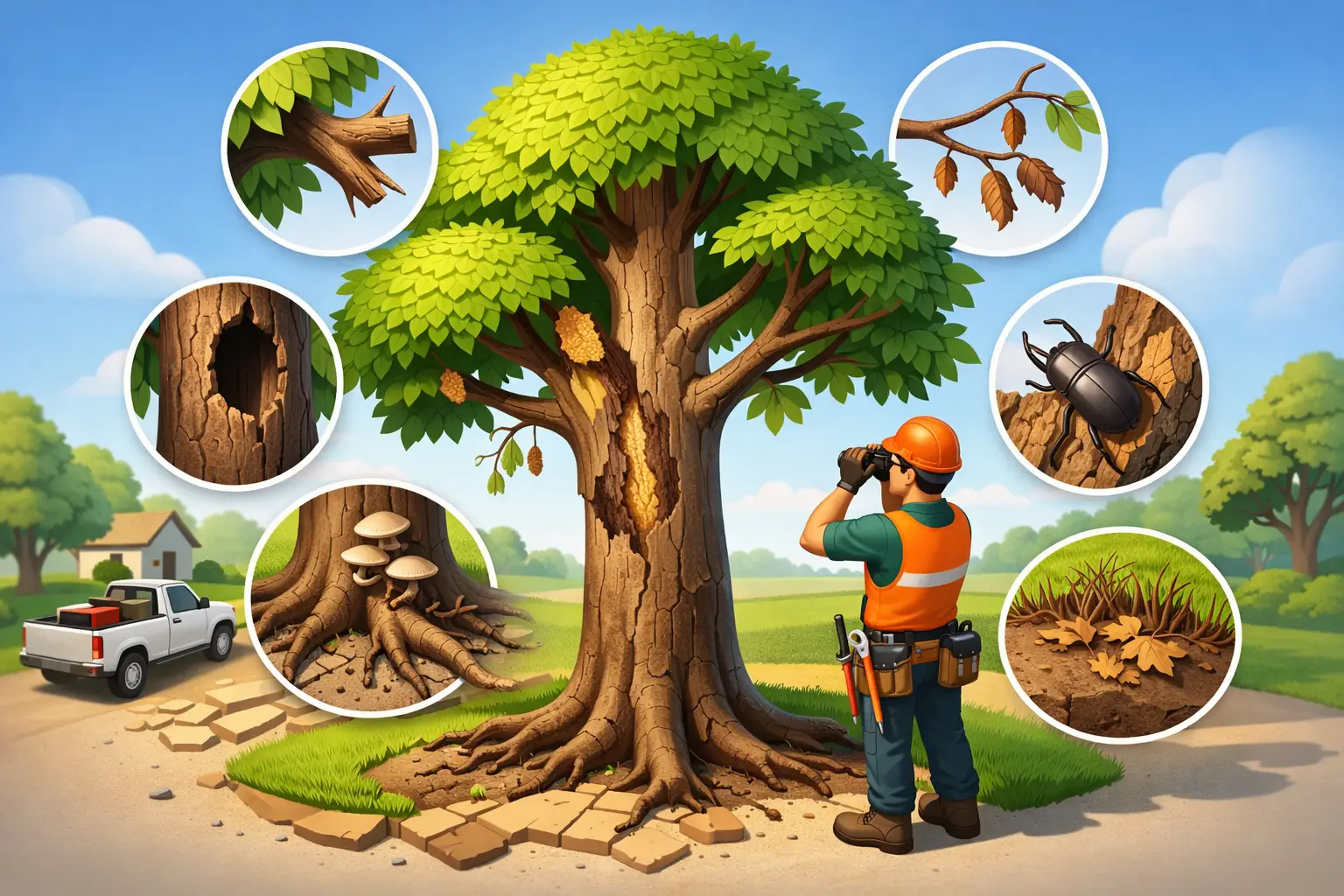
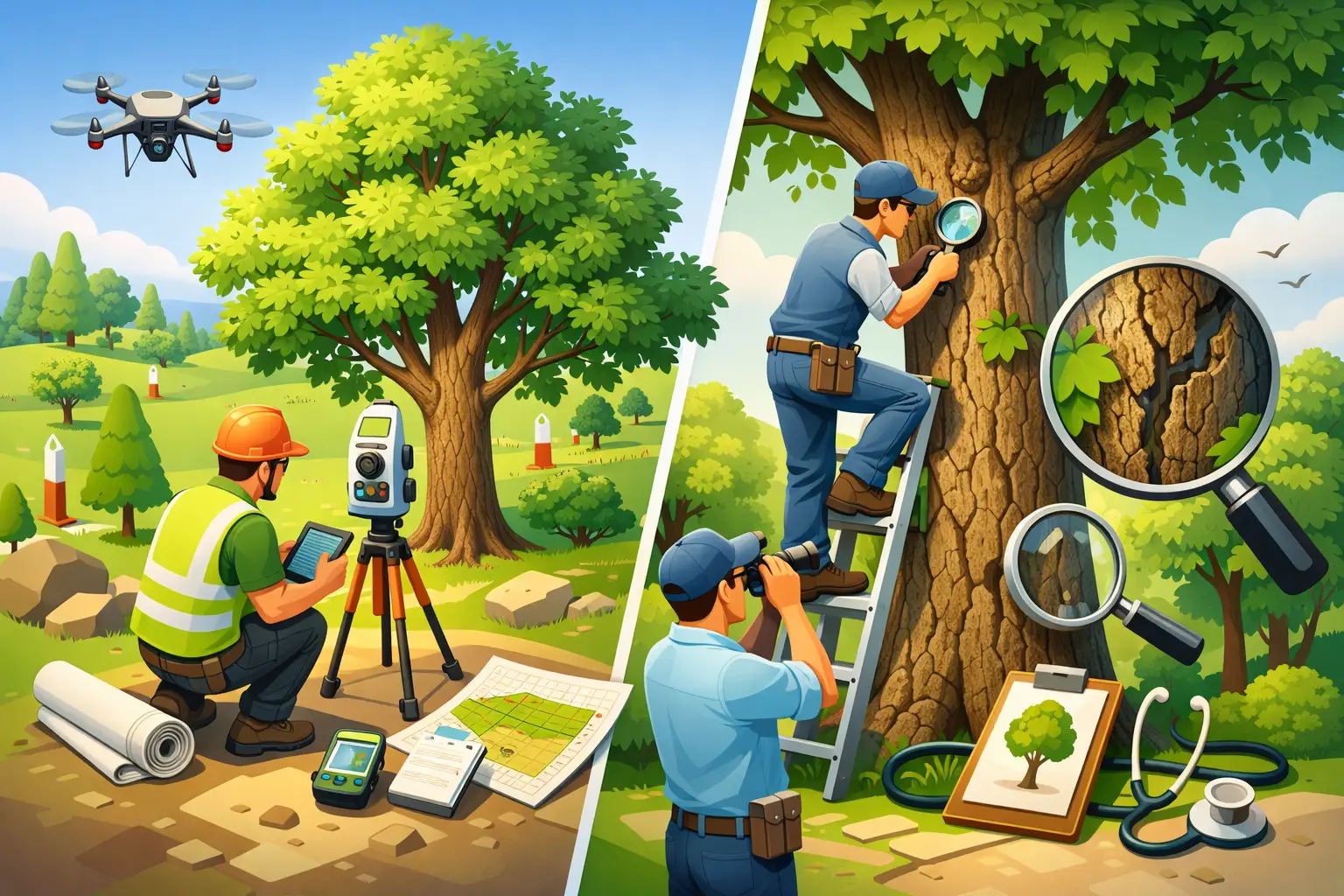
A visual inspection is usually the more straightforward option. An arborist attends site and assesses the tree by looking at its overall condition, structure, form and obvious defects. They will check for signs such as deadwood, decay, cracking, weak unions, root disturbance, pest or disease symptoms, and whether the tree poses a risk to people, buildings, roads or garden areas nearby.
That suits many day-to-day situations. A homeowner may be worried about a large beech overhanging the drive. A landlord may want several mature trees looked at after strong winds. A business may have trees on a boundary that need a professional eye before arranging maintenance. In these cases, a visual inspection is often the right starting point.
A tree survey is usually more formal and detailed. It may cover a group of trees rather than one specimen, and it is often used where records matter. Development sites, planning matters, mortgage concerns, insurance issues and duty-of-care management all tend to call for a survey rather than a simple visit and verbal advice. A survey may include tree positions, species, measurements, condition ratings, life expectancy, management recommendations and notes on constraints affecting the site.
So the difference is not just detail for detail’s sake. It is about purpose. If you need reassurance and practical recommendations, a visual inspection may be enough. If you need documented findings to support decisions, satisfy a process or manage a wider site responsibly, a survey is usually the better fit.
When a visual inspection is usually enough
For domestic properties, a visual inspection often gives exactly the level of advice needed. If a tree has changed after a storm, if branches are overhanging a neighbour’s fence, or if you have noticed fungi at the base, an experienced arborist can often tell a great deal by inspecting the tree carefully from ground level and around the root zone.
That can lead to clear, sensible next steps. The outcome may be that no work is required. It may be minor pruning, deadwood removal, crown reduction, further monitoring or, in some cases, urgent action. The value is in getting honest advice rather than guessing.
This approach also works well when there is no legal or planning process involved. A client may simply want to know whether a tree is safe to retain, whether it is declining, or whether maintenance would improve both safety and appearance. A professional inspection gives you a realistic view without overcomplicating matters.
There is, however, a limit to what a visual inspection can do. If access is restricted, if the tree is covered in dense ivy, or if the defects are likely to be internal rather than visible externally, the arborist may recommend further investigation. Good advice is not about pretending every answer is obvious from the ground. It is about being clear on what can be seen, what cannot, and what level of risk is present.
When a tree survey is the better choice
A tree survey becomes more useful when the trees form part of a bigger decision. If you are buying land, preparing for building work, managing a school, overseeing an estate or looking after commercial premises, records matter. You may need to show that the trees were inspected, what condition they were in, and what management was recommended.
A survey also helps where there are multiple trees with different needs. One may need remedial work now, another may be suitable for retention with monitoring, while a third may be in conflict with planned construction. Having that set out clearly makes budgeting and planning much easier.
This is especially relevant across mixed sites in places such as Fife, Dundee and Perth, where mature trees often sit close to roads, boundary walls, houses and working areas. A row of sycamores beside a car park needs a different level of management from a single ornamental tree in a back garden. A survey gives structure to that decision-making.
There is also the question of accountability. If you are responsible for land used by staff, tenants, visitors or the public, a documented survey can form part of a sensible management approach. It does not remove all risk – trees are living structures and conditions change – but it does show that the trees have been assessed professionally and not ignored.
What an arborist is looking for
Whether the job is a visual inspection or a survey, the process is not just a glance up into the canopy. A competent arborist is reading a combination of factors. They will consider species characteristics, age class, previous pruning, structural form, soil conditions, visible decay, root plate movement, branch loading, nearby targets and signs of physiological stress.
That matters because one symptom on its own does not always tell the full story. A crack may be fresh and serious, or old and stable. Fungal fruiting bodies may indicate significant decay, or they may need to be interpreted in context. A lean may be natural and long-established, or a warning sign if recent soil movement is visible.
Experience makes a real difference here. The right advice is not about alarming the client or recommending unnecessary work. It is about understanding the tree as a whole and balancing safety, longevity and practical use of the site.
Why the cheapest option is not always the best one
It is understandable to want the quickest and least expensive answer. Sometimes that is entirely reasonable. But there is a difference between keeping things simple and cutting corners.
A rushed look from someone without proper arboricultural knowledge can miss the details that matter. Equally, paying for a full survey when a straightforward inspection would do is not the best use of your money. The right service sits in the middle – proportionate to the tree, the risk and the purpose of the assessment.
This is where clear advice at the start is so important. A good contractor will ask what prompted the enquiry, who uses the area around the tree, whether any planning or development issue is involved, and what outcome you actually need. From there, they can recommend the most sensible route rather than a one-size-fits-all service.
After the inspection – what happens next?
The result of a tree assessment is not always major work. Quite often, the recommendation is routine maintenance or a recheck after a set period. Some trees benefit from selective pruning to reduce end weight or remove deadwood. Others simply need monitoring, especially if a feature has been noted but is not yet critical.
Where work is required, it should be carried out safely, with the right equipment and a clear plan for protecting the surrounding area. That is particularly important on tight sites, near roads, beside buildings or where access is awkward. Specialist access equipment can make a major difference to both safety and quality when dealing with larger or more complex trees.
Just as important is leaving the site tidy. Professional tree work should solve a problem, not create a mess. For homeowners and commercial clients alike, that standard matters.
Choosing the right assessment for your trees
If your concern is centred on one or two trees and you want practical, expert advice, start with a visual inspection. If you need formal records, a wider site review or information to support planning and management decisions, ask for a tree survey. In some cases, a visual inspection leads to a survey later once the scope becomes clearer, and that is perfectly normal.
The key is not to wait until a tree becomes an emergency. Small concerns are easier to assess and manage than major failures after high winds or prolonged decline. If something about a tree does not look right, or if you are responsible for trees on land that people use regularly, getting it checked is the sensible step.
At HL Tree Services, the focus is always on clear advice, safe workmanship and doing what is right for the tree and the site. If you are weighing up a tree survey or visual inspection, the best starting point is a proper conversation with someone who knows what to look for. A sound assessment now can prevent a far bigger problem later.