When a tree has come down and the stump is still sitting there, the next decision usually comes quickly. Do you grind it out or remove it entirely? With stump grinding vs stump removal, the right answer depends on what you want to do with the space, how much disturbance you can tolerate, and what lies below the surface.
For some properties, a quick, tidy finish is the priority. For others, especially where building work, replanting or full site clearance is planned, leaving any part of the root system behind is not ideal. Both methods solve the problem, but they do it in very different ways.
Stump grinding vs stump removal – what is the difference?
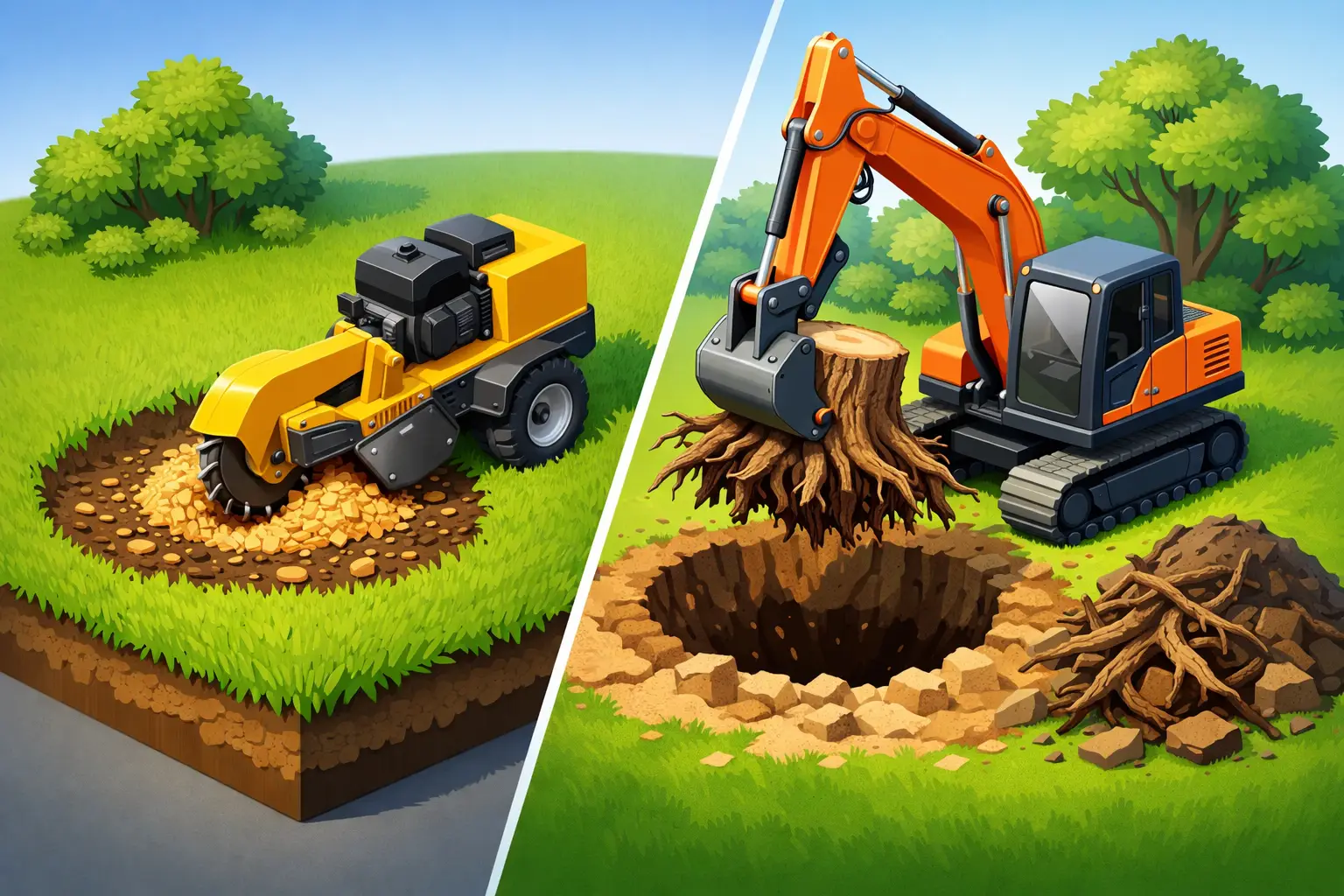
Stump grinding is the process of mechanically grinding the stump down below ground level. A specialist machine cuts the timber into small chips, usually taking the visible stump and the upper section of the root flare out of the way. The deeper root system stays in the ground and will gradually break down over time.
Stump removal is more intensive. It involves taking out the entire stump and the main root ball. Depending on the size, species and location of the tree, that can mean significant excavation, more spoil to remove, and more reinstatement afterwards.
That difference matters because the finished result is not the same. Grinding is usually about making the area usable and presentable. Removal is about taking everything out so the ground is fully clear.
When stump grinding is the better choice
In most domestic gardens, stump grinding is the practical option. It is typically quicker, less disruptive and more cost-effective than full removal. If your main aim is to get rid of a trip hazard, improve the look of the garden, or free up space for turf, gravel or light planting, grinding often does the job well.
It is also useful where access is limited. Many gardens in Fife, Dundee and surrounding areas have fences, narrow gates, patios, raised beds and established landscaping that make major excavation awkward. A stump grinder can often deal with the stump while keeping disturbance to the surrounding area to a minimum.
Another advantage is tidiness. Grinding does create woodchip and some surface mess, but it usually avoids the large hole and heavy ground disturbance that come with digging out a stump completely. That can make a real difference if you want the area left neat and ready for reinstatement without turning the garden into a work site.
There are limits, though. If you want to build over the area, install foundations, or plant another tree in exactly the same spot, the remaining root material may become a problem later.
What happens after grinding?
After a stump is ground out, you are left with a shallow area filled with grindings and soil. That material can sometimes be reused in part, but it is not always the best final surface for turfing or planting. In many cases, it makes sense to remove some of the grindings and backfill with fresh topsoil.
The remaining roots underground will decay naturally. That is usually fine for lawns and general landscaping, but the timeline varies. Larger root systems can take years to break down fully.
When stump removal makes more sense
Full stump removal is usually the better choice when you need the ground completely clear. That often applies on development sites, access routes, driveways, extensions, retaining walls, and areas where future excavation is already planned.
It can also be the right option where the stump is very large, beginning to affect surrounding hard landscaping, or likely to interfere with drainage and groundwork. If a contractor is going to dig in the area anyway, it can be more sensible to remove the whole stump rather than leave buried root material behind.
For some clients, peace of mind is the deciding factor. They do not want to wonder whether roots will settle, rot or get in the way later. In that case, complete removal gives a cleaner slate, even if the upfront work is greater.
The trade-off is disruption. Removing a stump fully usually means digging, lifting, shifting spoil and making good afterwards. On a tidy residential property, that can be more invasive than many people expect.
Why full removal is not always practical
Even when a customer asks for total removal, the site itself may push the decision another way. Nearby walls, underground services, delicate paving, garden structures and restricted access all affect what can be done safely. A large root ball beside a boundary wall is not something to attack casually.
That is where professional assessment matters. The safest method is not always the most aggressive one. Sometimes grinding offers the best balance between clearing the stump and protecting the rest of the property.
Cost, time and disruption
For most jobs, stump grinding is cheaper than stump removal. It usually takes less time, requires fewer labour hours, and creates less spoil to take away. If budget is an important factor, grinding often gives the best value for money.
Removal tends to cost more because the work is heavier. There is more excavation, more handling of waste, and often more reinstatement once the stump is out. The final bill reflects that extra time and site impact.
That said, the cheapest option is not always the most economical in the long run. If you grind a stump now and later need to excavate the area for a driveway or building work, you may end up paying twice. The right choice depends on the next stage for the site, not just the immediate price.
Access, machinery and safety
No two stump jobs are exactly alike. A straightforward stump in an open front garden is one thing. A stump tucked behind a garage, close to a greenhouse, or sitting on a slope is another.
Machinery choice matters. Professional stump grinders are designed to work efficiently while controlling the job properly, but there still needs to be enough access to get equipment in safely. Where larger machinery cannot reach, there may be smaller specialist options, although they can affect speed and cost.
Safety is another reason not to treat stump work as an afterthought. Underground utilities, hidden roots, unstable ground and nearby structures all need to be considered before work starts. A proper site assessment helps avoid damage and makes sure the method suits the location.
What about regrowth?
One of the most common questions is whether the stump will grow back. The answer depends on the species and how the stump is dealt with. Some trees are more likely to produce new shoots from the remaining base or roots.
Grinding significantly reduces the chance of visible regrowth because the stump is taken down well below the surface, but with certain species, suckering from roots can still happen. Full removal reduces that risk further because the main root system is taken out as well.
If regrowth is a concern, it is worth raising it at the quote stage. The species, age and condition of the tree all affect the best approach.
Which option suits your property?
If you want a stump gone with minimal fuss, and you are not planning major works in the same area, grinding is often the sensible choice. It is efficient, tidy by comparison, and suitable for many gardens and managed landscapes.
If you need the ground entirely cleared for construction, hard landscaping or exact replanting, removal may be the better investment. It asks more of the site in the short term, but it avoids leaving buried timber and roots behind.
For many customers, the decision comes down to one practical question: do you need the area to look clear, or do you need it to be completely clear? That is the point where expert advice becomes useful. A good contractor will not push one method for every job. They will look at access, ground conditions, future plans and the safest way to leave the site in good order.
At HL Tree Services, that is how we approach it – honest advice, the right equipment for the job, and a clean, professional finish that suits the property rather than a one-size-fits-all answer.
If you are weighing up stump grinding and stump removal, the best next step is to think beyond the stump itself. Consider what the space needs to do next, and the right option usually becomes much clearer.