A leaning beech beside a driveway, a group of mature trees on a proposed building plot, or a cracked limb above a public path can all look like straightforward problems. They are not. Tree survey cost reflects the professional judgement needed to assess risk, tree health, legal constraints and the practical work required to put matters right.
For homeowners, estates and commercial property managers, a survey can prevent an avoidable failure, support a planning application or provide clear evidence for insurers and contractors. The right survey is not always the most detailed or expensive one. It is the one that answers the question in front of you clearly and safely.
What affects tree survey cost?
There is no sensible flat rate for every tree survey. A quick inspection of one accessible garden tree takes very different time and equipment from a condition survey covering dozens of mature trees across a commercial site.
The main factor is scope. A surveyor needs to know whether you require advice on a single concern, a formal report for planning, an inspection of multiple trees, or an assessment following storm damage. The number of trees matters, but so does their size, species, age and condition. Large, veteran or visibly defective trees require a more careful inspection than young, healthy specimens.
Access can change the price too. Trees at the rear of a property with narrow access, steep ground, busy roads or neighbouring buildings take longer to inspect safely. In some cases, a closer aerial inspection may be recommended to examine cavities, decay, unions or defects high in the canopy. Specialist access equipment, such as a cherry picker, may be needed where climbing is unsuitable or where work must be completed efficiently around a site.
Location and site use also matter. A tree over a quiet corner of a private garden presents a different level of potential harm from one over a school entrance, car park, footpath, roof or road. Survey reports should consider targets beneath the tree, not simply whether it looks untidy or overgrown.
Finally, the report itself affects the cost. A written document with tree schedules, photographs, recommendations, location plans and planning-ready information takes longer to prepare than verbal advice after a site visit.
Typical tree survey prices
As a broad guide, a straightforward survey of one or a small number of accessible trees may start from around £150 to £300. A more detailed written report for several trees can commonly range from £300 to £750 or more. Larger sites, development land, complex access arrangements and specialist investigations are priced individually.
These figures are useful only as a starting point. A low quote is not automatically good value if it does not include the report, photographs, clear recommendations or the information your insurer, planner or contractor actually needs. Equally, a full development survey is unnecessary if you simply need professional advice about one ash tree near your fence.
When requesting a quote, explain what has prompted the survey and what you need to do with the findings. A few photographs, the property postcode, the approximate number of trees and details of any planning or insurance deadline will help the arborist provide a realistic price from the outset.
A single-tree condition or safety survey
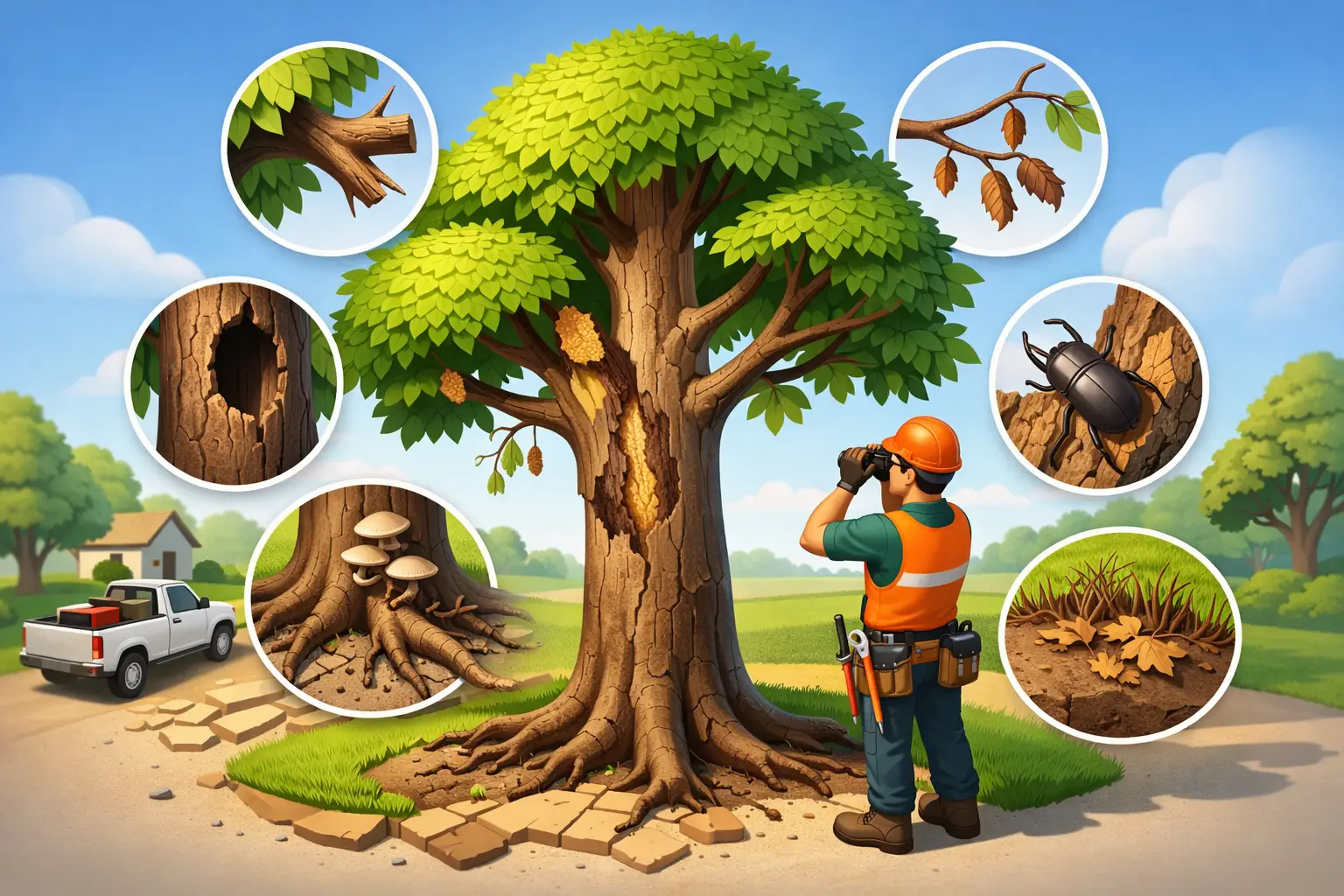
This is often requested when a tree has changed visibly, has lost limbs, appears to be declining, or sits close to a building or area of regular use. The inspection considers features such as deadwood, fungal growth, cracks, cavities, poor branch unions, root disturbance and lean.
The recommendation may be as simple as removing deadwood, reducing a limb, monitoring the tree at set intervals or carrying out further investigation. It is not always a recommendation to fell. Good arboricultural advice balances safety with the benefits of retaining a healthy tree wherever possible.
A tree survey for planning or development
If trees could be affected by a new extension, access road, drainage works or a larger development, you may need a formal survey prepared to the relevant planning standard, often BS5837. This records the trees, their condition, likely life expectancy and their potential value within the site layout.
The cost is higher because the work needs accurate measurements, categorisation, plans and supporting documentation that designers and planning authorities can use. Depending on the proposal, further documents such as an arboricultural impact assessment, method statement or tree protection plan may also be required. These are separate pieces of work, so make sure the quote states exactly what is included.
Tree preservation orders and conservation areas
A survey is not the same as permission to carry out work. Before pruning or felling, check whether the tree is protected by a Tree Preservation Order or whether the property sits within a conservation area. Your local authority can confirm this.
A professional survey can provide the evidence and specification needed for an application or notice, particularly where work is required for safety or tree management. However, approval times and application requirements are outside the surveyor’s control, so do not leave this until the week before building work is due to begin.
What should a professional report include?
The level of detail should suit the purpose, but a useful written survey normally identifies the trees inspected, records relevant observations, explains any defects or management issues, and sets out prioritised recommendations. It should be written in plain terms as well as using correct arboricultural language.
For a larger site, expect a numbered tree schedule and a plan showing locations. Photographs are particularly helpful where there are visible defects or where work needs to be understood by a property manager, insurer or planning officer who was not present at the inspection.
Recommendations should be specific. “Prune tree” is vague. “Remove deadwood over 50mm diameter from the canopy” or “reduce the end weight of the extended limb away from the property” tells you what the contractor is being asked to do and why. This protects the tree from unnecessary cutting and gives you a fair basis for comparing work quotes.
When a survey can save money
It can feel tempting to arrange tree work first and ask questions later, especially after strong winds or when branches are overhanging a roof. But an inspection can avoid spending money on the wrong solution. For example, a tree with a harmless natural lean may need routine monitoring, while a less obvious root issue could require prompt action.
For property managers, a documented inspection programme also provides a sensible record of how trees have been managed. This is valuable where trees stand near public areas, tenant parking, playgrounds or commercial premises. It helps prioritise budgets instead of reacting only when a branch fails or a complaint arrives.
On development sites, early surveys are often cheaper than redesigning plans after protected root areas or high-value trees have been identified. Trees can influence foundations, drainage routes, building positions and construction access. Bringing arboricultural advice in at the beginning gives a project more room to work around them properly.
Do you need a survey or tree work quote?
The distinction is simple. If you already know the work required – for example, a hedge needs cutting back or a clearly dead small tree needs removing – a tree work quote may be enough. If you need to establish the tree’s condition, assess risk, support an application or decide what work is appropriate, start with a survey.
An experienced tree team can often identify this from an initial conversation. Be honest about warning signs such as recent movement in the ground, new cracks, fungal brackets, broken branches, storm damage or a sudden change in leaf cover. If there is an immediate danger to people, property or a road, treat it as urgent rather than waiting for a routine report.
HL Tree Services provides practical, professional tree advice for customers across Fife and surrounding areas, with clear recommendations based on the tree, the site and the job at hand. A well-scoped survey gives you more than a price for paperwork. It gives you a sound basis for protecting people, property and the trees worth keeping.