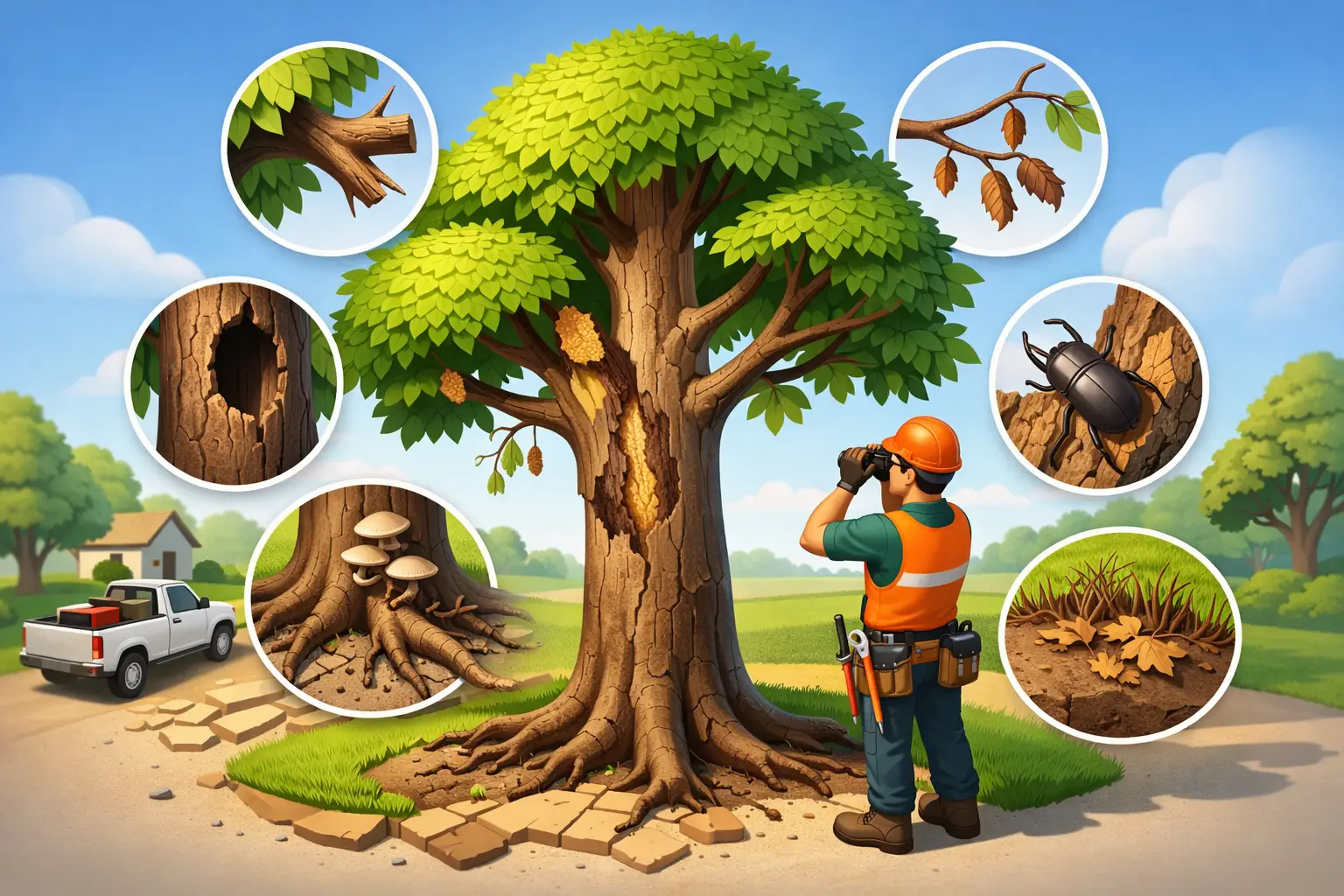
A tree can transform a garden, but the wrong one can quickly become a source of shade, leaf debris, root problems or storm damage. Choosing the best trees for gardens in Fife and East Scotland means looking beyond a photograph or a label at the garden centre. Local wind exposure, soil conditions, available space and how much maintenance you are willing to take on all matter.
Fife gardens are varied. A sheltered town garden in Cupar or Dunfermline may support a much wider choice than an exposed coastal plot near St Andrews, Anstruther or the East Neuk. Inland gardens can still face hard winter frosts, while many properties contend with heavy clay, compacted ground or poor drainage. The best approach is to choose a tree that suits its place from the start, then give it enough room to grow naturally.
What makes a tree suitable for an East Scotland garden?
A good garden tree should earn its place all year round. It may provide spring blossom, autumn colour, berries for birds, screening, light shade or simply a strong focal point. Just as importantly, it should cope with the conditions without needing constant corrective pruning.
Wind tolerance is a major consideration locally. Strong coastal winds can dry foliage, damage young branches and cause a newly planted tree to lean or fail before its roots are established. In exposed gardens, avoid planting a single young tree in the open without protection. A sheltered position, a well-fitted stake and a sensible choice of species will make a real difference.
Soil is equally important. Clay soils can be fertile but slow to drain, particularly through winter. Sandy soils, common in some coastal areas, drain quickly and may be short of nutrients. Before planting, check whether water sits in the area after rain, and do not assume that adding a small amount of compost will solve a deeper drainage problem.
Finally, be realistic about mature size. The small tree in a pot is not the tree you will have in 15 or 25 years. Consider the height and spread, but also its distance from buildings, boundaries, drains, driveways, overhead cables and neighbouring gardens.
The best trees for gardens in Fife and East Scotland
Rowan – a dependable choice for many gardens
Rowan, or mountain ash, is one of the most useful small to medium trees for Scottish gardens. It is hardy, attractive and generally tolerant of poorer ground and cooler conditions. Creamy flowers appear in spring, followed by bright berries that bring birds into the garden, then good autumn colour.
Native rowan suits informal and wildlife-friendly planting schemes particularly well. Cultivars are also available with yellow, pink or red berries. Most remain manageable for a typical garden, although they still need enough space for a rounded crown. Rowan is not the right answer for a very dry, highly exposed coastal plot, but it performs well in many Fife settings once established.
Silver birch – light, elegant and fast growing
Silver birch is a familiar sight across Scotland for good reason. Its white bark, fine foliage and airy canopy make it an excellent option where you want height and movement without creating dense shade. It works particularly well in larger gardens, natural planting schemes and plots with room for a small group of trees.
Birch establishes relatively quickly, but it is not maintenance-free. It can grow taller than homeowners expect and should not be planted too close to a house, patio or boundary. Its fine roots are widespread, so give it adequate space and avoid cramped planting beds. For smaller gardens, a multi-stem birch or a naturally smaller cultivated variety may be a better fit.
Crab apple – blossom, fruit and seasonal interest
For a tree that offers plenty without taking over the garden, crab apple is difficult to beat. Spring blossom can be white, pink or deep red depending on the variety, while small fruits provide autumn interest and food for wildlife. Many crab apples also have excellent leaf colour later in the year.
They are suitable for a wide range of soils, although a sunny position usually gives the best flowering and fruiting. Choose the eventual size carefully, as varieties vary considerably. A compact ornamental crab apple can suit a modest garden, while larger types make impressive specimen trees in lawns or communal grounds.
Amelanchier – a strong option for smaller spaces
Amelanchier, often called snowy mespil, is one of the best choices for a compact garden where year-round interest matters. It produces delicate white spring flowers, fresh green leaves, berries for birds and reliable orange-red autumn colour. Many are available as multi-stem forms, which can soften a boundary or create a more natural look than a single standard tree.
It prefers moist but well-drained soil and is happiest in sun or light shade. In a very exposed spot, give it some protection while young. Its modest scale makes it a practical option close to patios and smaller lawns, provided there is still room for its mature spread.
Hawthorn – tough, native and valuable for wildlife
Hawthorn is often underestimated because it is so common in hedgerows, but it makes a hard-working small tree for the right garden. It tolerates wind, supports wildlife and provides spring blossom followed by red haws in autumn. Its dense growth can also help create privacy where a more open-canopied tree would not.
The trade-off is its thorns and informal habit. Hawthorn is less suited to a neat, highly formal front garden or an area used regularly by young children. However, for a rural property, an edge-of-garden planting scheme or a wildlife-focused boundary, it is a sound local choice.
Field maple – good colour without excessive scale
Field maple is a native tree that deserves more use in domestic gardens. It has attractive lobed leaves, warm yellow autumn colour and a naturally tidy form when given room. It copes with pruning better than many larger trees, which can be useful where a crown needs to be managed away from a building or access route.
It is adaptable, but like most trees it will perform better in reasonable soil than in permanently waterlogged ground. Field maple is particularly useful for gardens that need a resilient tree with a more traditional appearance than ornamental species.
Scots pine – for larger, exposed or characterful plots
Scots pine is a tree with real Scottish character. It can handle poorer soils and exposed conditions better than many broadleaved trees, and its evergreen needles provide structure throughout winter. It is most suitable for larger gardens, estates and sites where there is room to appreciate its mature form.
This is not a small suburban garden tree. A Scots pine needs space, and it may become a substantial feature over time. It also needs professional inspection if mature branches develop defects, particularly near buildings, paths or parking areas.
Trees to approach with care
Some trees are excellent in the right location but can cause difficulty in an average-sized garden. Oak, beech, sycamore, horse chestnut and many conifers can all become far larger than their original planting position allows. Their roots, shade and long-term management needs should be considered before purchase, not after they have outgrown the space.
Fast-growing trees are another common trap. Rapid growth can feel rewarding at first, especially if privacy is needed, but it often leads to frequent pruning and weak branch structure. Leylandii, willow and poplar are examples that require careful siting and a clear maintenance plan.
A tree near a house does not automatically create a problem, but distance matters. If you are planting close to a building, retaining wall, drain or driveway, seek proper advice on suitable species, soil type and expected mature dimensions. Where a mature tree is already causing concern, an inspection is safer than making assumptions or attempting major pruning yourself.
Planting well gives your tree the best start
The best time to plant bare-root and root-balled trees is during dormancy, usually from late autumn to early spring, provided the ground is not frozen or waterlogged. Container-grown trees can be planted at other times, but they will need more careful watering during dry spells.
Dig a hole wider than the root ball but no deeper. The root flare, where the trunk begins to widen into roots, should sit at or just above finished soil level. Planting too deeply is one of the most common mistakes and can affect long-term health.
Backfill with the excavated soil rather than creating a rich pocket that roots may be reluctant to leave. Water thoroughly, apply a mulch around the base without allowing it to touch the trunk, and keep grass and weeds away from the immediate root zone. A stake can help in windy locations, but it should allow slight natural movement and be checked regularly so it does not rub the bark.
For the first two growing seasons, watering matters more than feeding. A young tree may look settled above ground while its roots are still developing below. During dry periods, give it a slow, deep soak rather than frequent light watering.
Plan for the tree you will have, not the tree you buy
A well-chosen tree adds value, character and habitat to a property for decades. It should not need to be repeatedly cut back simply because it was planted beneath cables, beside a wall or in a space too small for its natural shape. When in doubt, getting advice before planting is far easier and more economical than correcting a poor choice later.
For homeowners, estates and property managers, HL Tree Services can advise on appropriate planting, tree condition and the safe long-term management of established trees. The right tree, planted in the right place, is one of the simplest ways to make a garden feel settled for years to come.