A tree can look tough enough to take anything, right up until a heavy limb drops over a driveway or a hard cut leaves it struggling for years. That is why tree pruning rules matter. Good pruning improves safety, keeps growth balanced and helps a tree stay healthy. Bad pruning does the opposite, and the damage is not always obvious straight away.
For homeowners and site managers, the difficulty is knowing where sensible garden maintenance ends and specialist tree work begins. A small ornamental tree is one thing. A mature sycamore over a roof, road or neighbouring boundary is another. The rules are not just about where to cut. They also cover timing, tree biology, legal restrictions and the level of risk involved.
The tree pruning rules that matter most
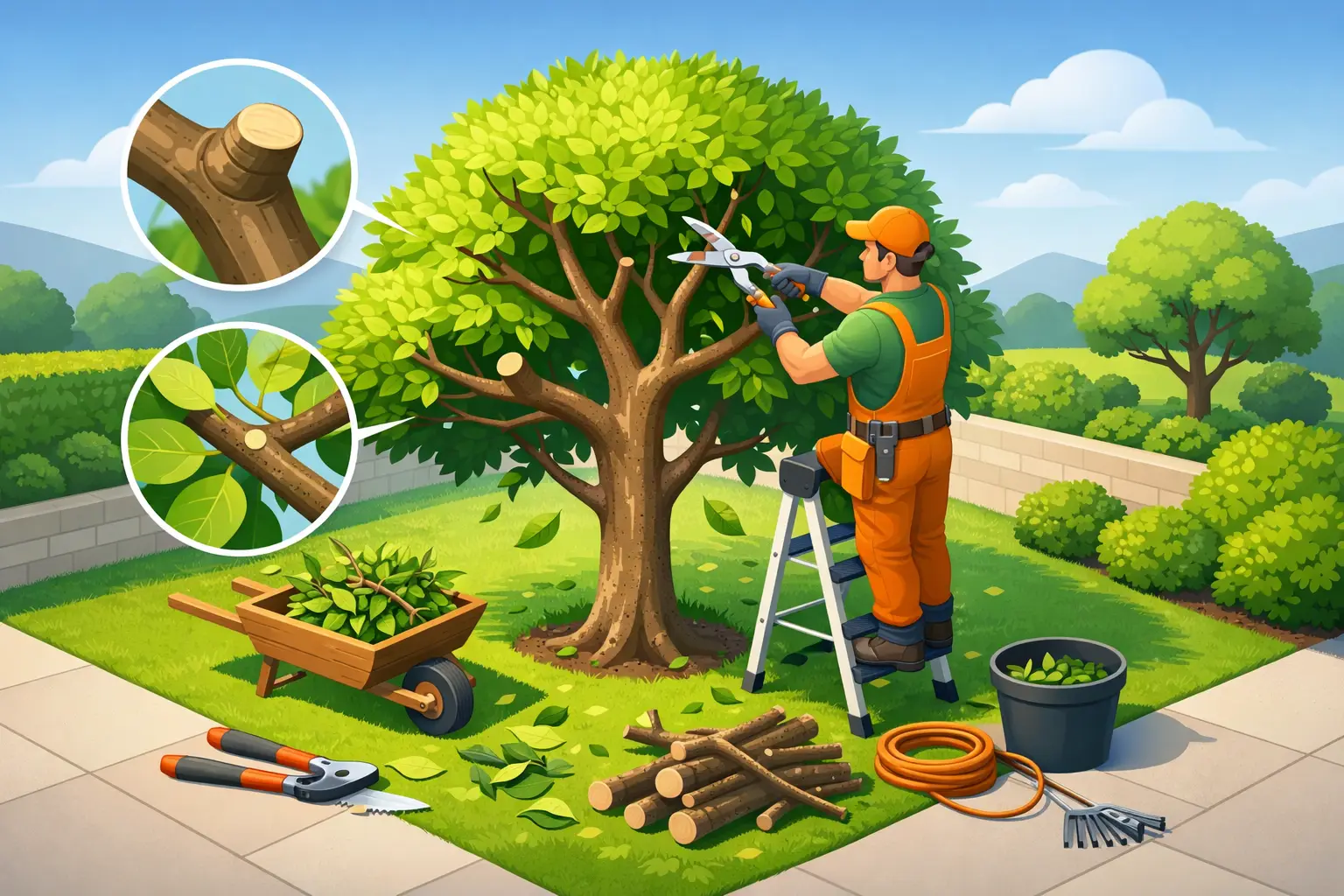
The first rule is simple – prune with a purpose. If you cannot clearly explain why a branch needs to come off, it is usually best left alone. Most worthwhile pruning falls into a few categories: removing deadwood, reducing risk, improving clearance, correcting weak structure, or managing size in a way the tree can tolerate.
The second rule is not to remove more than the tree can cope with. As a general guide, taking too much live growth in one go puts the tree under stress. It can respond with weak regrowth, poor vigour or a greater risk of decay. Mature trees are especially less forgiving than younger ones, so heavy reduction needs proper judgement.
The third rule is to make clean, well-placed cuts. That means cutting just outside the branch collar rather than flush to the trunk and never leaving long stubs behind. Flush cuts remove natural defence tissue. Stubs die back and can invite decay. Neither is good practice.
A fourth rule is that safety always comes before neatness. It is easy to focus on the finished shape, but the real priority is whether the work reduces hazard without creating new problems. Over-pruned trees can become unstable, while poorly balanced cuts can shift weight in unhelpful ways.
Timing matters more than many people realise
One of the most misunderstood tree pruning rules is that there is no single perfect month for every species. Timing depends on the type of tree, the reason for pruning and the condition it is already in.
For many broadleaf trees, dormant season pruning can work well because the branch structure is easier to assess and the tree is not putting energy into full leaf. That said, some species are better handled at different times. Birch, maple and walnut, for example, can bleed sap heavily if pruned at the wrong point in the year. Fruit trees often have their own pruning windows depending on whether the aim is shape, productivity or disease control.
There is also the practical issue of nesting birds. In the UK, active nests are legally protected. Even where a tree clearly needs maintenance, work may need to be delayed or carefully assessed first. This is one reason why a quick weekend cut-back is not always as straightforward as it seems.
Storm damage changes the picture as well. If a branch has split or a tree has become unsafe, remedial work may be needed promptly regardless of season. In those cases, risk management takes priority, but the work still needs to be done properly.
What should be pruned and what should be left alone
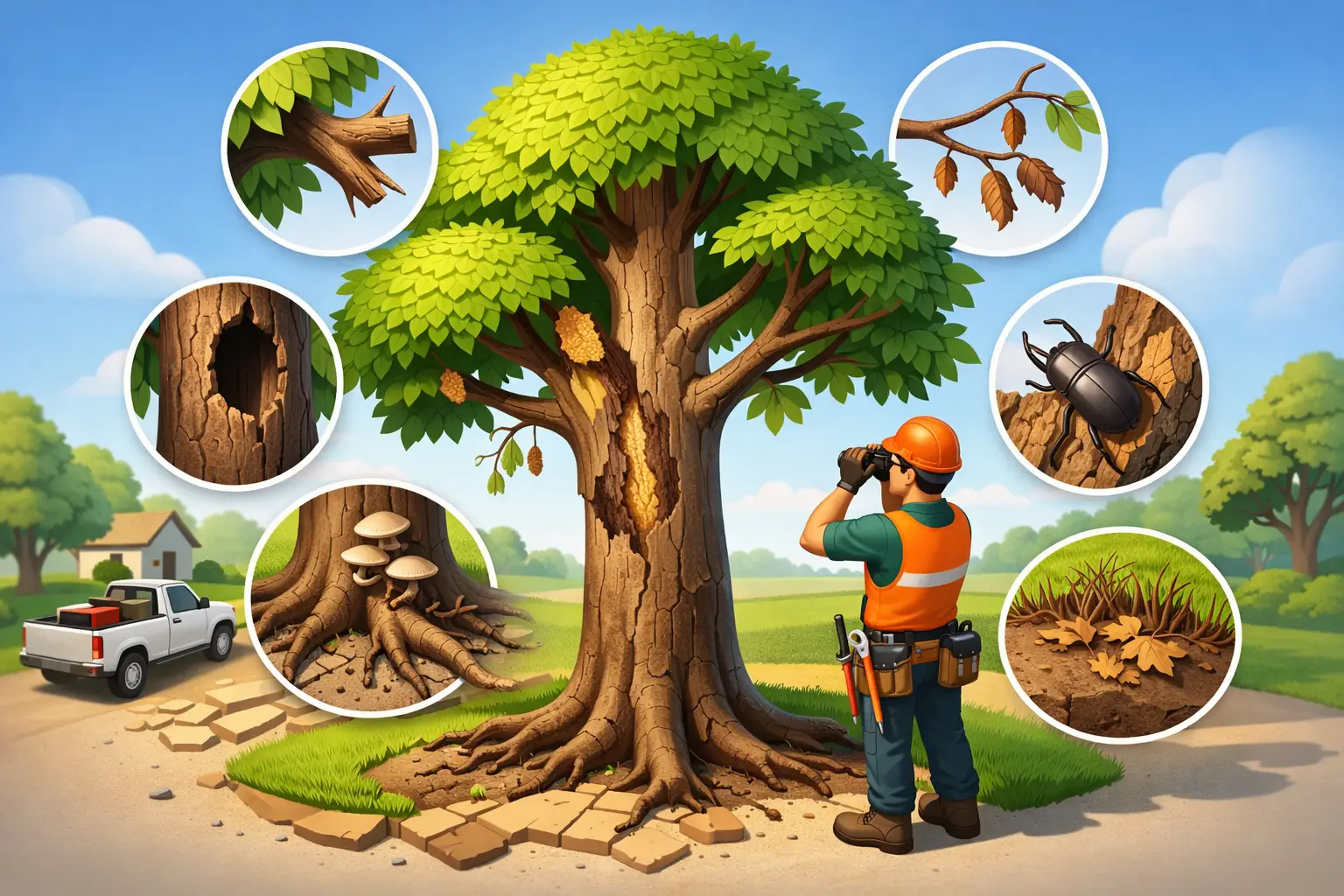
Dead, dying and damaged branches are often the clearest candidates for pruning. Deadwood can fall without warning, especially in windy weather, and damaged limbs rarely improve on their own. Removing them can make a tree safer and reduce the chance of further tearing.
Crossing branches are another common issue. When limbs rub against each other, the bark can wear away and create an entry point for pests or disease. Selective pruning can solve that without stripping out the canopy.
Low branches affecting access, visibility or buildings may also need attention. Clearance over footpaths, drives and roads is a practical reason for pruning, but it should be done with restraint. Raising a crown too aggressively can leave a tree looking awkward and can increase stress on the remaining structure.
What should usually be left alone is healthy growth removed purely for convenience or because the tree has become larger than expected. If a tree is in the wrong place, repeated harsh cutting is often not a long-term answer. In some cases, formative work, crown reduction or a more considered management plan is far better than lopping bits off every year.
Poor pruning can create bigger problems
Topping is one of the clearest examples of what not to do. Cutting back the top of a tree indiscriminately might seem like a quick way to reduce height, but it commonly leads to weak, fast regrowth and a poor branch structure. It also leaves large wounds that the tree may struggle to seal.
Another problem is over-thinning. Removing too much internal growth can expose limbs that were previously sheltered, increasing the risk of sunscald and wind stress. A tree needs leaf area to produce energy. Strip too much out and you weaken its natural resilience.
There is also the issue of hidden defects. Cracks, cavities, included bark and decay are not always obvious from the ground. A branch that looks like a straightforward reduction job can behave very differently once weight starts shifting during the cut. That is where experience and safe access methods matter.
Tree pruning rules and the law
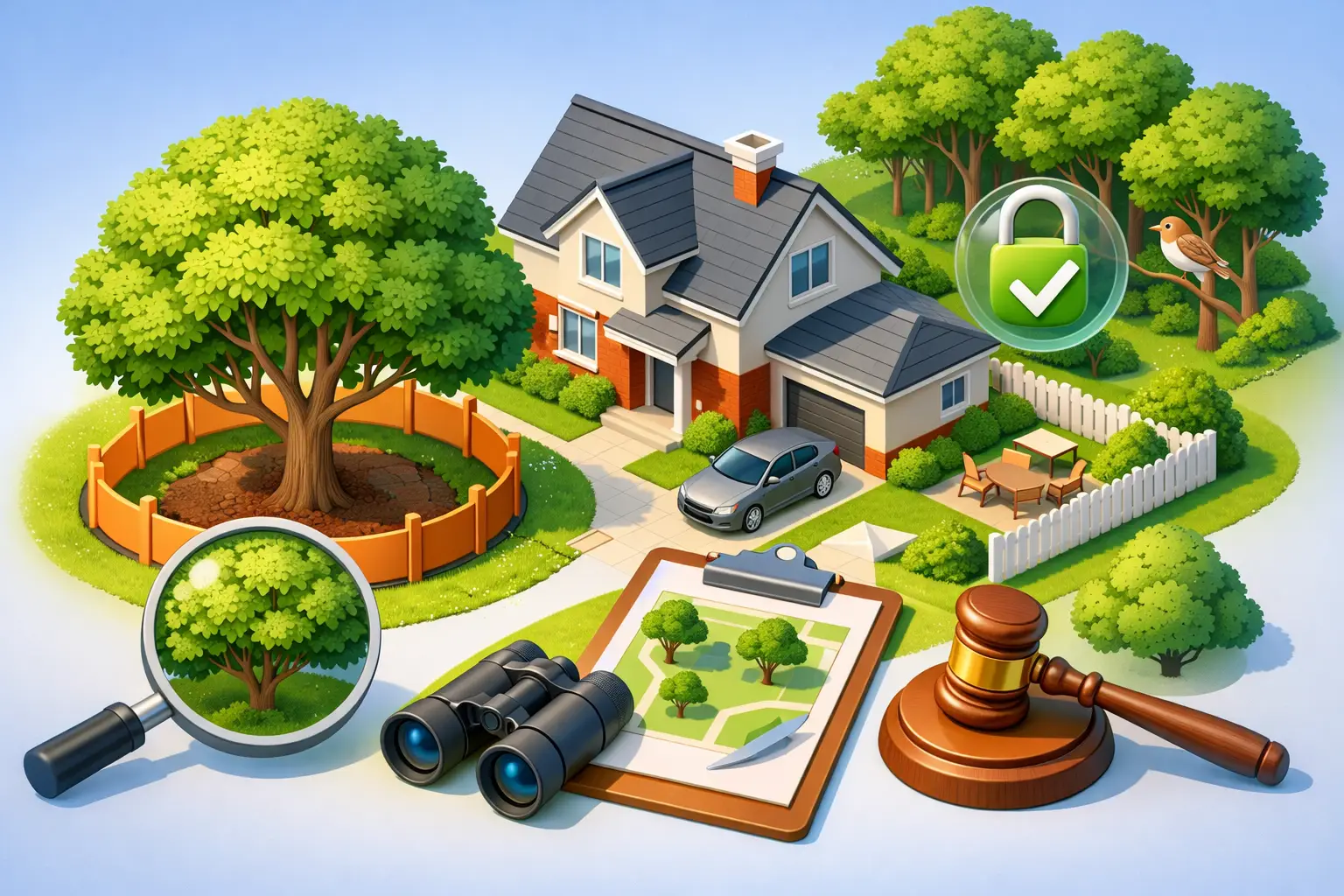
Not every tree can be pruned whenever you choose. Some are protected by Tree Preservation Orders, and others may stand within conservation areas. If that applies, consent or notice may be required before work is carried out, even if the tree is on private land.
Boundary issues can cause confusion too. You may have the right to cut back growth encroaching onto your side, but that does not automatically mean any type of cut is acceptable. If the work destabilises the tree or causes unnecessary damage, disputes can follow. It is also worth remembering that the wood and branches technically remain the property of the tree owner unless agreed otherwise.
Where trees are close to roads, public footpaths, buildings or utilities, the stakes are higher. Commercial sites, estates and landlords in particular need to think beyond appearance. Duty of care, public safety and documented maintenance all come into play.
When routine pruning becomes professional tree work
There is a clear line between light garden pruning and work that should be handled by trained arborists. Height is one factor, but it is not the only one. The real warning signs are location, weight, condition and consequence.
If branches overhang a property, road, greenhouse, parked vehicles or a neighbour’s garden, the margin for error shrinks quickly. The same goes for trees with storm damage, decay, heavy lean or awkward access. Working from ladders with a saw is where many avoidable accidents happen.
Professional pruning is not just about equipment. It is about making the right cuts in the right order, controlling falling sections safely and leaving the tree in better condition than before. On larger trees, access equipment such as a cherry picker can make the job safer and cleaner where climbing is not the best option.
For clients across Fife, Dundee and Perthshire, that local knowledge matters too. Weather exposure, mature gardens, roadside trees and tight access all affect how work should be planned.
A sensible approach for owners and managers
If you are not sure whether a tree needs pruning, start with the practical questions. Is there deadwood? Is there a genuine safety issue? Has clearance become a problem? Is the tree showing signs of poor structure or previous bad cutting? Those are useful reasons to investigate further.
Then look at the bigger picture. What species is it? What time of year is it? Could it be protected? Would pruning solve the problem or just postpone it? A good contractor will not push unnecessary work. They will explain what is worth doing, what can wait and what should be left alone.
That honest advice is often the difference between proper tree care and repeated patch-up work. HL Tree Services deals with both routine pruning and more awkward, high-risk jobs, and the same principle applies to each one – do the work safely, do it cleanly and do what is right for the tree as well as the site.
Tree pruning should never be guesswork dressed up as maintenance. A careful cut at the right time can extend a tree’s life and reduce risk. The wrong cut can take years to show its cost, which is why the best next step is often a proper assessment before the saw comes out.