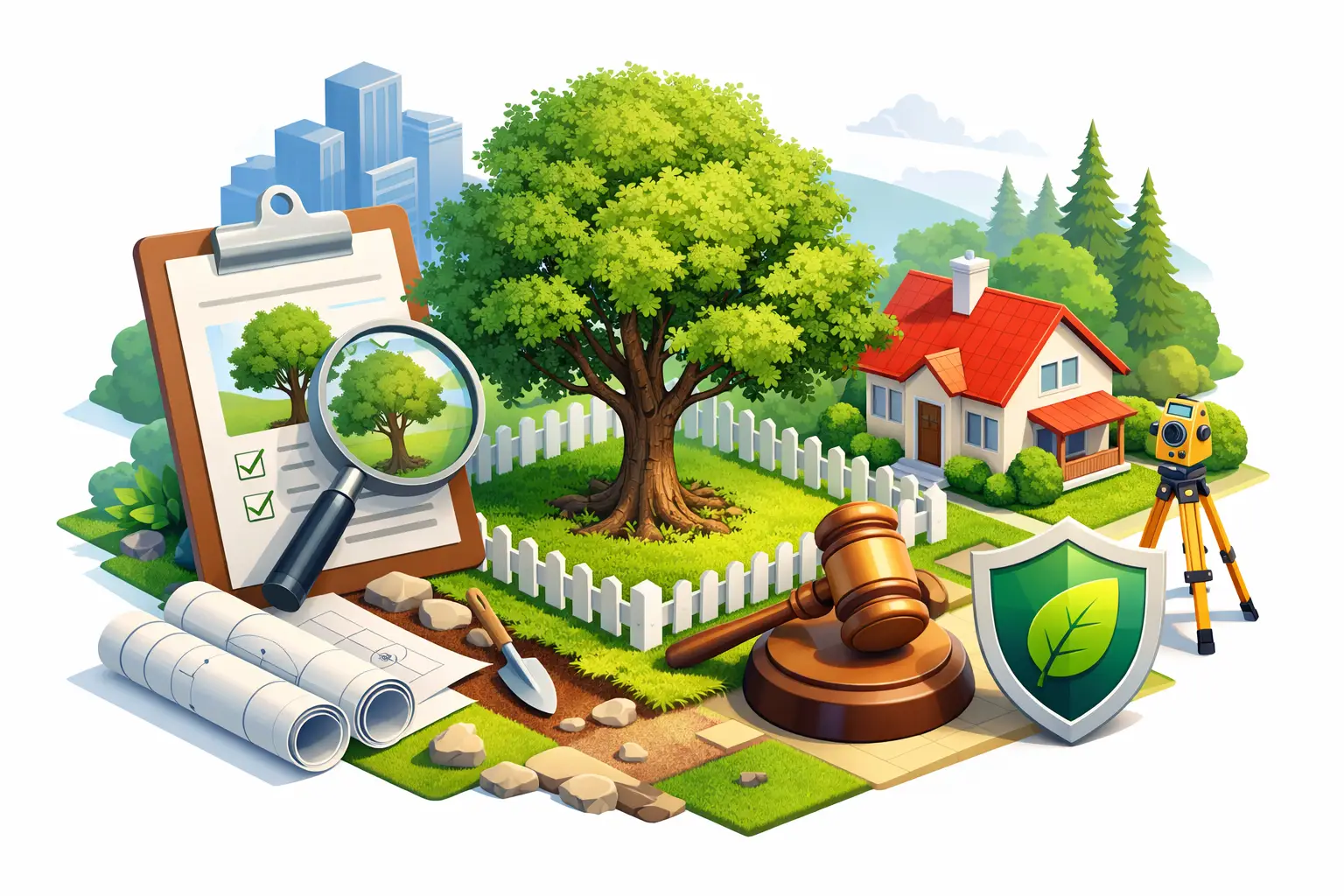
A mature tree can be the best feature of a garden or site – until a storm-damaged limb, excessive shade or proposed building work makes action necessary. This tree preservation order guide explains what a TPO means, how to check whether it applies to your tree, and how to plan lawful work without putting people, property or the tree at unnecessary risk.
For homeowners, estates and property managers, the key point is simple: do not assume that owning the tree gives you automatic permission to prune, reduce or remove it. Protected-tree work is managed by the local planning authority, and the right approach depends on the tree’s condition, the work proposed and the reason for it.
What is a Tree Preservation Order?
A Tree Preservation Order, commonly called a TPO, is a legal protection placed on trees or woodland that provide public amenity value. A council may protect a single tree, a group of trees, an area or a woodland. The order can cover trees growing in a private garden, on an estate, beside commercial premises or along a development boundary.
A TPO does not mean a tree can never be maintained. It means most work needs the planning authority’s written consent first. That includes felling, crown reduction, thinning, lifting, pollarding, cutting roots and removing significant branches. Even well-intended work can cause lasting damage if it is poorly specified or carried out at the wrong time.
The protection stays with the tree, not the owner. If a property is sold, the new owner remains responsible for complying with the order. It is also worth remembering that trees within conservation areas are subject to separate controls, even where no individual TPO is in place.
How to check if a tree is protected
The safest starting point is to contact the relevant local planning authority before booking non-urgent work. Councils usually hold records of TPOs and conservation area boundaries, although online maps and historic records should be treated as a starting point rather than final confirmation.
Give the council the full address, a clear description of the tree and, where possible, a photograph or site plan. On larger grounds, identifying the tree accurately matters. A vague request such as “the oak at the back” can create confusion where several mature trees are present.
Do not rely on a neighbour’s recollection, an old sales advert or the absence of a visible notice. Orders can be amended, made provisional or confirmed after previous ownership. If work is planned around Dundee, Fife or Perth, checking early prevents avoidable delays once contractors, scaffolding or building schedules have been arranged.
TPOs and conservation areas are not the same
A TPO is a specific order protecting identified trees or woodland. A conservation area is a designated place where trees above certain sizes are generally protected by a notice process. In a conservation area, you normally give the planning authority six weeks’ notice of intended work. The authority can then allow the work, advise on it, or make a TPO if the tree merits longer-term protection.
The practical lesson is the same: check before work starts. The legal route, paperwork and timescale may differ, so a clear description of the proposal is essential.
Tree preservation order guide: applying for consent
A good application does more than ask to “cut back” a tree. The council needs enough detail to understand the purpose, extent and likely effect of the proposed work. Vague requests are more likely to be delayed, refused or approved with conditions that do not solve the original problem.
Set out what you want done and why. For example, a request may involve removing deadwood over a driveway, reducing a limb that is making contact with a roof, or carefully reducing a crown to manage excessive loading on a mature tree. Include the tree species if known, its location on a plan, recent photographs and any relevant history such as storm damage, decay or previous failures.
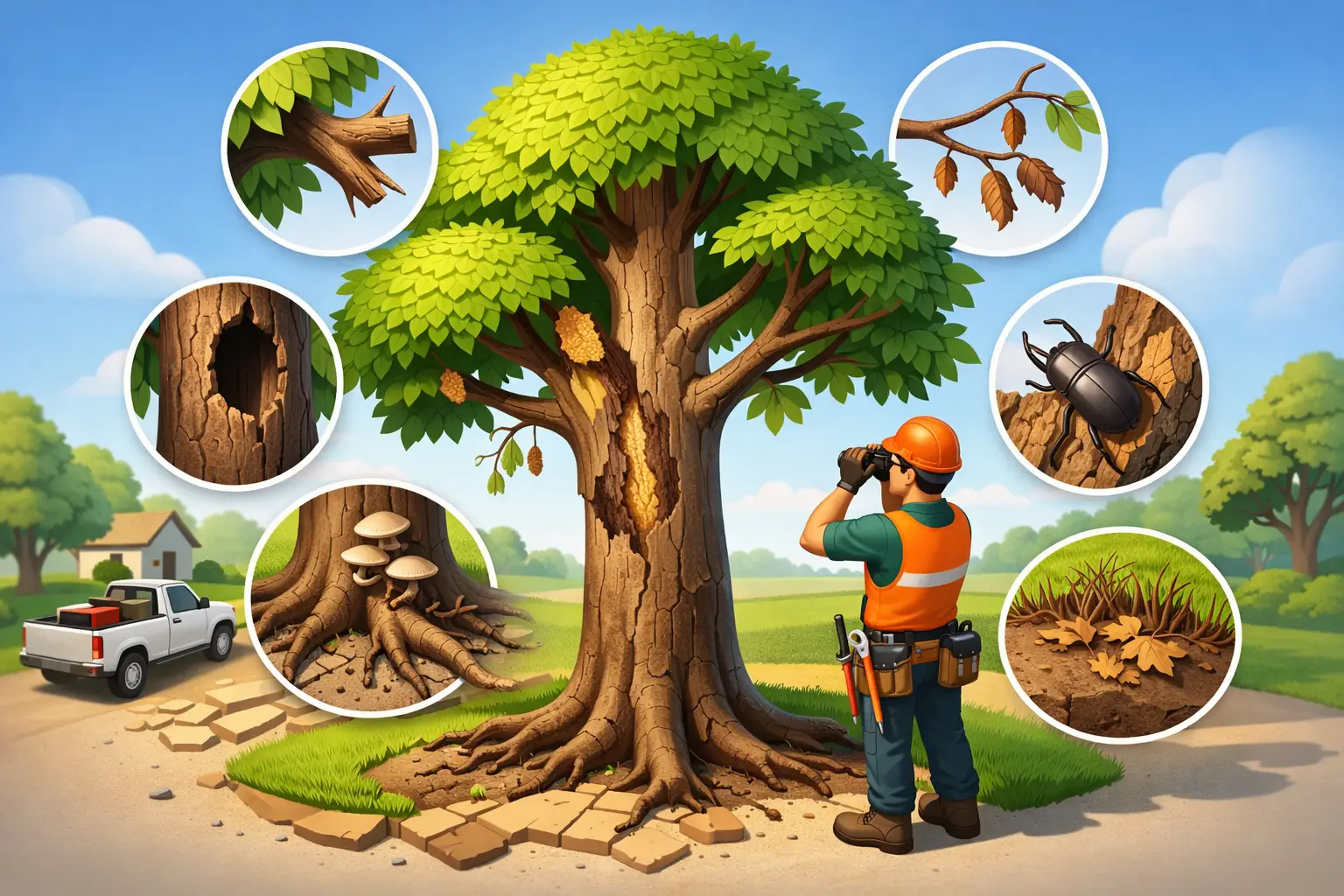
For substantial work, an arboricultural assessment can be useful. A professional inspection helps distinguish between a genuine safety issue and a problem that can be managed through lighter pruning. It can also identify defects that are not obvious from ground level, including cavities, fungal decay, weak unions and branch loading.
The planning authority may approve the work as requested, approve a modified specification, attach conditions, or refuse consent. Conditions can cover timing, pruning standards, replacement planting or the need for work to be carried out by a competent contractor. Read the decision carefully. Consent for a crown reduction is not permission to remove the tree, and permission for one tree does not automatically cover another nearby.
When emergency work may be justified
There are limited exceptions where protected-tree work can be carried out without prior consent, including work on dead trees and action necessary to remove an immediate danger. These exceptions are often misunderstood.
A tree that looks untidy, has a few dead twigs or worries a neighbour is not automatically an emergency. Equally, a partially failed limb hanging over a public path after high winds may require prompt action to make the area safe. The difference is the level and immediacy of risk.
Where urgent work is needed, take photographs before any intervention if it is safe to do so. Record the damage, the weather event where relevant, the risk location and the minimum action needed. Keep photographs of the work and retained material where practical. Notify the planning authority as soon as possible, particularly if the work goes beyond making the tree safe.
The sensible approach is to remove or reduce the hazardous part only. Felling an entire protected tree because one branch has failed can be difficult to justify unless its condition clearly warrants it. A qualified tree surgeon can assess access, rigging requirements and whether a cherry picker is the safest option, especially over buildings, roads or confined gardens.
Why professional specifications matter
The words used in a TPO application affect both the decision and the finished result. “Tidy up” and “lop” are not useful specifications. They do not define branch size, pruning points, canopy spread or the amount of live growth to be removed.
Poorly planned pruning can leave large wounds, trigger weak regrowth, spoil the tree’s form or create a greater safety issue in future. Heavy crown reduction may be appropriate for a declining tree with a particular defect, but it is not always the right answer for shade or leaf fall. Sometimes selective thinning, crown lifting, deadwood removal or a discussion about a different management cycle provides a better long-term outcome.
A competent contractor should assess the tree from the ground and, where required, at height before beginning. They should use appropriate climbing, lowering and access equipment, protect nearby surfaces, control the work area and leave the site clean. For protected trees, they should also work precisely to the approved specification rather than treating consent as a broad licence to reshape the tree.
Common mistakes that can lead to trouble
The most costly mistake is starting work before protection has been checked. Enforcement action and fines can follow unauthorised damage or removal, and the owner may be required to plant a replacement tree. The financial risk is only part of the issue: mature trees take decades to replace and often add real character, privacy and value to a property.
Other frequent problems include applying for work without clear reasons, using an unqualified contractor, assuming a verbal conversation is approval, and changing the scope once a team arrives on site. If the tree turns out to be more hazardous than expected, pause and seek advice rather than pressing on.
Development proposals need particular care. Tree protection should be considered before driveways, extensions, drainage runs and service trenches are fixed on a plan. Root damage from compaction or excavation can destabilise a tree years later, even when no branches have been cut. Early advice can help retain valuable trees while avoiding future conflict between buildings, access and canopy growth.
Plan early, protect the right tree
A protected tree should not be treated as a problem to work around. With the right inspection, clear application and careful workmanship, necessary maintenance can often be completed safely while preserving the tree’s health and contribution to the site. If you are unsure whether a tree is protected or what work is justified, get the position checked before the saws come out – it is the quickest route to a safe, tidy and lawful result.