A commercial site can look straightforward at first glance – a few trees, heavy scrub, some old stumps, maybe poor access around the edges. Then work starts and the real issues appear. Hidden roots, unstable timber, restricted working space, nesting season concerns, buried services, and the simple fact that clearing land quickly still has to be done safely. That is why a proper guide to commercial site clearance matters before any machinery arrives on site.
Commercial clearance is not just about making land look tidy. It is often the first stage of a wider project, whether that is construction, access improvement, utilities work, boundary management, drainage, or bringing neglected ground back into use. If the clearance phase is rushed or poorly managed, delays and extra costs usually follow.
What commercial site clearance actually involves
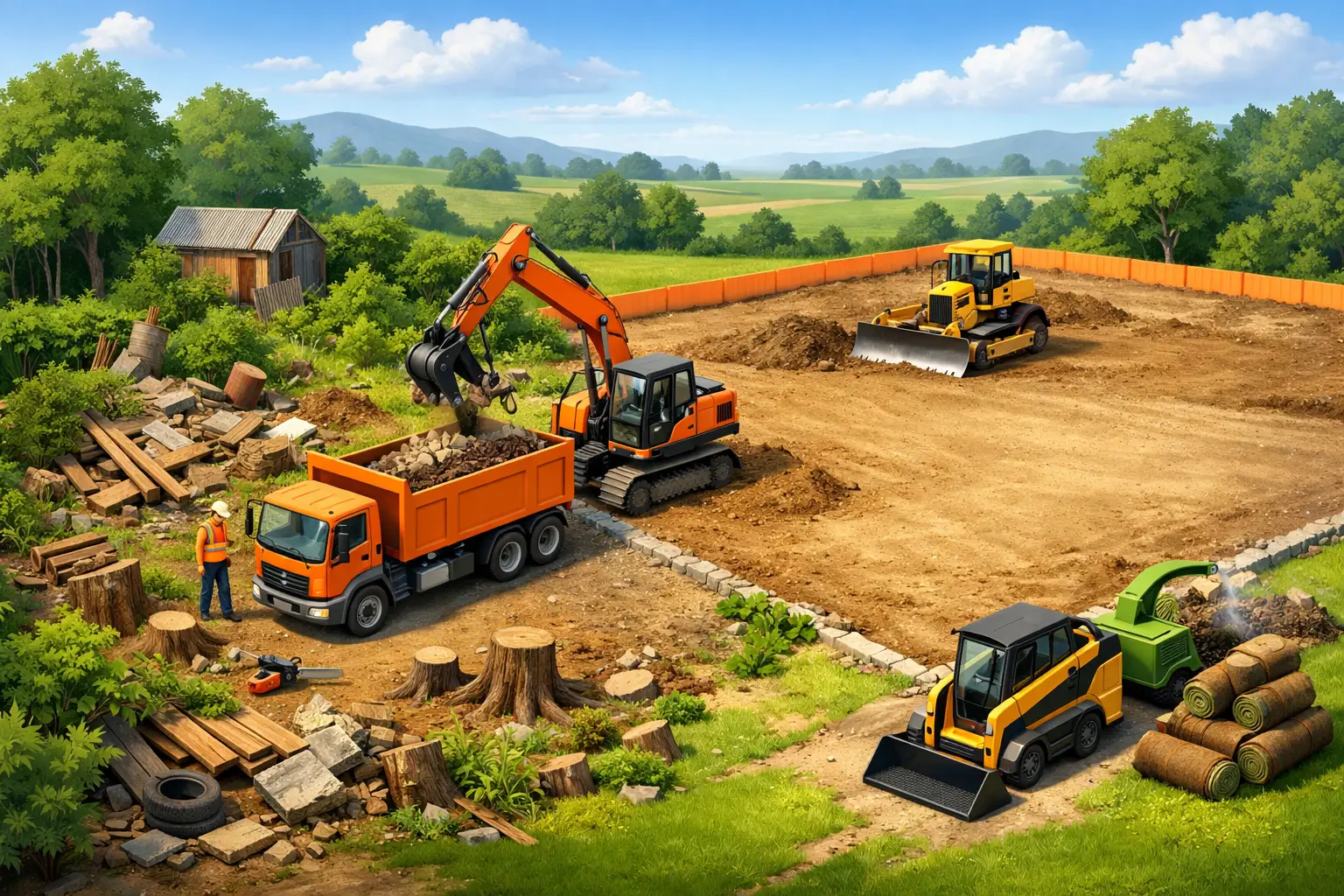
In practical terms, commercial site clearance is the organised removal of trees, vegetation, hedges, brash, stumps, and other natural obstacles so a site can be used safely and efficiently. On some sites that means selective tree removal while retaining valuable specimens. On others it means stripping back dense overgrowth, removing self-seeded trees, opening access routes, and grinding out stumps so follow-on trades can get started.
No two sites are quite the same. A small plot behind industrial units has very different demands from a roadside development parcel, a farm boundary, or a large estate area with mixed vegetation. The right approach depends on what is staying, what is going, how the site will be used next, and what risks are present from the outset.
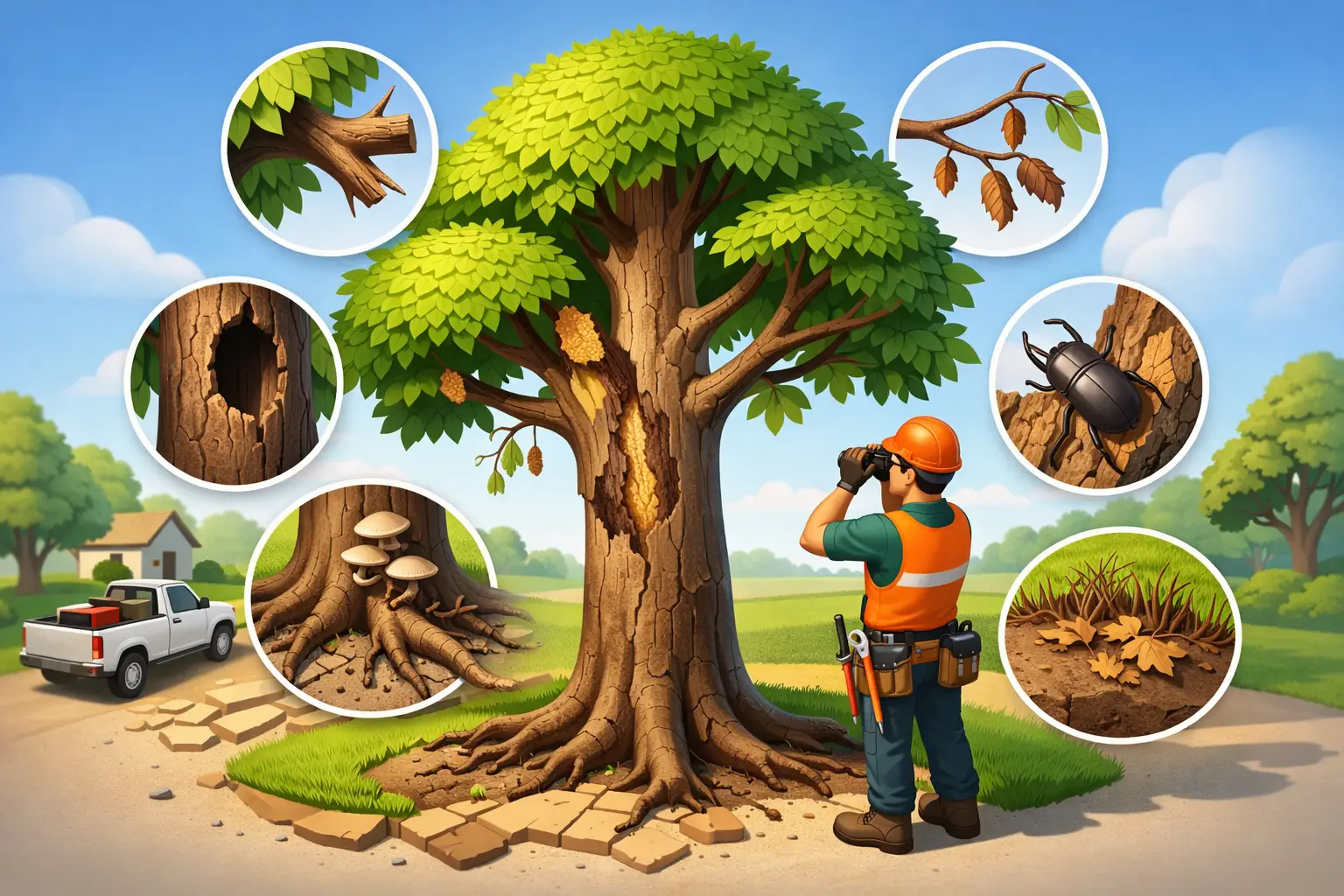
That is why experienced contractors will usually assess more than just the visible vegetation. They will look at access for plant and chippers, the proximity of buildings and roads, overhead lines, ground conditions, waste volumes, and whether specialist equipment such as a cherry picker is needed to dismantle larger trees safely.
Why planning matters before clearance starts
The fastest way to lose time on a commercial job is to treat clearance like a basic cut-and-remove exercise. Good planning protects the programme, reduces risk, and helps avoid expensive surprises once work begins.
Tree constraints are one of the first things to check. Some trees may be protected, sit within a conservation area, or need to be retained as part of a planning condition. Even where there is no formal protection, removing mature trees without a proper assessment can create knock-on problems for neighbouring boundaries, visibility lines, or future landscaping.
Wildlife is another factor that cannot be brushed aside. Nesting birds, bats, and other protected species can affect when and how work is carried out. It depends on the site and the season, but this is one area where cutting corners can stop a project altogether.
Access also deserves more attention than it usually gets. A site might appear easy to clear, but if machinery cannot enter safely, timber cannot be extracted cleanly, or waste cannot be loaded efficiently, the job changes shape quickly. Sometimes smaller equipment and sectional dismantling are the safer option. Sometimes a larger machine setup saves time and money. The right answer depends on the space available and the risk around it.
A guide to commercial site clearance in stages
Most commercial clearance projects follow a clear sequence, even if the scale varies.
The first stage is the site visit and scope review. This is where the contractor works out exactly what needs removing, what must remain, and what the finished site needs to look like for the next phase. It is also the point where practical issues are spotted early rather than halfway through the job.
The second stage is method planning. Larger trees may need sectional dismantling rather than straight felling. Dense scrub may be flailed, cut and chipped, or removed in sections depending on ground conditions and surrounding structures. Stumps may need grinding below finished ground level if future surfacing or construction is planned.
Then comes the clearance itself. This can include tree felling, crown reduction to facilitate safe removal, hedge removal, brash chipping, log handling, stump grinding, and vegetation management across the wider site. The best jobs are not just fast. They are controlled, tidy, and carried out in a way that leaves the site ready for what comes next.
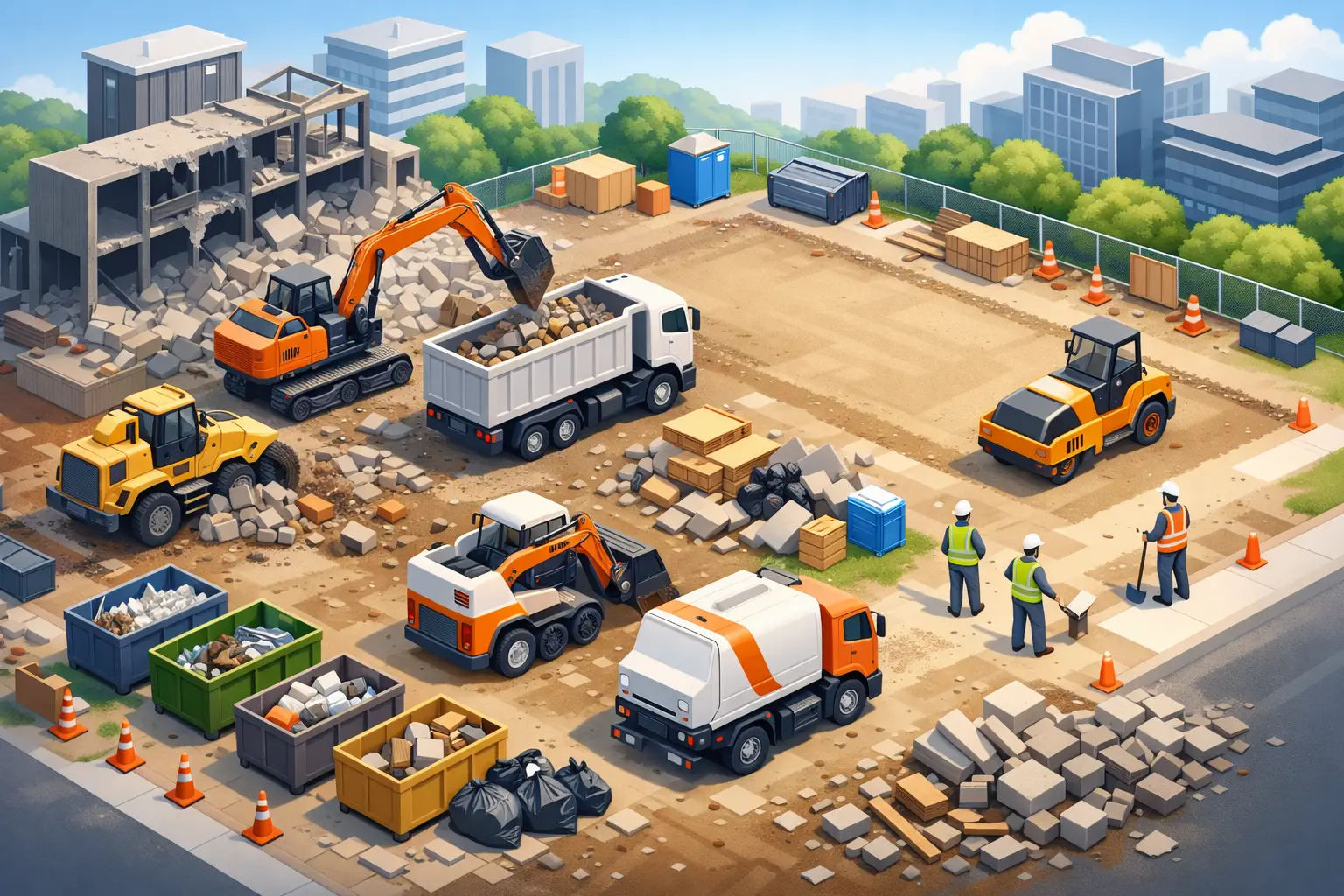
The final stage is waste handling and clean-up. That matters more than many clients expect. A site that has technically been cleared but is left with timber stacks, churned ground, and scattered debris is not truly ready. Professional clearance should leave a clear result, not another problem for the principal contractor or landowner to sort out.
Safety is not a box-ticking exercise
Tree and vegetation clearance can become high risk very quickly, especially on commercial sites where deadlines are tight and surroundings are less forgiving. Public footpaths, roads, parked vehicles, buildings, boundary fences, utilities, and uneven ground all increase the level of planning required.
This is where experience shows. A trained team will know when a tree can be felled cleanly and when it needs to be dismantled in sections. They will know how to manage exclusion zones, coordinate plant movements, and keep the work area under control. They will also know when weather, visibility, or ground conditions make it sensible to pause rather than push on.
There is always a balance between speed and care. Commercial clients usually need efficient turnaround, and rightly so. But speed only helps if the job is done properly the first time.
Choosing the right contractor for commercial site clearance
If you are comparing contractors, look beyond the quote total. Commercial site clearance is one of those services where a cheap price can hide expensive gaps.
A capable contractor should be able to explain how the site will be cleared, what equipment will be used, how waste will be removed, and what limitations may affect the programme. They should also be realistic. If access is tight, if protected trees may be involved, or if weather could affect machinery, it is better to hear that upfront.
It is also worth asking how tidy the finish will be. On commercial sites, cleanliness is part of the service. Chipped brash, removed timber, stump treatment or grinding, and a sensible handover condition all make a difference once the next trade is due in.
For larger or awkward jobs, specialist access equipment can be a major advantage. A contractor with the right machinery can often carry out complex work more safely and efficiently than a team trying to manage with limited kit.
Common issues that change the job
Even well-planned site clearance can shift once work begins. Hidden debris in undergrowth, old fencing swallowed by hedges, soft ground after heavy rain, and root systems running further than expected are all common. On redevelopment plots, there may also be pressure to preserve specific trees while clearing everything around them, which takes care and precise working methods.
This is why clear communication matters. A good contractor will keep the client informed if the scope changes, rather than pressing ahead and leaving disputes to sort out afterwards. It is not unusual for commercial clearance to involve decisions on the day. The difference is whether those decisions are managed professionally.
When selective clearance is the better option
Not every site needs a full strip-out. In many cases, selective clearance is the smarter route. Retaining sound boundary trees, preserving screening, or keeping healthy mature specimens can improve the finished site and reduce replacement planting costs later.
There is also a practical benefit. Removing only what is necessary can shorten programme time, reduce waste volumes, and limit disturbance to the ground. For estates, business parks, and managed commercial land, this often produces a better long-term result than clearing everything simply because it is there.
Local knowledge helps on working sites
Across Fife, Dundee and Perthshire, commercial sites vary widely. Some have restricted urban access and close neighbouring properties. Others are more rural, with larger boundaries, banks, ditches, and difficult terrain. Local knowledge helps when judging travel access, disposal logistics, and the kind of equipment a site can realistically accommodate.
That is one reason many clients prefer to work with an established local contractor rather than a remote team with little feel for the area. HL Tree Services regularly handles awkward, high-risk and large-scale tree work, and that practical, on-the-ground experience matters when a site needs clearing safely and without fuss.
What a good result looks like
A good clearance job is not just measured by what has been removed. It is measured by what has been left behind – a safe, workable, properly managed site with no avoidable mess, no unnecessary damage, and no confusion about the next step.
For some clients that means complete vegetation removal and stump grinding ready for development. For others it means opening access, reducing risk from poor-quality trees, and restoring control over overgrown land. The right outcome depends on the purpose of the site, and that is exactly why no sensible contractor treats every clearance job the same way.
If you are planning work on commercial land, the best starting point is a clear view of the end use, the constraints on site, and the standard of finish you actually need. Get that right, and the clearance phase becomes far easier to manage from day one.