A storm can turn a healthy-looking tree into an immediate hazard in a matter of minutes. A snapped limb may be hanging above a driveway, a split trunk may be leaning towards a roof, or roots may have lifted in saturated ground. When this happens, emergency tree services in Fife: what to do after storm damage becomes less about tidying the garden and more about protecting people, property and access.
The safest decision is usually the simplest one: keep clear, do not attempt a repair yourself, and arrange a professional assessment as soon as conditions allow. Storm-damaged trees can be under enormous tension, and the danger is not always visible from the ground.
Make the area safe before anything else
Do not walk beneath broken or hanging branches, even if they appear firmly caught in the canopy. Wind can shift them without warning. Keep children, pets, neighbours and vehicles away from the affected area, and use a safe route around the garden if a path, gate or driveway is blocked.
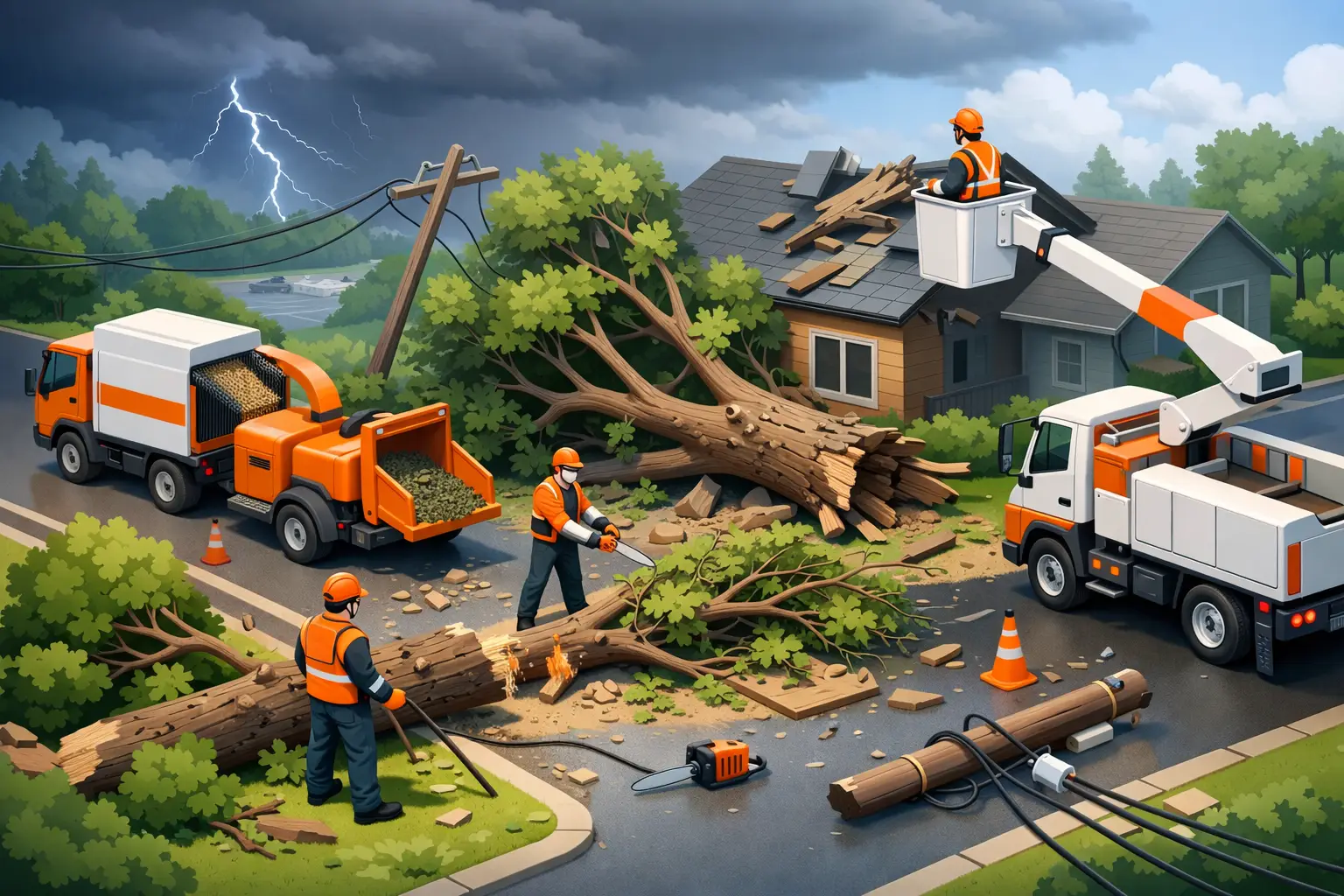
If a tree or branch has brought down, damaged or is touching an electricity, telephone or overhead service line, stay well away. Do not touch the tree, attempt to move branches, or use ladders nearby. Contact the relevant network operator or emergency service where there is an immediate threat to life, then make the area inaccessible until it has been declared safe.
A tree resting on a shed, fence, conservatory or roof should also be treated as unstable. It may look as though it is supported, but further movement can cause additional structural damage or bring down more of the tree. Avoid entering a damaged building until it has been checked where necessary.
Check from a distance, not from underneath
Once the wind has eased and you can stand in a clear, safe position, take a few photographs from different angles. These can help with an insurance claim and allow a tree surgeon to understand the likely scale of the job before arriving. There is no need to get close for a perfect picture.
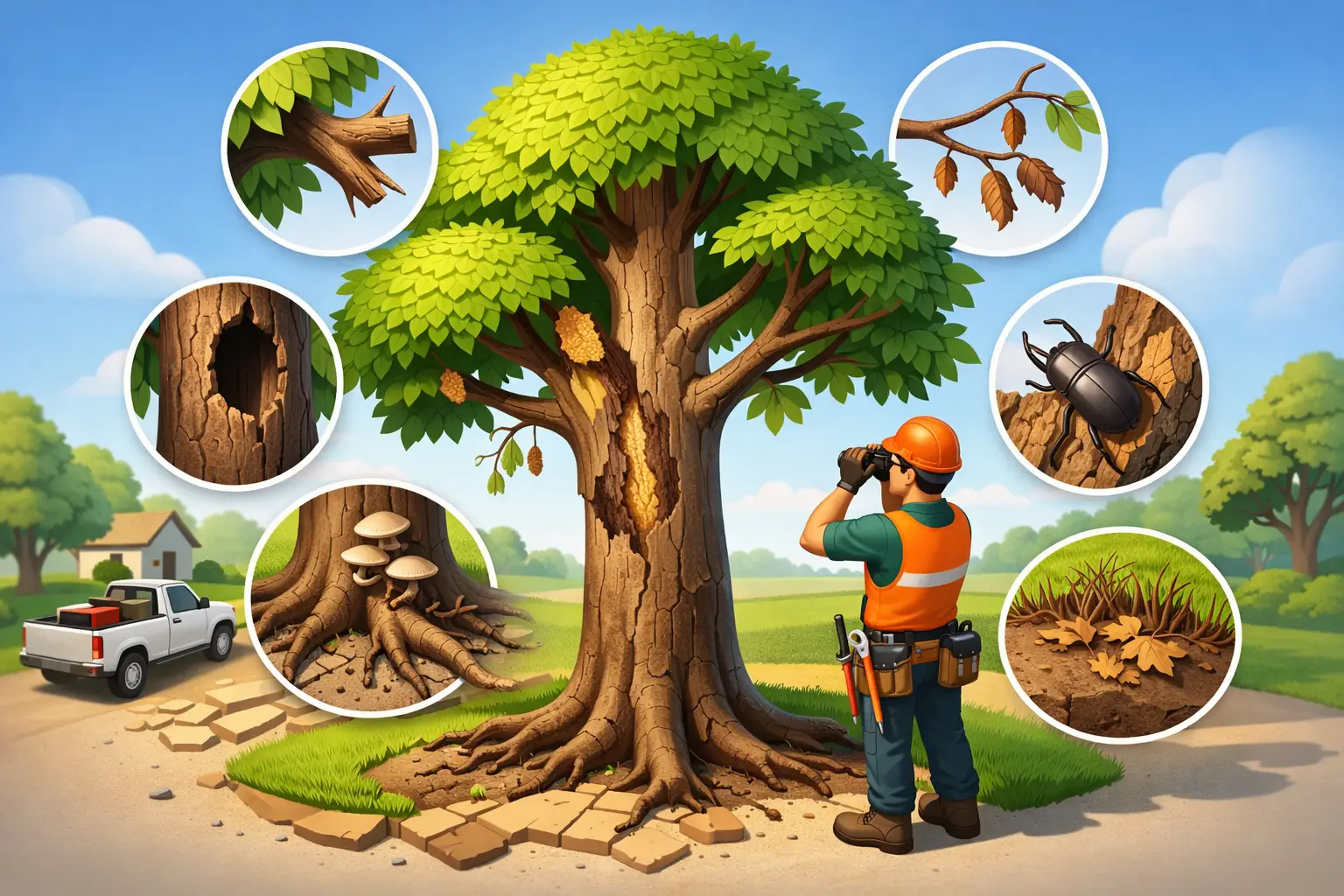
Look for obvious signs such as a tree leaning where it was previously upright, a cracked or split main stem, lifted soil around the root plate, torn branches, or limbs suspended in neighbouring trees. Also note whether the tree is blocking a public footpath, driveway, private road or access for emergency vehicles.
Not every storm-damaged tree needs to be removed. A mature tree with a torn branch may be safely pruned and retained, while a tree with major root movement or a split through its main structure may need urgent dismantling. The right outcome depends on the species, the extent of damage, where the tree is positioned and what it could strike if it fails.
Do not be reassured by a tree that is still standing
Some of the most serious failures occur after the storm has passed. Waterlogged ground can lose its grip on the roots, and a partially fractured stem may remain standing for days before giving way. If a tree has changed angle, the ground is heaving, or cracks have appeared in the trunk, treat it as an urgent issue even if no branches have fallen.
Why DIY storm clearance is risky
It is tempting to pull down a branch, climb a ladder or use a chainsaw to reopen a driveway quickly. This is where many injuries happen. Storm damage changes the forces within timber: branches may be bent, compressed, twisted or held under tension by other limbs. A cut in the wrong place can cause wood to spring, roll or fall unpredictably.
Ladders add another level of risk. Wet ground, unstable branches and gusting wind are a poor combination, particularly near roofs and overhead lines. Even smaller trees can cause serious injury when they move unexpectedly.
Professional emergency work is planned around controlled removal. A qualified tree team assesses the direction of lean, likely tension points, safe working zones, access for equipment and the safest order in which to dismantle the tree. In awkward locations, a cherry picker may allow damaged limbs to be dealt with safely without climbing an unstable tree.
When to call emergency tree services in Fife
A prompt call-out is sensible when there is an immediate or developing risk to people, buildings, roads, vehicles or essential access. This includes a fallen tree across a driveway, a large limb over a house, a tree leaning towards a neighbouring property, or storm damage above a busy commercial entrance.
For homeowners, the priority may be making a garden, parking space or access route safe. For estates, property managers and commercial sites, the duty is often wider: staff, visitors, tenants, customers and public areas may all be affected. In these situations, clear temporary exclusion zones and a fast professional inspection are particularly valuable.
HL Tree Services provides 24-hour emergency call-out support across Fife and nearby areas, helping clients make dangerous trees safe with the right equipment and a practical plan for clearance. The first objective is not necessarily to remove every piece of timber immediately. It is to reduce the risk safely, then complete the required pruning, dismantling and site clean-up properly.
What to tell the tree surgeon
A clear description helps the team prepare for the job. Explain the location, whether the tree has hit a building or line, whether access is blocked, and if there are visible hanging branches or a significant lean. Mention restricted access, narrow gates, steep ground, parked cars or nearby structures.
Photographs taken from a safe distance are useful, but do not delay a call if the situation appears dangerous. If severe weather is still active, the team may need to wait until conditions are safe enough to work. That is not a lack of urgency – high winds make climbing, lifting and cutting more hazardous, and the safest response may be to secure the area until a controlled operation can begin.
Think about insurance and responsibility
Take photographs before any work begins where it is safe to do so, and keep a simple note of the date, time and weather conditions. If a tree has damaged your home, vehicle, boundary or outbuilding, contact your insurer promptly and follow their guidance. Emergency works to prevent further damage may be necessary, but insurers may want evidence of the original situation.
Where a tree crosses a boundary, responsibility can become less straightforward. Avoid arguments or assumptions while there is an active hazard. The immediate concern is safety. A tree professional can assess what has failed, what remains dangerous and what work is needed to prevent further damage.
Tree Preservation Orders and conservation area rules can still apply to storm-damaged trees. However, genuinely urgent works to remove an immediate danger are treated differently from routine tree work. A competent contractor can advise on the practical steps and record the condition of the tree, which is helpful where protected trees are involved.
After the urgent work: protect the tree and the site
Once the immediate danger has been dealt with, it is worth considering the next stage rather than assuming removal is always the answer. Storm pruning should be selective. Cutting back every damaged branch may make a tree look neater in the short term, but excessive pruning can create poor regrowth, decay points and an unbalanced canopy.
A professional assessment can identify whether the tree can be retained with careful remedial pruning, bracing or monitoring. In other cases, removal and stump grinding may be the safer long-term choice, particularly where root failure or major structural damage is present.
The site should also be left safe and tidy. That may mean removing timber and brash, clearing paths and gutters, dealing with damaged fencing, and checking nearby trees for secondary damage. One fallen branch can conceal another weakness higher in the canopy.
A calm response makes the biggest difference
Storm damage is unsettling, especially when a tree is close to your home or has cut off access to the property. Resist the urge to solve it quickly with a saw or ladder. Create distance, keep others out of harm’s way, record the damage from a safe position and bring in experienced help.
A fast, controlled response can prevent a difficult situation becoming a serious incident – and it gives any tree worth saving the best possible chance of recovery.