A fallen limb across a drive is obvious. The cracked branch hanging over a footpath is the one that catches people out. After a spell of strong weather, branch removal after high winds is not just about tidying up. It is about dealing with hidden tension, unstable timber and damage that can worsen quickly if handled the wrong way.
In many cases, the branch on the ground is only part of the problem. Wind can twist the crown, split larger limbs at the union, or weaken a tree that still looks upright and intact. For homeowners, landlords and site managers, the safest next step is not always immediate cutting. It starts with a clear look at what has moved, what is under pressure and what could fall next.
Why branch removal after high winds needs care
Storm-damaged timber behaves differently from routine pruning waste. A branch may be resting on a fence, tangled in other limbs, or partly attached and holding tension. Once cut, it can spring, roll or drop without warning. That is why jobs that seem simple from the ground can become dangerous very quickly.
There is also the condition of the tree itself to consider. High winds may expose old decay, weak unions or root movement that was not visible before. If a branch has torn away rather than snapped cleanly, the wound can be larger and more damaging to the tree. Removing debris safely while protecting the remaining structure takes judgement as well as equipment.
For commercial premises and public-facing sites, there is another layer to think about. A partly failed branch over parking areas, entrances or walkways creates an immediate risk to people and vehicles. Fast action matters, but rushed cutting without proper control can make the situation worse.
What to check before any branch removal after high winds
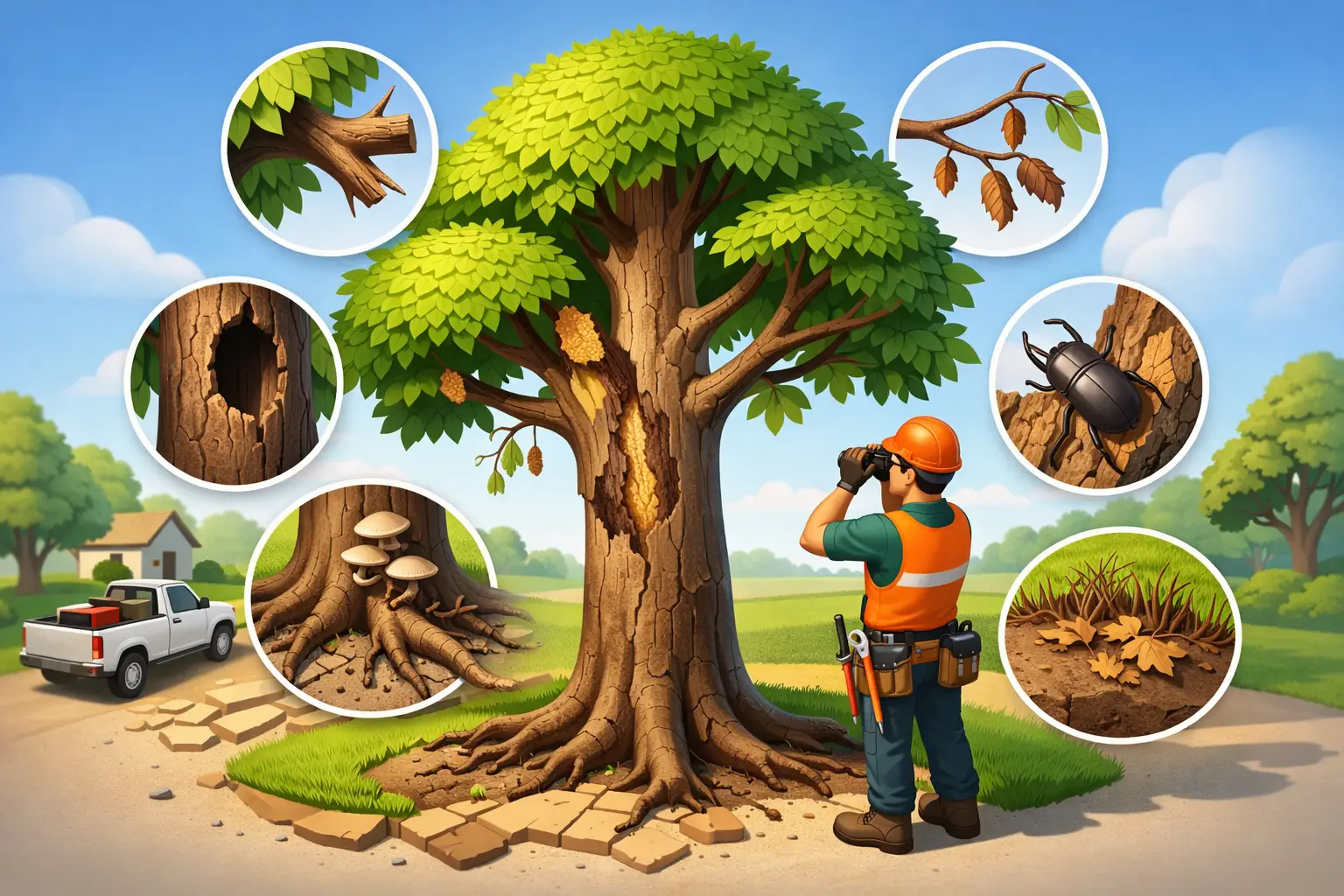
Start at a distance. If a tree has shifted, is leaning more than usual, or shows lifted ground around the base, do not go underneath it. Root plate movement can mean the whole tree is unstable, even if only one branch appears damaged.
Next, look for hanging branches, fresh splits in scaffold limbs, torn bark and anything caught in the canopy. Power lines are an obvious stop sign, but they are not the only one. Branches can also be lodged over greenhouses, sheds, conservatories and neighbouring boundaries, where a small movement can cause expensive damage.
It is worth checking whether access routes are affected too. A branch blocking a road entrance, bin store, farm track or delivery area can disrupt day-to-day use of the property. In those cases, making the area safe often comes before full remedial work. The priority is controlled removal, not simply getting everything cleared as fast as possible.
When it is safe to deal with small fallen branches yourself
Not every wind-damaged branch needs specialist intervention. Small, cleanly broken branches already on the ground and well away from the tree can often be moved by hand if the area is stable and there is no sign of further damage overhead.
That said, even light clear-up work needs a bit of caution. Gloves, sturdy footwear and awareness of what is above you go a long way. If you have to drag material out from under the canopy, stop and reassess. The moment you are working beneath suspended limbs or near split timber, it moves out of the simple tidy-up category.
A sensible rule is this: if the branch is heavy, still attached, trapped under pressure or needs a saw above shoulder height, it is no longer a DIY job.
Signs you need a professional tree surgeon
A professional should be called in if the branch is hanging, partially attached, twisted into the crown or resting on a structure. The same applies if the tree is large, close to buildings, near a road, or showing signs of wider storm damage.
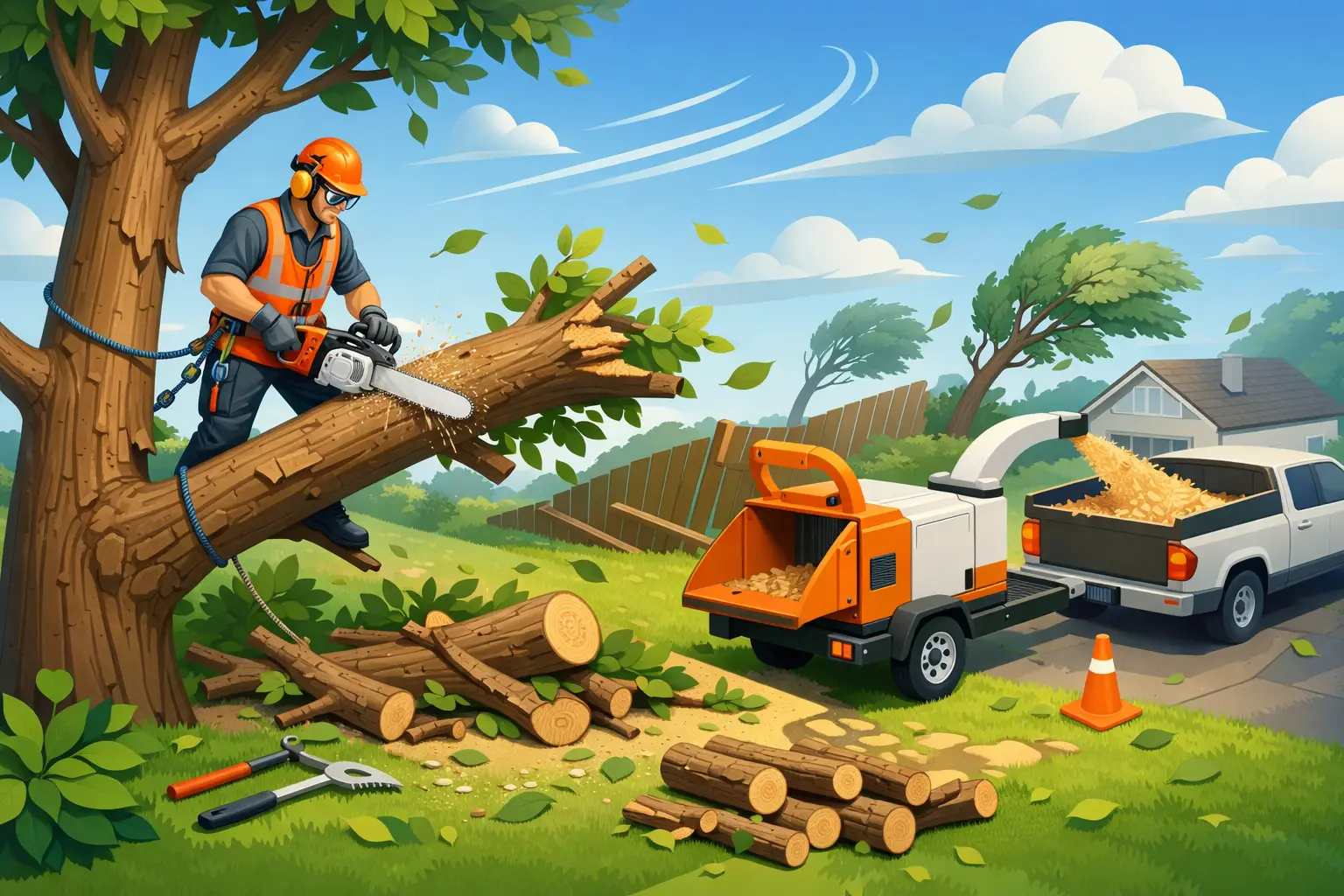
Specialist access can make a major difference here. On awkward sites, a cherry picker or controlled rigging setup allows damaged limbs to be removed in sections rather than dropped. That protects fences, roofs, paving and planted areas below. It also reduces the risk of tearing the tree further during removal.
This is especially relevant with mature trees, multi-stem specimens and conifers, where wind damage is not always easy to read from the ground. What looks like one failed branch may actually be part of a larger structural weakness. An experienced arborist will assess whether the tree can be retained with remedial work or whether heavier reduction, bracing or removal is the safer option.
The hidden risks people often miss
One of the most common issues after high winds is stored tension. A branch bent but not broken can release force the moment it is cut. Another is compression, where timber pinned against the ground or another branch closes the saw cut and traps the blade before the piece shifts unexpectedly.
There is also the matter of partial failure. A limb may be split along its length while still carrying weight. From below, it can look solid enough. Once disturbed, it can peel away violently. This is one reason storm work is treated differently from ordinary garden maintenance.
Then there is clean-up. Removing the branch is only part of the job. Torn bark may need tidying, damaged stubs may need correct pruning back to a suitable growth point, and the tree may need inspection for follow-on defects. A rushed cut can leave a poor wound, invite decay and create another hazard later on.
Protecting the tree as well as the property
After a storm, it is easy to focus only on what has fallen. But if the tree is otherwise healthy and worth retaining, the quality of the remedial work matters. Good branch removal should reduce risk while preserving as much sound structure as possible.
That may mean selective pruning to rebalance the crown, removal of torn sections to sound wood, or a broader inspection to identify weak limbs that are now exposed. In some cases, less is more. Over-pruning after wind damage can stress the tree further and leave it more vulnerable in future weather.
There is no single answer for every tree. A mature beech in a front garden, a wind-damaged willow near water, and a conifer line on a commercial boundary all call for different decisions. The right approach depends on species, condition, location and the extent of the damage.
What a proper professional response looks like
A good storm-damage call-out starts with making the site safe. That could mean isolating the area, removing immediate hazards and checking whether the tree has suffered more than one point of failure. From there, the work should be planned around access, drop zones, nearby structures and the safest cutting method.
For domestic clients, that often means reassurance as much as anything else. You want to know the risk has been assessed properly, the work will be carried out cleanly, and the site will not be left as a bigger mess than before. For commercial clients and property managers, response time, safe systems of work and dependable clear-up are just as important.
HL Tree Services handles this kind of work with the practical mindset it needs – safe access, controlled dismantling where required, tidy completion and honest advice on whether further work is necessary.
After the branch is gone, what next?
Once the immediate hazard has been removed, the tree should not simply be forgotten. High winds can reveal weaknesses that have been developing for years. If there are cracks, cavities, repeated limb failures or signs of decline, it is worth arranging a fuller inspection.
That does not always lead to major work. Sometimes the answer is straightforward remedial pruning and monitoring. Sometimes it is clear that the tree has become unsuitable for its setting, especially where targets such as roads, homes or public spaces sit beneath it. Either way, a proper assessment helps you make a decision based on condition rather than guesswork.
If you have several trees on a property, check the surrounding group as well. Wind often exploits the same weak points across exposed sites, boundary lines and overgrown crowns. One failed branch can be the warning sign that the rest need attention before the next blow comes through.
Strong winds leave plenty of obvious mess behind, but the real risk is often the damage that stays up in the canopy. If you are dealing with branch failure after a storm, treat it with care, keep people clear, and get the right help when the job moves beyond simple ground-level debris. A tidy garden can wait. A safe one should not.