A mature tree can be a real asset to a Fife home – until it starts leaning over a roof, blocks light from a garden, sheds heavy limbs in high winds or outgrows the space around it. Tree felling in Fife: everything homeowners need to know starts with one simple point: removing a tree is not always the right answer, but when it is necessary, it needs careful planning and skilled execution.
A professional tree surgeon will look beyond the visible problem. The species, condition, position, access, nearby buildings and legal status all affect whether a tree should be felled, reduced, pruned or monitored. The safest option is rarely a matter of simply taking a chainsaw to the base of the trunk.
When is tree felling the right option?
Felling means removing the whole tree, usually down to a low stump. It may be appropriate where a tree is dead, dying, seriously diseased, structurally unsound or causing damage that cannot be managed through pruning. It can also make sense where a tree has outgrown a small garden, is too close to a property, or is preventing planned building work.
However, a large tree does not automatically need to come down because it creates shade, drops leaves or has grown taller than expected. Healthy trees often respond well to crown reduction, crown thinning or the removal of selected branches. These options can retain the tree’s character and environmental value while reducing wind resistance, improving light or creating clearance from a building.
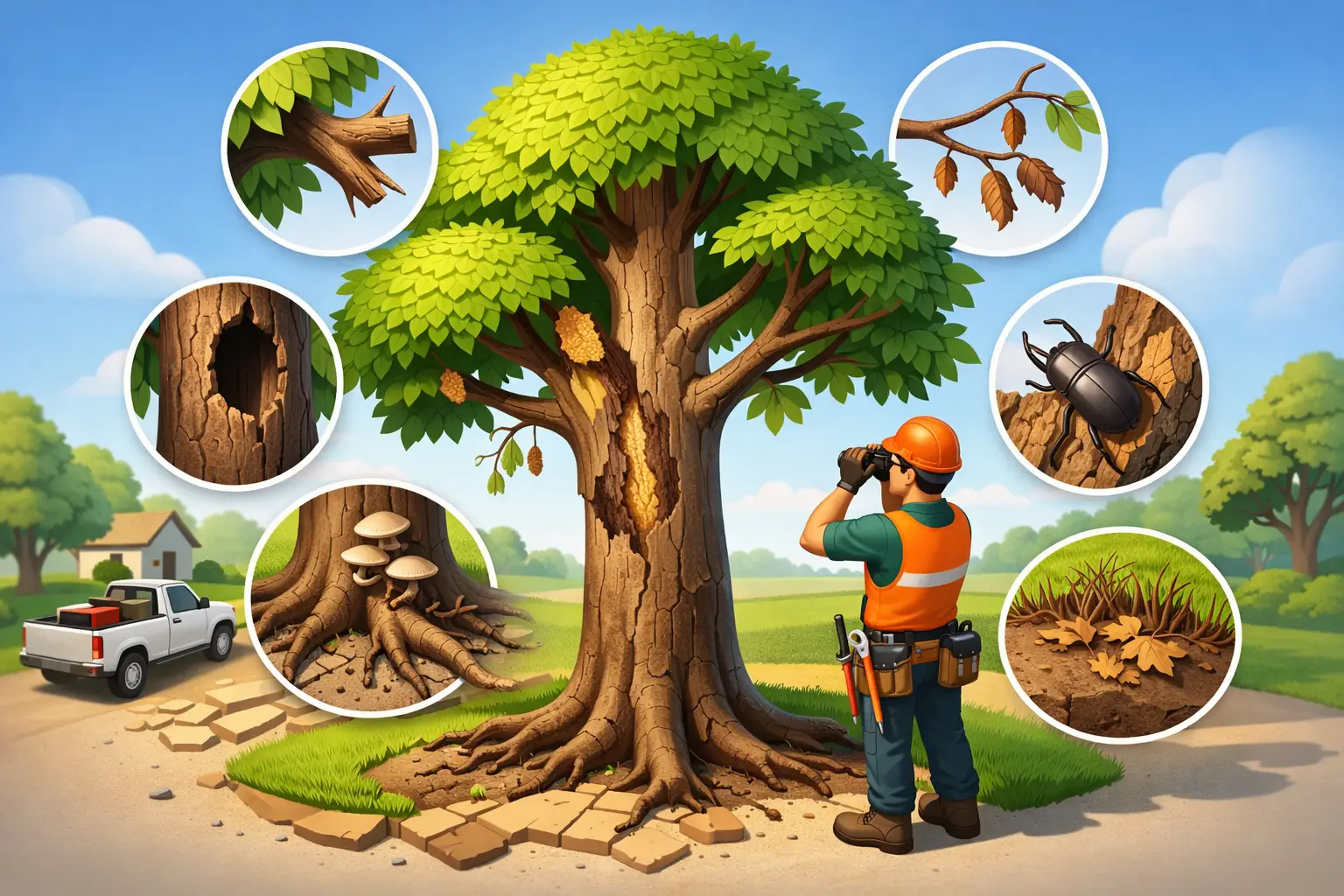
The best decision depends on the tree and its surroundings. A skilled inspection can identify decay, weak unions, fungal growth, root issues and storm damage that are not always obvious from the ground. If there is a concern about safety, do not wait for the next period of strong wind to find out how serious it is.
Tree felling in Fife and legal permissions
Before work begins, check whether the tree is protected. Trees covered by a Tree Preservation Order, commonly called a TPO, require formal consent from the local planning authority before most pruning or felling work can take place. Felling or damaging a protected tree without permission can lead to significant penalties.
Trees in conservation areas may also be protected. In many cases, homeowners must give the council six weeks’ written notice before carrying out work to a tree above the relevant size threshold. This gives the authority time to assess the tree and decide whether a TPO should be made.
If a tree is genuinely dangerous, emergency work may be needed to make the situation safe. Even then, the danger should be documented with photographs and professional evidence wherever possible. The exemption is not a shortcut for routine removal, and only the work necessary to remove the immediate risk should be undertaken.
You should also consider ownership and boundaries. A tree close to a fence or growing near a neighbouring property can create understandable frustration, but a neighbour does not have an automatic right to fell it. Branches that cross a boundary may sometimes be cut back to that boundary, provided the work does not damage the tree and no protection applies. The cut material still belongs to the tree owner unless they agree otherwise. A calm conversation before arranging work can prevent a straightforward job becoming a long-running dispute.
For very large-scale felling, particularly outside a domestic garden, a felling licence may be required. A qualified local contractor can help identify when further checks are necessary.
Why professional felling is safer
The greatest risks in tree work are not always the obvious ones. A tree may look as though it has room to fall into a garden, yet its natural lean, decay, branch weight or the slope of the ground can change its direction. Overhead cables, greenhouses, sheds, parked vehicles and neighbouring homes reduce the margin for error further.
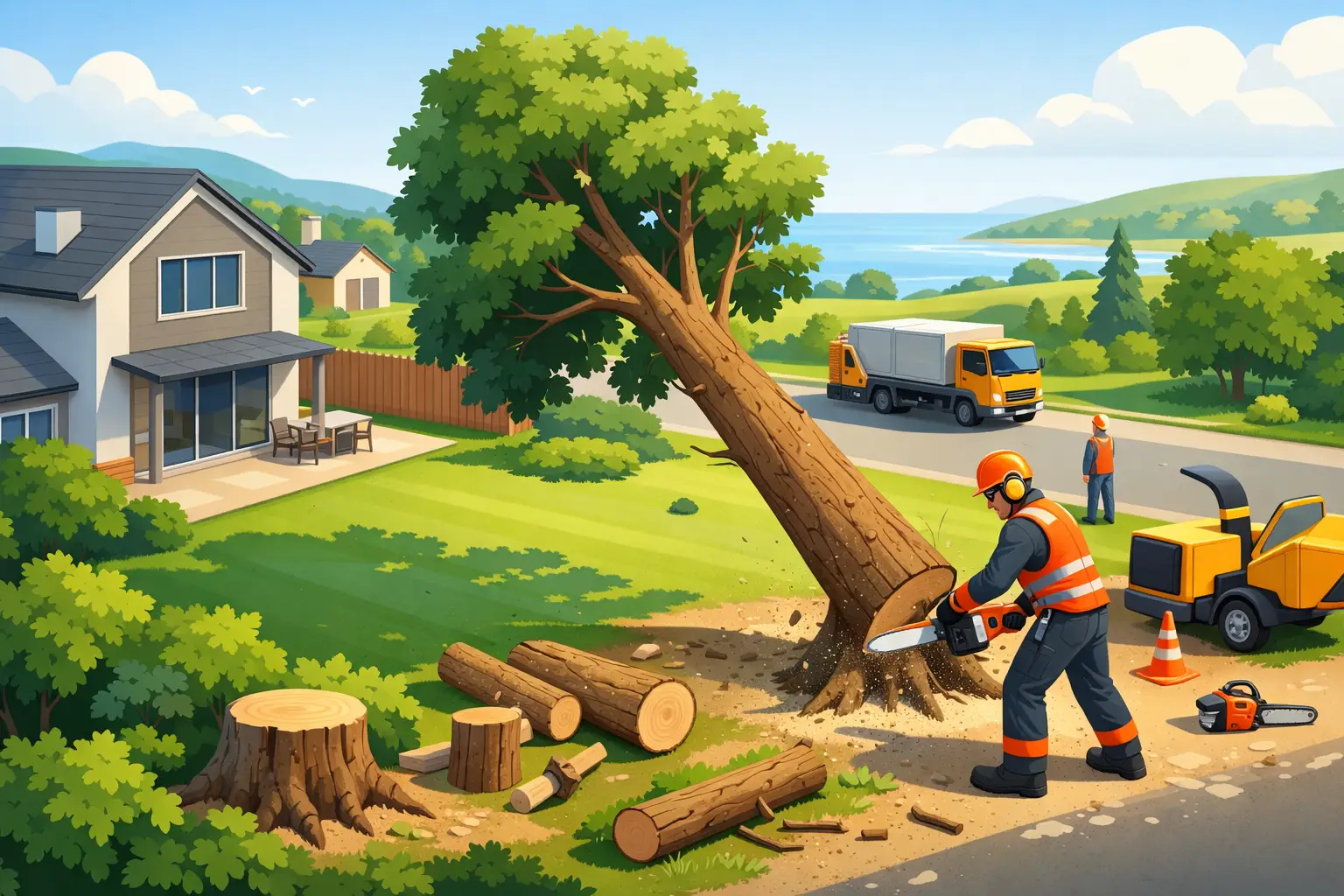
On an open site, a suitably qualified team may be able to fell a tree in one controlled movement. In most domestic settings, though, sectional dismantling is the safer method. Climbers or a specialist cherry picker remove the tree in manageable pieces, lowering branches and timber with ropes where required. This takes longer than a single fell, but it protects the property, the workforce and anyone nearby.
Professional tree work also involves proper exclusion zones, suitable personal protective equipment, inspected climbing gear and a clear plan for dealing with the timber. It is not a job for an untrained homeowner, even where the tree appears small. Falls, chainsaw injuries and unpredictable timber movement can have life-changing consequences.
Wildlife checks matter
Trees provide habitat, and felling work must take wildlife into account. All wild birds, their nests and eggs are protected. Nesting activity is especially common through spring and summer, although nests can be active at other times of year. A pre-work inspection is essential, and work may need to be postponed if an active nest is found.
Bats may roost in cracks, lifted bark, cavities and dense ivy, including on trees that appear dead. Bats and their roosts have strong legal protection. Signs such as holes, loose bark, staining below an opening or small droppings may mean a specialist ecological assessment is needed before work proceeds.
This is one reason a responsible tree surgeon will not promise to remove every tree immediately. The right team will explain what has been found, what needs checked and how the work can be completed lawfully.
What affects the cost of tree felling?
There is no useful one-price-fits-all figure for tree felling. A small ornamental tree with clear access is very different from a mature beech overhanging a conservatory. The key factors are the tree’s height and spread, condition, access for people and equipment, proximity to buildings or cables, the need for traffic or pedestrian management, and whether material needs to be removed from site.
Stump grinding is normally a separate part of the job. Felling leaves the stump and major roots in place, while grinding reduces the stump below ground level so the area can be turfed, planted or prepared for landscaping. If you want to build, pave or plant a new tree in the same spot, discuss this at quotation stage so the right depth and clearance can be planned.
A clear quote should set out the scope of work, whether arisings will be removed, and whether the site will be left as logs, chipped mulch or cleared ground. Asking for the cheapest price without checking these details can be a false economy. A tidy, properly managed job has a value long after the final branch is down.
Preparing your garden for the work
Homeowners can make the day run more smoothly by providing access to the tree and moving cars, garden furniture, pots, washing lines and other breakable items from the work area. Let the team know about concealed drains, septic tanks, power lines, gates with limited width and any shared access arrangements before they arrive.
Keep children and pets indoors while the work is underway. Even with careful lowering systems, tree work is noisy and involves moving equipment, falling debris and heavy timber. A professional team will manage the work zone, but a clear garden makes safe working easier.
If access is tight, do not assume the job cannot be done. Smaller equipment, climbing techniques and a cherry picker can all be considered depending on the site. The practical method should be chosen after seeing the tree, not guessed from a photograph alone.
Choosing a tree surgeon you can trust
Look for a contractor that can explain the proposed work in plain language, carries appropriate insurance and uses trained, competent staff. They should assess legal restrictions, discuss wildlife considerations and be honest if pruning is a better option than felling. Be wary of anyone who pressures you to decide immediately or offers to carry out protected-tree work without the correct process.
HL Tree Services provides professional tree felling across Fife, from routine garden removals to awkward, high-risk dismantling work. The focus should always be on a safe method, careful protection of the surrounding property and a clean finish once the site is complete.
A tree removal decision is easier when it is based on a proper assessment rather than worry, guesswork or a stormy forecast. Ask for clear advice, understand what will happen to the timber and stump, and choose a team prepared to do the job properly from the first inspection to the final clean-up.