A large limb hanging over a drive after high winds is not a job to put off until the weekend. When a tree has split, uprooted or dropped heavy branches near a house, road, fence or power line, emergency tree removal Perth becomes a safety issue first and a tidy-up job second.
In most cases, the real risk is not the part already on the ground. It is the section still under tension, the stem leaning into another tree, or the cracked limb that looks stable until the next gust moves it. That is why urgent tree work needs a calm, professional approach rather than a quick attempt with a saw and ladder.
When emergency tree removal in Perth is genuinely urgent
Not every damaged tree needs to come down immediately. A few fallen twigs after rough weather are common, and even a larger branch in an open garden may be manageable if it has landed clear of people and property. But there are situations where waiting is the wrong call.
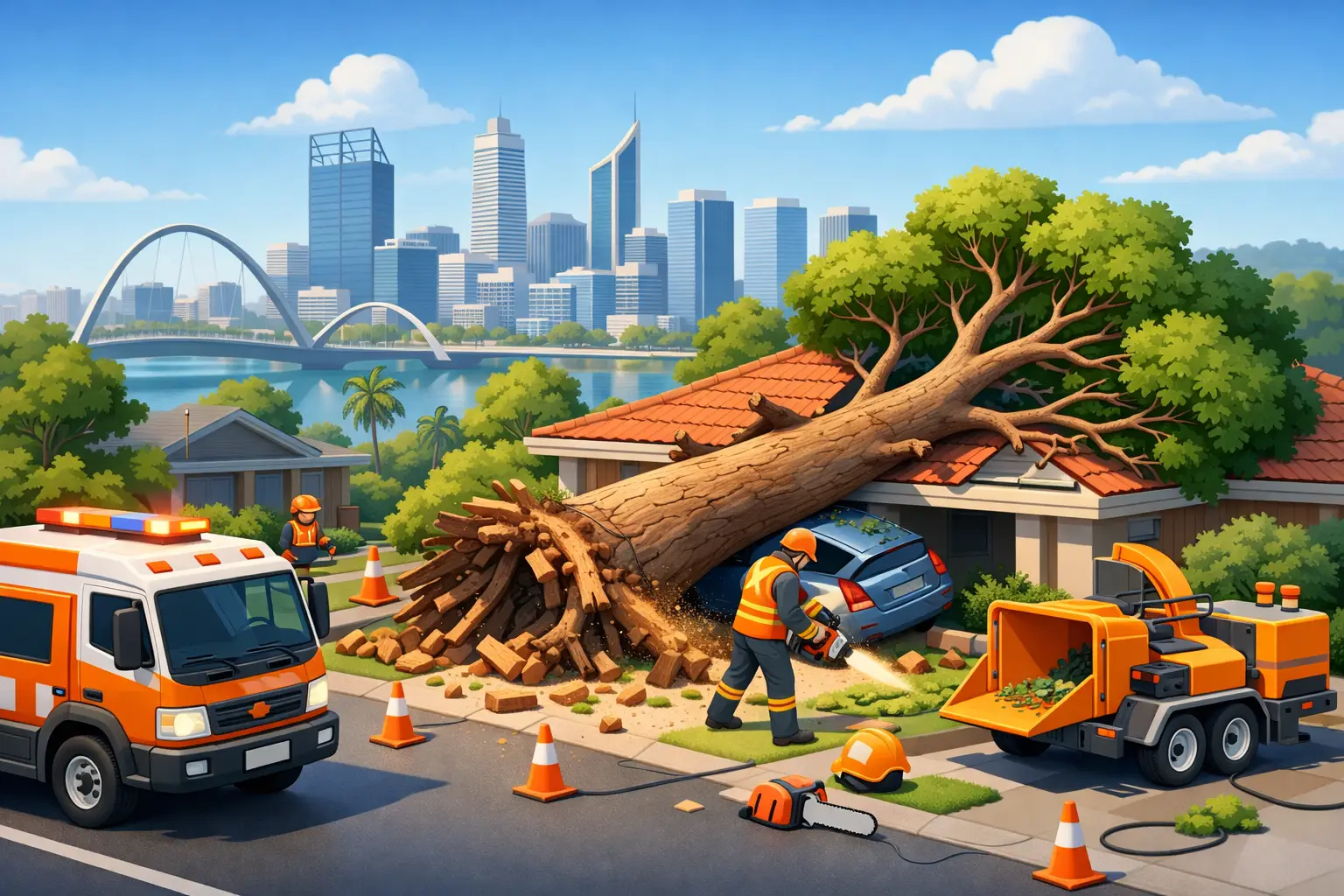
If a tree is blocking access, leaning heavily towards a building, resting on a roof, tangled over a public footpath, or interfering with utilities, the job moves into emergency territory. The same applies when the root plate has lifted, the trunk has split, or major limbs have torn out and left the canopy unstable.
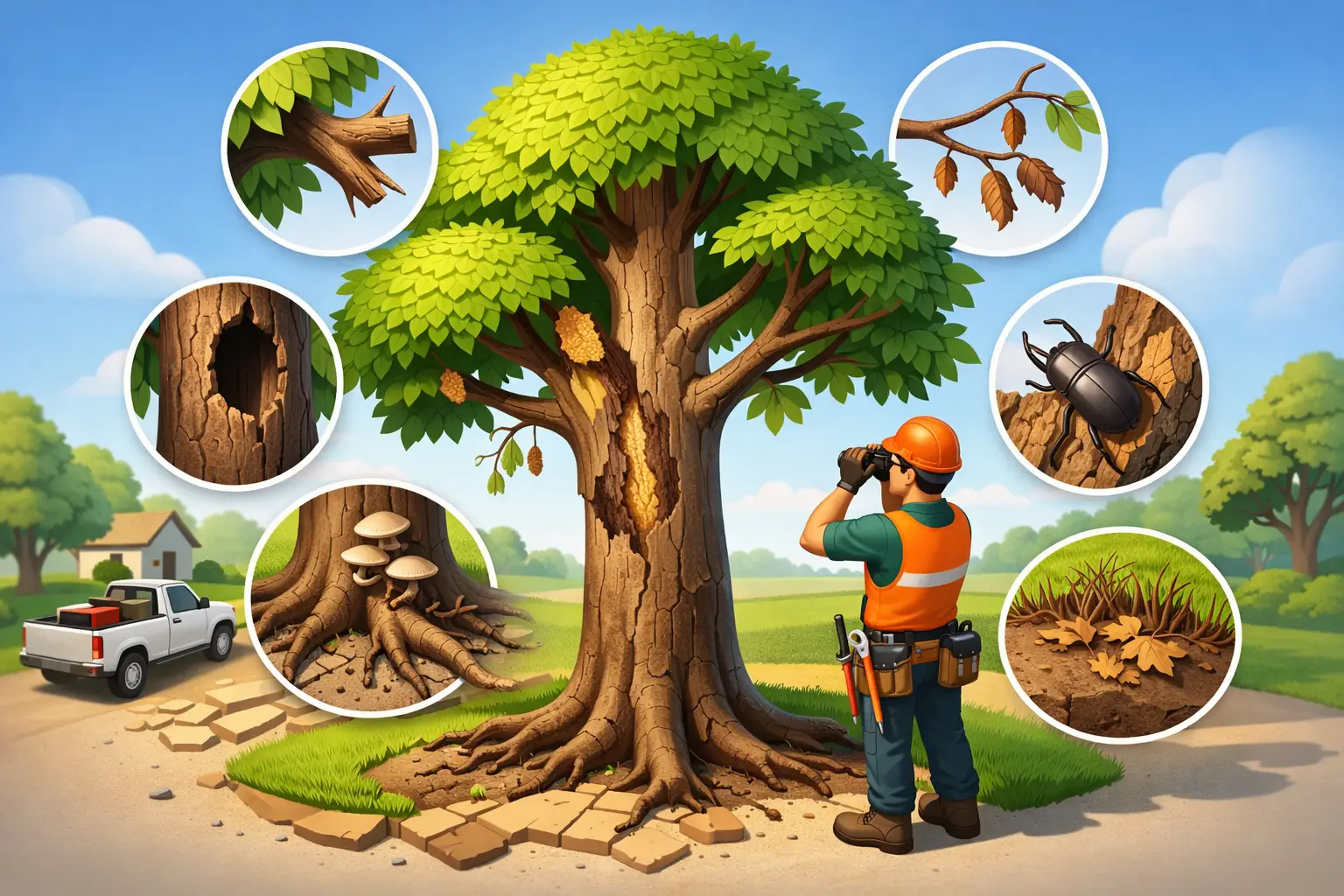
Sometimes the danger is less obvious. A tree may still be standing, but internal failure, decay exposed by a break, or storm movement at the base can mean it is no longer structurally sound. To an untrained eye it can look as though it has survived. In reality, it may be one gust away from collapse.
What to do first after tree damage
Your first step is simple – keep people away. Move family members, staff, visitors and vehicles clear of the area. Do not walk underneath hanging limbs or try to drag timber away if the rest of the tree is still under load.
If a tree has affected a road, public pavement or overhead line, report that issue to the relevant authority straight away. If there is immediate danger to life, emergency services come first. Once the area is as safe as possible, contact a qualified tree surgeon who handles urgent call-outs.
Photos can help when you make the call, especially if access is awkward or the damage is spread across a wider site. A clear description of what has happened, whether the tree is touching a structure, and whether the route is accessible for equipment will help the team respond properly.
What you should not do is start cutting at random. Storm-damaged trees behave unpredictably. Branches can spring, trunks can roll, and partially failed stems can shift without warning. Domestic tools are not designed for that level of risk.
Why emergency tree removal Perth needs specialist equipment
Urgent tree work is rarely just a case of cutting from the bottom and dropping the rest neatly into an open space. In many Perth properties, trees stand close to houses, garages, conservatories, garden walls, roads or neighbouring boundaries. That changes the method completely.
A professional team will assess weight distribution, anchor points, ground conditions and the safest dismantling sequence. In some cases, climbing is appropriate. In others, a cherry picker offers better access and more control. Rigging equipment may be needed to lower sections safely rather than letting them fall.
This matters because damaged trees often hold hidden pressure. A stem that appears trapped might swing free the moment one cut is made. A branch twisted into another crown can kick sideways. Good emergency work is controlled work, even when the situation is urgent.
For commercial sites, estates and managed properties, the need for proper equipment is even clearer. Access routes, traffic movement, pedestrian safety and site responsibilities all have to be considered while the tree is being made safe.
The difference between making safe and full removal
One point worth understanding is that emergency attendance does not always mean the whole tree is removed there and then. Sometimes the priority is to make the site safe by removing the failed section, reducing dangerous weight, clearing blocked access and stabilising the immediate hazard.
That can be the right decision if conditions are poor, if further inspection is needed, or if the remaining tree may still be retained after remedial work. Other times, full dismantling is clearly the safest option because the root system has failed or the main structure is no longer reliable.
It depends on the damage, the species, the location and what the tree is threatening. A good contractor will explain whether the emergency call-out is for immediate removal, immediate risk reduction, or both.
Common causes of emergency tree failures
Storms are the obvious trigger, but they are not the only one. Saturated ground can weaken root stability even when winds are moderate. Trees with included bark, historic pruning wounds or hidden decay may fail suddenly under loads they would once have tolerated.
Age can play a part, but so can neglect. Overgrown crowns, deadwood left in place, and old damage that has never been properly assessed all increase the chance of a problem developing into an emergency. Construction works, trenching and soil compaction around roots can also undermine stability over time.
That said, healthy trees can still suffer in extreme weather. Even well-maintained specimens are not immune if they face repeated storms or are exposed on open ground. The difference is often in how much control you have over the outcome when a tree has been regularly inspected and maintained.
What a professional team will look for on arrival
The first job is assessment. Before any cutting starts, the team needs to understand what is moving, what is loaded, what could fail next, and who or what is at risk nearby. That includes nearby trees, buildings, fences, parked cars, sheds and access points.
They will also consider whether the tree is protected, whether nesting wildlife could be affected, and whether traffic or pedestrian management is needed. In a genuine emergency, safety work comes first, but experienced contractors still work carefully and within the proper framework.
Then comes the method. That may involve sectional dismantling, controlled lowering, brash removal, timber processing and clearing the site so it is left safe and usable. For many customers, the clean-up matters almost as much as the removal itself. After an already stressful incident, nobody wants a lawn buried under debris for days.
Choosing the right contractor in an emergency
When a tree comes down unexpectedly, speed matters, but judgement matters more. You need a contractor who can respond quickly without treating the job casually. Look for a team that is properly insured, trained for high-risk tree work, and equipped for difficult access and awkward dismantles.
It also helps to choose a local business that understands the types of properties and weather conditions common in and around Perth. A team used to dealing with mature garden trees, roadside specimens and storm damage across residential and commercial sites is more likely to make good decisions under pressure. That practical, hands-on experience is a big part of what gives customers confidence when the situation is far from routine.
A reputable company will speak plainly, explain the risks, and avoid guessing. If the tree can be retained safely, they should say so. If it needs to come down, they should be clear about why.
Can emergency tree work be prevented?
Not always, but risks can often be reduced. Periodic inspections, crown management, deadwood removal and early attention to visible defects all make a difference. Trees near buildings, roads, parking areas and boundaries are especially worth monitoring because the consequences of failure are higher.
The aim is not to remove every mature tree at the first sign of age or movement. Good arboriculture is about balance. Many trees can be managed safely for years with the right pruning and monitoring. Others reach a point where removal is the more responsible option.
If you have a tree that already gives you cause for concern, after heavy weather or simply because something has changed, do not wait for it to become an emergency. A professional assessment now is usually simpler, safer and less costly than dealing with a major failure later.
When urgent damage does happen, the priority is clear – protect people, secure the area, and get experienced help on site. Emergency tree work is about making a dangerous situation safe with the right skill, equipment and judgement. And when it is handled properly, you can move from immediate risk to a clean, controlled outcome far more quickly than you might expect.