A tree leaning over a driveway after high winds is not the moment for guesswork. In an emergency tree surgeon review, the real question is not who can turn up fastest, but who can make the site safe without creating a bigger problem. When a tree has split, uprooted, dropped limbs or become unstable near a house, road, fence or power line, the quality of the response matters straight away.
Emergency tree work is different from routine pruning or planned felling. The risks are higher, access is often awkward, and the pressure to act quickly can lead property owners to focus on speed alone. A proper review looks at the whole service – safety, judgement, equipment, communication, clean-up and whether the work solved the issue properly.
Why an emergency tree surgeon review matters
After storm damage, many people are dealing with stress, blocked access or concern about further collapse. In that situation, it is easy to take the first available contractor at face value. Sometimes that works out well. Sometimes it leaves the customer with avoidable damage, poor clean-up, an unfinished job or a tree that is still unsafe.
A useful emergency tree surgeon review should help you separate a genuine professional from someone simply offering chainsaw work. Tree surgery in hazardous conditions is specialist work. It calls for training, experience and the right equipment, but also calm decision-making. Removing the obvious broken branch is only part of the job. The wider structure of the tree, the surrounding ground conditions and the safest dismantling method all need to be assessed.
For homeowners, that means peace of mind. For estates, landlords and commercial sites, it also means reducing liability and getting the area back into safe use as quickly as possible.
What a good emergency response looks like
The first sign of a capable contractor is usually how they handle the initial call. They should ask sensible questions about the tree, the location, what has failed, whether access is blocked and whether there is immediate danger to people or property. If overhead utilities are involved, they should be clear about boundaries and safety rather than making casual promises.
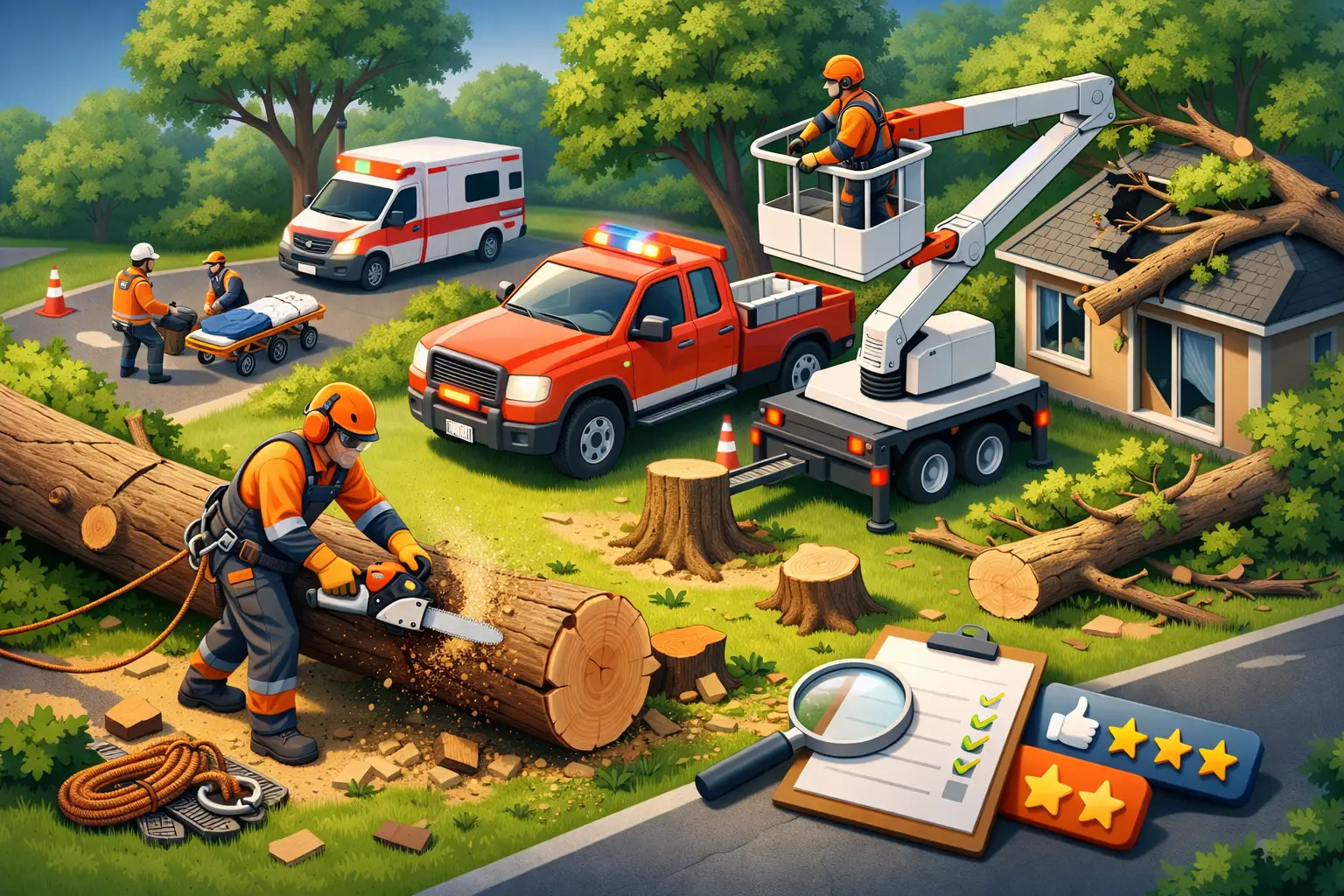
On arrival, the standard to look for is control. A professional team does not rush straight into cutting. They assess the load on limbs, identify compression and tension points, check escape routes and plan how material will come down safely. In many cases, that means sectional dismantling rather than simply cutting at the base.
This is also where equipment matters. Emergency work often involves restricted gardens, damaged trees over buildings, steep banks or awkward roadside positions. A team with proper climbing kit, rigging knowledge and access equipment where needed is in a stronger position to complete the work cleanly and safely. Specialist access can make the difference between a tidy job and unnecessary damage to lawns, sheds, fences or neighbouring property.
Speed is important, but not on its own
A fast response is valuable when a tree has failed across a road, blocked a driveway or is threatening a structure. But speed without method is a poor trade. If a contractor arrives quickly and leaves a dangerous hung-up limb, tears up the site or cuts in a way that causes further breakage, the problem has not really been solved.
The better measure is safe efficiency. A strong emergency team works quickly because they know what they are doing, not because they skip the planning.
What to look for in an emergency tree surgeon review
A review worth trusting should say more than “great service” or “turned up on time”. In emergency tree work, the useful details are often practical. Did the contractor make the area safe? Did they explain the risks clearly? Were they tidy once the immediate danger had been dealt with? Did they protect nearby surfaces and structures where possible?
It also helps when reviews mention the type of emergency. Storm-damaged conifers, split stems over greenhouses, fallen trees over access routes and dangerous hanging branches all test slightly different skills. A contractor who handles straightforward removals well may still struggle with unstable, high-risk dismantling.
Look for signs of professionalism in the wording of a review. Customers often mention whether the team was calm, respectful and clear about what needed done. That matters. During a stressful call-out, reassurance backed by competence goes a long way.
Signs the review reflects real emergency experience
The strongest reviews usually mention specifics such as safe cordoning off, careful dismantling, difficult access, use of specialist equipment, or thorough removal of debris. They may also refer to the site being left clean and usable, which is more important than many people realise. Once the immediate hazard has gone, piles of timber, brash and sawdust can still leave a property awkward or unsafe.
By contrast, a vague review can still be genuine, but it tells you less. Emergency tree work is one of those services where detail is useful because the quality gap between average and excellent can be significant.
Questions worth asking before work begins
Even in an urgent situation, a brief conversation can tell you a lot. Ask what the plan is, whether the whole tree needs removed or only the failed section, and what happens to the waste. If access is awkward, ask how they will manage it without unnecessary damage.
It is also fair to ask what cannot be safely done straight away. Sometimes severe weather, darkness, ongoing instability or utility issues mean the first visit is about making the site safe, with follow-on work to complete once conditions improve. That is not a red flag. In some situations, it is the most responsible approach.
An honest contractor will not pretend every emergency has a one-visit answer. Trees under tension, root plates still moving, and stems lodged in neighbouring canopies often need a staged approach.
Where things can go wrong
Not every poor experience comes from bad intentions. Sometimes the issue is that the contractor is more used to standard garden work than genuine emergency tree surgery. They may underestimate the weight distribution in a damaged tree, lack the access equipment required, or fail to protect surrounding features during dismantling.
Another common problem is incomplete thinking. The obvious fallen section gets cleared, but the cracked stem above it is left in place. The driveway is reopened, but the canopy over the roof remains unstable. In a proper emergency response, the visible damage is only the starting point.
Price can be another sticking point. Emergency call-outs naturally cost more than planned work because of timing, urgency, staffing and risk. That said, higher cost should still come with higher standards. A rushed job with poor communication is poor value even if it was not the most expensive quote.
A local service makes a difference
For emergency work, local knowledge is more useful than people sometimes think. A contractor covering Fife, Dundee and Perthshire regularly is likely to understand the mix of tight residential access, exposed rural sites and mature trees found across the area. They are also more likely to reach you promptly when conditions across the region are difficult.
That matters after storms, when roads may be obstructed and call-out demand rises quickly. A team with a strong local base and the equipment to deal with awkward jobs is often better placed than a general contractor travelling in from further afield.
This is one reason many customers look beyond advertising and pay attention to reputation. When a company consistently gets called to handle difficult removals, storm damage and urgent making-safe work, it tends to show in the quality of feedback.
What “tidy” really means after an emergency
Clean-up is not a small extra. It is part of the service. Once a dangerous tree or limb has been dealt with, the property should not be left looking like a worksite unless there is a clear reason and agreement to do so.
A professional finish usually means removing timber and brash, raking through the area, clearing sawdust where practical and making access usable again. On larger or more complex jobs, a little disturbance is unavoidable, especially in wet conditions, but there is a big difference between unavoidable mess and careless mess.
For domestic clients, tidiness often shapes the whole impression of the job. For commercial sites and landlords, it affects how quickly normal use can resume.
Emergency tree surgeon review: the best result to look for
The best outcome is not simply that the tree is gone. It is that the danger has been managed properly, the work has been carried out with clear judgement, and you are left with confidence rather than doubt. In any emergency tree surgeon review, that is the standard worth using.
A capable tree surgeon should leave you feeling that the situation was under control from the first conversation to the final clear-up. That includes honest advice if part of the tree can be retained, or firm guidance if complete removal is the only safe option. It also includes respect for your property, your time and the fact that emergency call-outs usually happen when people are already under pressure.
If you ever need urgent tree work, trust the team that brings skill, proper equipment and a steady head to the job. Fast matters, but safe, tidy and professionally handled matters more.