A branch over a conservatory or a large limb leaning towards a roof can turn a straightforward tree job into a high-risk one very quickly. Safe tree work near buildings is not just about cutting carefully. It is about planning every stage so the tree is controlled, the property is protected and nobody on site is put at unnecessary risk.
When trees grow close to houses, garages, boundary walls, offices or outbuildings, the margin for error is small. A section cut too large, a rope set badly, or decay hidden in the stem can all change how the job needs to be done. That is why work in tight spaces should never be treated like open-ground felling. It needs a proper assessment, experienced operators and the right equipment for the site.
Why tree work near buildings needs a different approach
In a clear field, a tree can sometimes be felled in one direction with enough space to land safely. Near buildings, that option often disappears. The work usually has to be dismantled in sections, with branches and timber lowered in a controlled way rather than simply dropped.
That changes everything. The climber has to think about rooflines, greenhouses, sheds, fences, parked vehicles, overhead cables, neighbouring gardens and access routes before a saw even starts. Ground staff need clear communication and a tidy, organised work area. If the site is cramped, specialist access equipment such as a cherry picker can be the safest choice, especially where climbing is made more hazardous by decay, storm damage or awkward stem structure.
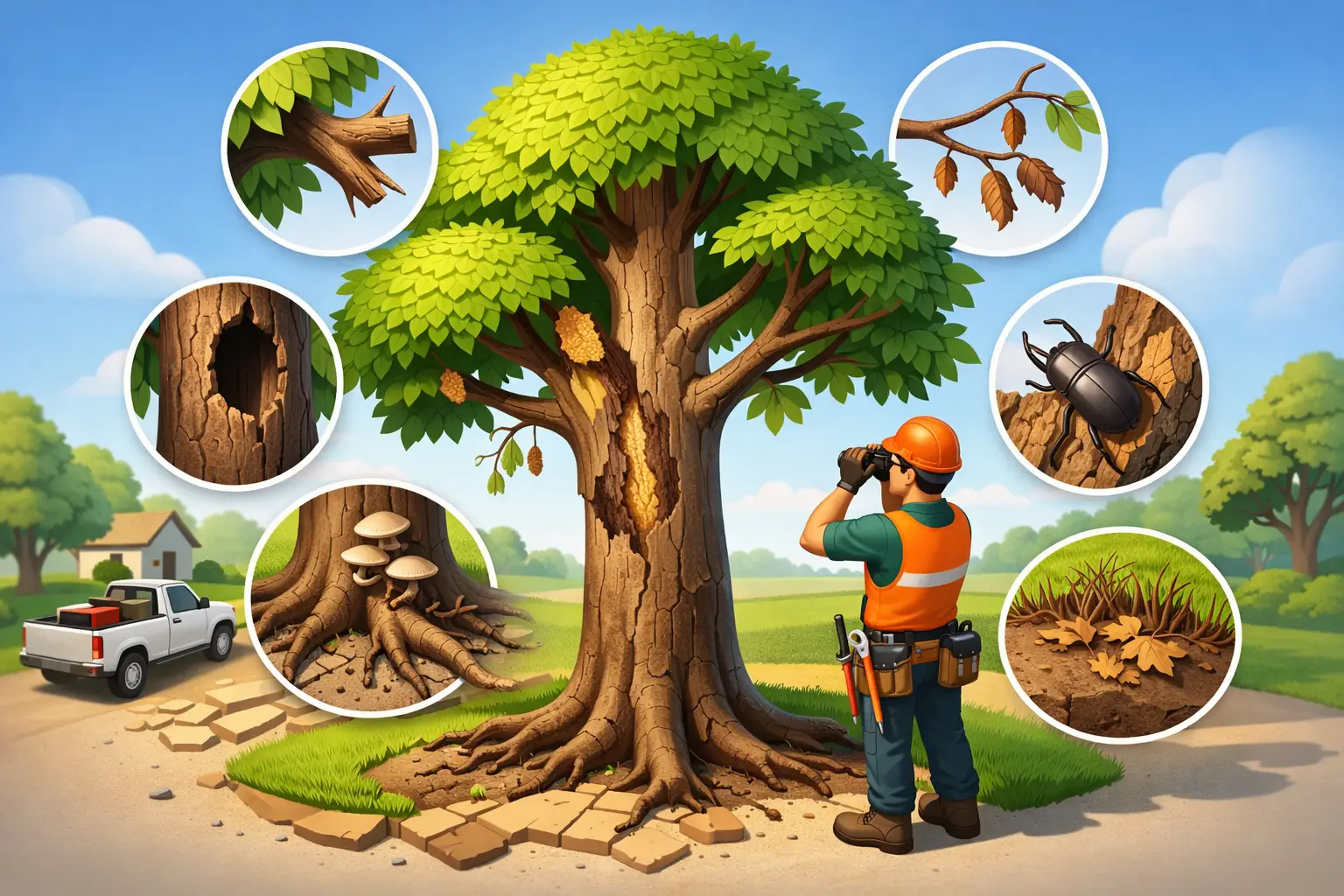
There is also the issue of what cannot be seen from the ground. Trees growing close to buildings may have included bark at unions, cavities, deadwood over roofs or roots affected by previous building work. Those details matter because they affect where weight can be taken, how the tree will react to pruning, and whether dismantling needs to be more cautious than first expected.
The first step in safe tree work near buildings
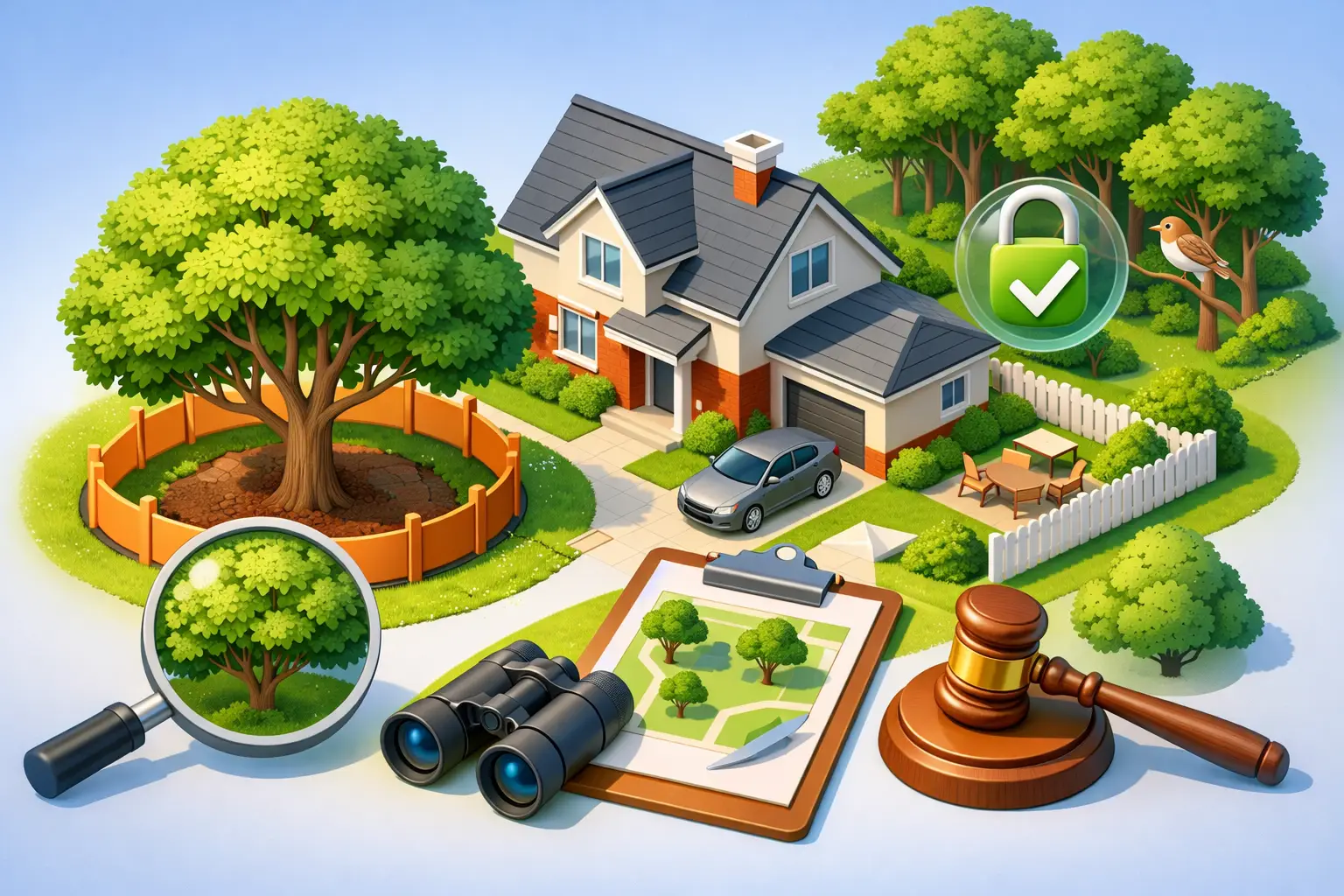
The safest jobs usually start with a thorough site assessment. That means looking at the tree itself, but also everything around it. The shape of the canopy, lean, species, defects, access, drop zones and escape routes all need to be considered together.
A mature sycamore over a driveway presents one kind of challenge. A storm-damaged conifer pressed against a garage presents another. In some cases, the safest solution is careful pruning to reduce end weight and clear the structure from the building. In others, full dismantling is the only sensible option. It depends on the condition of the tree, the amount of clearance available and the level of ongoing risk.
This is also the stage where a good contractor will identify practical site issues that property owners may not have thought about. Fragile roofs, weak sheds, narrow side passages, artificial lawns, decorative paving and shared boundaries all influence how the work should be carried out. A professional team plans for those details because avoiding damage is part of the job, not an optional extra.
Choosing the right method for the site
There is no single method that suits every tree close to a building. The safest option depends on the tree’s size, condition and position.
For smaller trees with enough room, directional felling may still be possible, but only if there is a genuinely clear landing area and no realistic risk to nearby structures. More often, sectional dismantling is required. That involves removing branches and timber piece by piece, either by hand, by rigging, or with mechanical assistance.
Rigging allows sections to be lowered under control rather than free-falling onto lawns, paving or roofs. Done properly, it protects the property and reduces shock loading on the tree and equipment. Done badly, it can create bigger problems than the original tree. That is why experience matters. Judging piece size, rope angles, anchor points and load paths is skilled work.
In some situations, access machinery is the safer route. A cherry picker can make a major difference where climbing would expose the operative to unnecessary risk or where reach over structures is needed. It is not about making the job easier. It is about using the right tool to complete the work safely and to a high standard.
Protecting the building as well as the tree team
Clients often focus on the obvious worry – a branch hitting the roof. That is a valid concern, but property protection is broader than that. Gutters can be cracked by smaller timber than people expect. Garden walls can be loosened by repeated impact. Sheds, fences and glass structures can be damaged by brash dragged carelessly during clear-up.
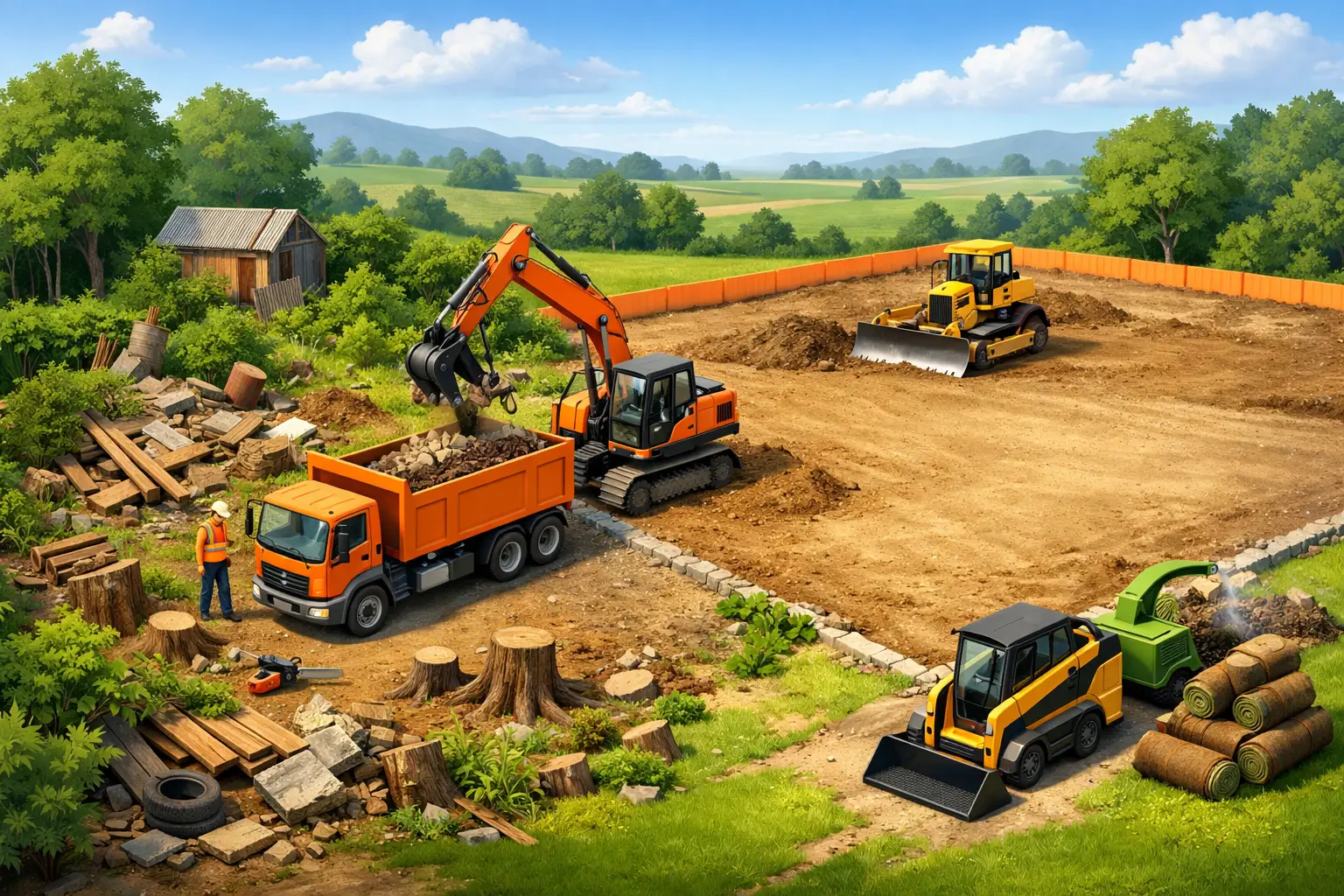
A careful team will think beyond the cutting stage. Ground protection may be needed to reduce wear on lawns or paving. Work zones should be set out clearly so timber is processed away from vulnerable features where possible. Vehicles should be moved, and neighbouring access considered if branches extend over boundaries.
Clean working habits also matter. A cluttered site creates trip hazards and slows down communication between climber and ground crew. Keeping the area organised is part of safe working, particularly in domestic gardens where space is limited.
When pruning is enough and when removal is the better option
Not every tree close to a building needs to come down. In many cases, selective pruning can provide enough clearance, reduce weight over a structure and remove defective limbs while keeping the tree healthy and attractive.
That said, pruning is not a cure for every problem. If a tree has significant decay, poor structure, major root issues or repeated failures, reducing it may only postpone a more serious issue. The right advice is not always the cheapest short-term option. A good arborist will be honest about that.
There is also a balance to strike between safety and tree health. Over-pruning to create quick clearance can leave a tree stressed, unstable or prone to poor regrowth. Sensible pruning should solve the immediate issue without creating another one two years later. That is where trained judgement counts.
Common risks people underestimate
One of the biggest mistakes people make is assuming a tree is safe because it has stood near a building for years. Trees change. Storms, decay, root disturbance and long unbalanced limbs can all alter the level of risk over time.
Another is treating deadwood as a minor issue. Over a lawn, a dead branch may be inconvenient. Over a greenhouse, parked car or footpath, it becomes a direct hazard. Likewise, ivy-covered stems can hide defects that are only found once work begins.
Access is often underestimated as well. A narrow passage, sloping garden or limited parking can affect what equipment can be used and how arisings are removed. If access is poor, the job may take longer and need a different method. That is normal. Safe work is shaped by the site, not rushed to fit an assumption.
Why qualified, insured contractors matter
Tree work beside buildings leaves little room for guesswork. Competence is not just about using a chainsaw. It covers site planning, climbing, rigging, rescue readiness, equipment checks and understanding how trees behave under load.
Insurance matters too, particularly where work is being carried out near homes, commercial units or shared boundaries. So does a willingness to explain the method clearly. Clients should feel confident that the team has considered the risks, the access and the finish of the job, including removal of waste and leaving the site tidy.
For property managers and commercial clients, reliability is just as important as technical ability. Delays, poor communication and messy working can cause knock-on problems for residents, staff or neighbouring properties. For homeowners, reassurance often comes from seeing a team that turns up prepared, protects the site properly and carries out the work with care from start to finish.
Across places such as Fife, Dundee and Perth, many properties have mature trees in tight gardens, near extensions, along drives or close to roads. Those jobs need local contractors who are used to awkward access, changing weather and the practical realities of working safely in lived-in spaces.
If you are looking at a tree and wondering whether it is too close for comfort, trust that instinct and get it assessed before a small issue becomes an expensive one. The safest tree work near buildings starts with good advice, careful planning and a team that takes pride in doing the job properly.