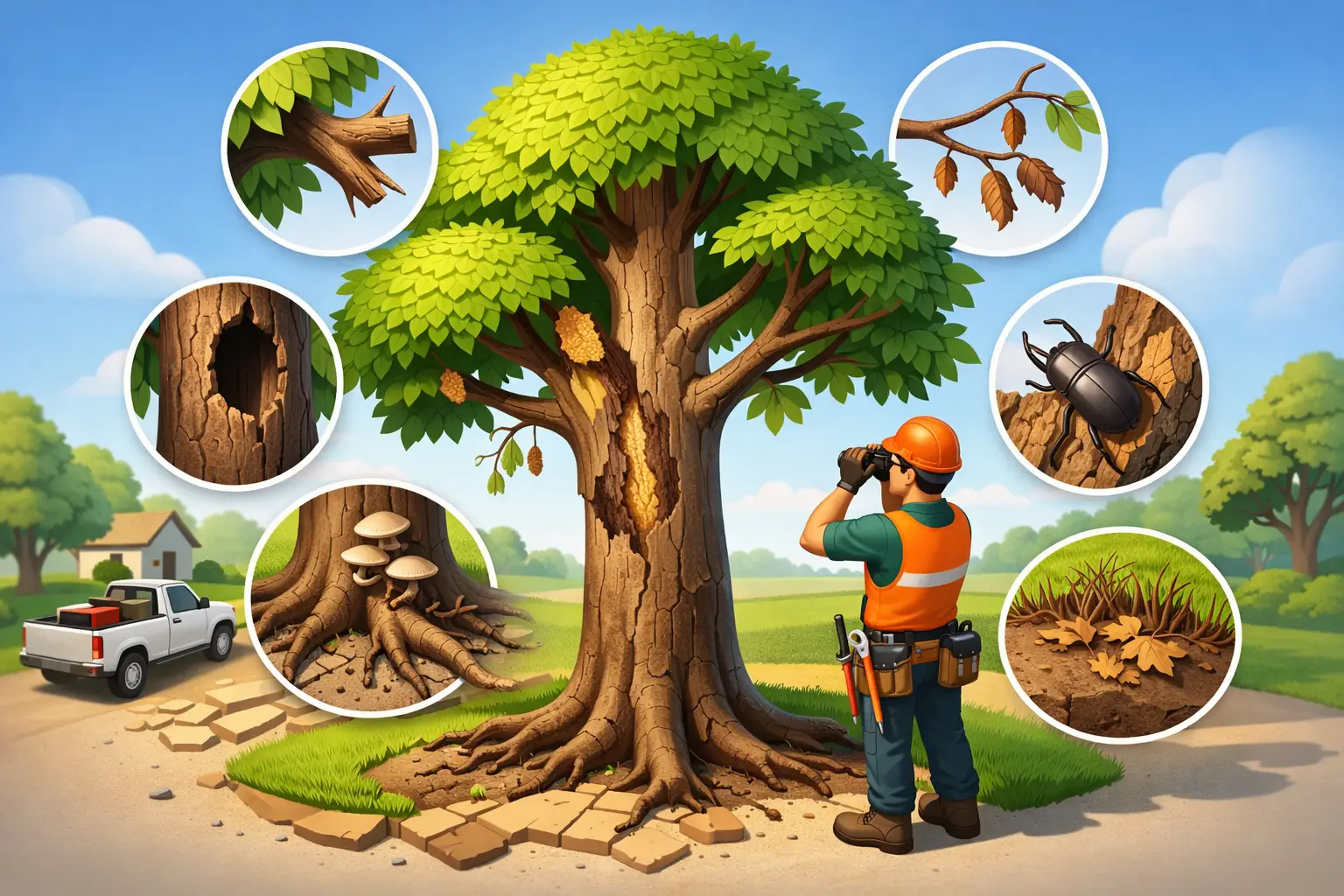
When a tree needs to come down, most people think about the cutting itself. In practice, the job usually runs best or worst based on what happens before the team arrives. If you are wondering how to prepare for tree removal, the main aim is simple – make the site safe, accessible and clear so the work can be carried out efficiently and without avoidable delays.
Tree removal is not just a matter of turning up with a chainsaw. The size of the tree, its condition, nearby buildings, fences, greenhouses, sheds, garden features and overhead lines all affect the method. A straightforward garden removal can be very different from taking down a large, awkward tree in a tight space. Good preparation helps the contractor work safely and helps you know what to expect on the day.
How to prepare for tree removal before the work starts
The first step is confirming exactly what is being removed and what is staying. That sounds obvious, but confusion happens more often than you might think, especially where there are grouped trees, overgrown boundaries or shared garden edges. Walk the site with your contractor beforehand if possible, and make sure you both agree on the tree, the access route and the end result.
This is also the stage to ask practical questions. Will the tree be dismantled in sections or felled in one go? Will heavy equipment be needed? Is stump grinding included or is the stump staying in place? Will timber and woodchip be removed, or would you like some left behind for logs or mulch? Small details like these make a big difference to how you prepare the space.
If the tree is close to a road, public footpath or neighbouring property, the job may need extra planning. A professional team will advise on what is required, but it is still worth raising anything unusual in advance. Restricted access, narrow lanes, steep gardens and limited parking can all affect the approach.
Clear access and protect the working area
One of the most useful things you can do is make access as easy as possible. Tree work often involves more equipment than clients expect – chippers, saws, rigging gear, climbing kit and, in some cases, larger machinery or specialist access equipment. If there is a driveway, keep it free. If the team needs access through a side gate, check that it opens fully and is not blocked by bins, plant pots or stored materials.
In the garden, move anything valuable or easily damaged out of the way. That includes patio furniture, barbecues, toys, ornaments, planters and anything else sitting near the work zone. Even with careful dismantling, tree removal creates movement, vibration and debris. It makes sense to give the team clear space rather than expect them to work around delicate items.
Vehicles are another common issue. If the tree overhangs a drive or the road outside the property, move cars well before the start time. The same goes for caravans, trailers and work vans. It is far easier to keep the drop zone open from the start than to try sorting it while the crew is setting up.
If you have features you are particularly concerned about, such as a new lawn, decorative paving or a fragile border, point them out in advance. A good contractor will always take care, but some surfaces are more vulnerable than others, especially in wet weather. Sometimes there is a trade-off between the most direct access route and the least disruptive one.
Think about neighbours, pets and children
Tree removal can be noisy, and depending on the location, parts of the work may happen close to a neighbour’s boundary. A quick word beforehand is often appreciated, especially if access is tight or branches extend near adjacent gardens. You do not need to turn it into a major discussion, but giving people notice can avoid unnecessary friction.
If your neighbours share a driveway or parking area with you, let them know if space needs to be kept clear. This matters even more on terraces, lanes or compact residential streets where a chipper or work vehicle can limit movement.
Pets and children should be kept well away from the work area for the full duration of the job. Gates opening and closing, unfamiliar equipment and falling branches can create obvious risks. Dogs in particular can become stressed by noise or attempt to get outside if workers are moving through access points regularly. The safest option is usually to keep pets indoors in a secure room or, if practical, away from the property until the work is finished.
Check permissions and site restrictions early
Before removal goes ahead, make sure there are no legal restrictions affecting the tree. Some trees are protected, and conservation area rules can also apply depending on the location. If you are not sure, ask your contractor or check with the local authority before work is booked in. It is much better to confirm this early than to assume and face a problem later.
For commercial premises, estates and managed sites, there may be additional internal approvals to deal with as well. Access permissions, tenant notices, caretaker arrangements or permit systems can all slow a job down if no one has prepared for them. The larger the site, the more useful it is to have one person responsible for confirming access and decision-making on the day.
Utilities are another point to consider. If there are overhead cables nearby, mention them from the outset. The same applies to drains, inspection covers, underground services or irrigation systems in the likely equipment route. A skilled tree team will assess hazards as part of the job, but good information from the client helps avoid surprises.
Plan for timber, waste and stump removal
A lot of customers focus on getting the tree down and only think about the aftermath once the work is under way. It is better to decide early what you want done with the arisings. Most clients prefer a full clear-up with all timber, brash and woodchip removed, but that is not the only option.
If you have a wood burner, you may want sections of timber left for processing. If you use mulch in borders, woodchip can sometimes be useful on site. The key is to agree this in advance so the crew can plan vehicle space, cutting lengths and loading time properly.
The stump is a separate question. Removing a tree does not automatically mean the stump disappears too. If you want to replant, pave, turf the area or avoid regrowth, stump grinding is often the sensible next step. If access for a grinder is difficult, say so early. Narrow gates, steps and retaining walls can all affect whether stump removal is straightforward or more involved.
Prepare for the day itself
On the morning of the job, make sure the team can get started without delay. Unlock gates, secure pets, move vehicles and keep the access route clear. If you need to be out, leave any agreed instructions in advance and make sure your phone is on in case questions come up.
You do not need to stand outside watching every cut. In fact, it is usually safer and easier for everyone if clients keep a sensible distance and let the crew work. If you want to check progress or ask something, wait for an appropriate pause rather than interrupting while equipment is in use.
Weather can affect timings. High winds, heavy rain or poor ground conditions may mean a job needs to be adjusted or rescheduled, particularly where climbing or lifting is involved. That can be frustrating, but it is part of carrying out tree work properly. Safety has to come first.
For larger or more technical removals, the process may look slower than expected at first. That is often a sign that the team is taking the tree down in a controlled way rather than rushing. Careful rigging, sectioning and lowering are what protect nearby property and leave a tidy result.
What good preparation helps you avoid
Most site problems come back to a few preventable issues: blocked access, parked cars, unclear instructions, neighbour disputes, loose pets and uncertainty over waste removal. None of these are dramatic, but each one can add time, cost or stress to a job that should be straightforward.
Knowing how to prepare for tree removal also helps you judge the service you are getting. A professional contractor should be clear about the method, realistic about risks and tidy in the way the site is left. If the conversation before the work is vague, that often carries through to the day itself. By contrast, a well-planned job tends to feel calm, organised and under control from the start.
For homeowners and property managers across places like Fife, where gardens range from open plots to very restricted access sites, that preparation matters. The more awkward the tree or the tighter the space, the more value there is in getting the details right before any cutting starts.
A tree removal day should not feel chaotic. With the right planning, it is simply a skilled job carried out safely, with proper care for your property and a clean finish once the last branch is gone.