A mature beech shading a drive in Fife may need very little cutting for years. A young ornamental tree beside a house may benefit from careful formative pruning every couple of years. That is why the answer to how often should trees be pruned in Scotland? is rarely a fixed annual appointment. Good tree care is based on the species, age, condition, location and the reason for pruning – not simply a date in the diary.
For many healthy established trees, a professional inspection every two to three years is more useful than routine heavy pruning. Work is then carried out only where there is a clear benefit: removing deadwood, improving clearance, reducing a specific risk or managing growth without spoiling the tree’s natural form.
How often should trees be pruned in Scotland?
As a broad guide, young trees often need light formative pruning every two to three years while they establish a strong structure. Mature garden and estate trees may only require attention every three to five years, alongside regular visual checks. Trees beside roads, public areas, buildings, power lines or busy car parks need more frequent monitoring because the consequences of a falling branch are greater.
That does not mean every tree should be cut on that schedule. A healthy oak in an open field can often be left largely alone, whereas a fast-growing willow near water, a dense conifer hedge or a tree that has previously been poorly reduced may require more regular management. The right interval should follow the tree’s needs, not a one-size-fits-all maintenance plan.
Scotland’s wet, windy weather also changes the picture. Strong gales, prolonged rain and saturated ground can expose weaknesses that were not obvious before. After a significant storm, it is sensible to check for hanging branches, fresh cracks, lifted roots, disturbed soil around the base and limbs resting on roofs, fences or cables. Keep clear if there is any doubt about stability and arrange a professional assessment rather than attempting to pull or cut damaged branches yourself.
The best time of year for tree pruning
For most deciduous trees, late autumn through to winter is often the preferred working period. With leaves off the tree, the branch structure is easier to assess, access is often better, and the tree is generally dormant. Careful winter pruning can limit stress and help reduce the spread of some pests and diseases.
There are important exceptions. Birch, maple, walnut and similar trees can bleed heavily if pruned in late winter or early spring, so summer is usually more suitable. Many fruit trees also have their own timetable: apples and pears are commonly pruned in winter, while stone fruits such as cherry and plum are usually better pruned in drier summer conditions to reduce disease risk. Evergreen trees, including yew and some conifers, can be managed at different times depending on the species and the purpose of the work.
The weather matters as much as the season. Pruning during very wet conditions can increase the chance of soil damage from access equipment and may not be suitable for particular disease-sensitive species. Equally, frozen ground, high winds and icy branches can make climbing and aerial work unsafe. A professional tree surgeon will choose a safe working window rather than forcing work through poor conditions.
What tells you a tree needs attention now?
Pruning should solve a genuine problem, not create one. Dead, broken or rubbing branches are clear reasons to act, particularly where they overhang a path, patio, driveway or neighbouring property. Dense growth may also need selective thinning where it is blocking light, reducing airflow, pressing against a building or interfering with vehicle access.
Look out for branches that have grown too close to gutters, roofs or chimneys, but avoid the temptation to cut them back hard without advice. Removing a large amount of leaf-bearing growth in one go can shock a tree, encourage weak regrowth and leave large wounds that take longer to compartmentalise.
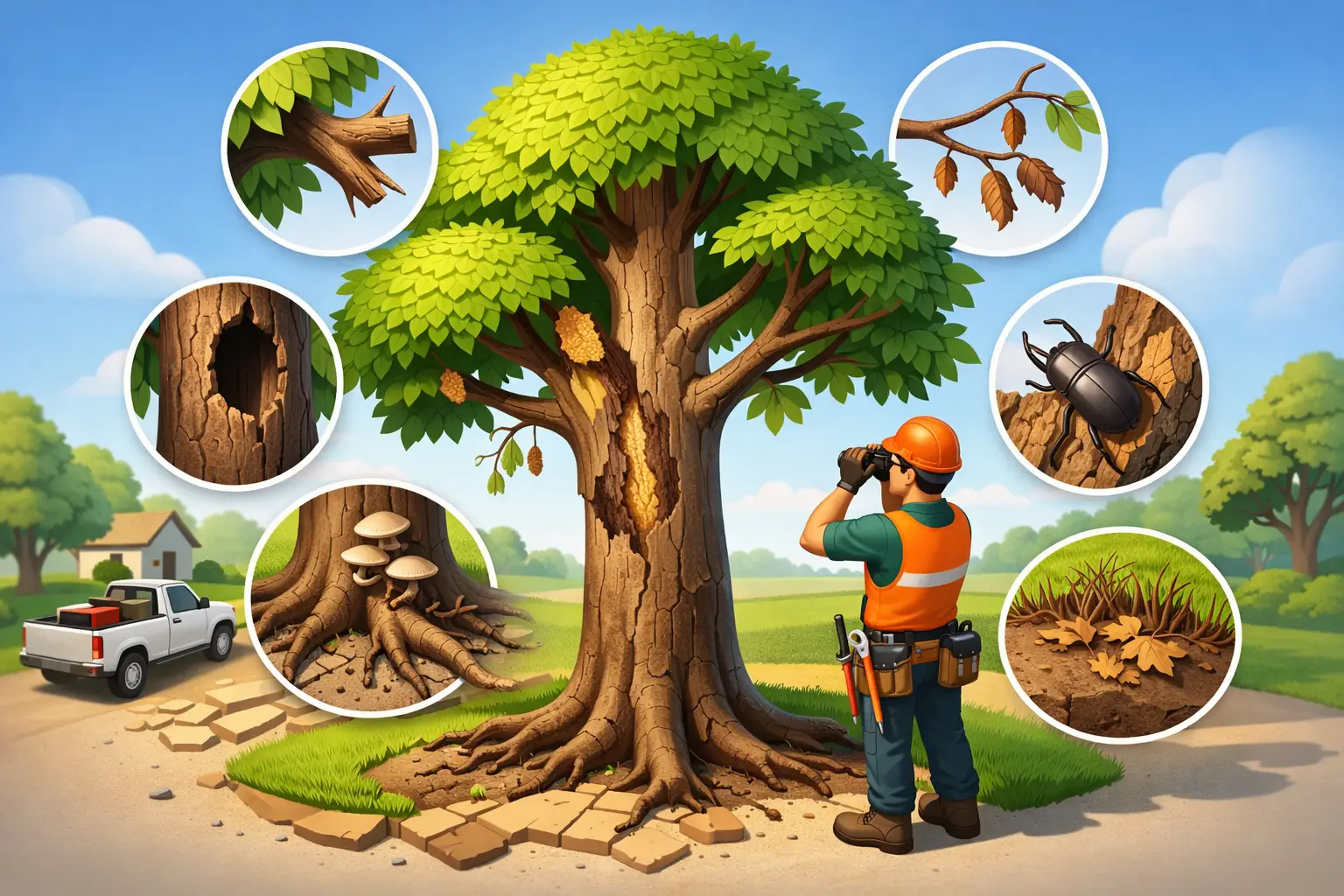
Signs of poor health deserve a closer look. These include fungal growth around the base, cavities, extensive deadwood in the crown, sudden thinning of leaves, peeling bark, large cracks or a noticeable lean that has developed recently. None of these automatically means a tree must be felled. They do, however, mean that an informed inspection is needed before deciding whether pruning, bracing, monitoring or removal is the safest course.
Avoid over-pruning healthy trees
One of the most common mistakes is treating a mature tree like a hedge. Topping – cutting the crown back to stubs or indiscriminately removing large limbs – can seriously compromise its health and appearance. It often triggers a flush of fast, weakly attached shoots, leaving the tree more difficult and expensive to manage later.
A better approach is selective pruning. This might mean crown cleaning to remove deadwood, crown lifting to create safe clearance above a path or drive, or a measured crown reduction that retains a balanced shape. The amount removed depends on the species, condition and previous management. In many cases, less is more.
Repeated hard reductions can be particularly troublesome on older trees. If a tree has become too large for its setting, the long-term answer may be phased work, a carefully specified reduction, or occasionally removal and replacement with a more suitable species. Honest advice should account for the tree’s future growth, not just make it look smaller for one season.
Young trees need a different pruning plan
The first years after planting are when light, well-timed pruning can make the biggest difference. The aim is not to make a young tree small. It is to develop one clear leader where appropriate, remove competing stems, correct badly placed branches and establish enough clearance for people, vehicles or mowing.
Small cuts made early are kinder to the tree than large corrective cuts years later. A newly planted tree should also be checked for ties that are too tight, damage from rabbits or deer, poor staking and drought stress. In exposed parts of Perthshire, Fife and the east coast, wind can shape a young tree quickly, so a regular inspection during establishment is worthwhile.
Check legal and wildlife considerations first
Before any significant pruning begins, check whether the tree is protected by a Tree Preservation Order or stands within a conservation area. The rules can require formal consent or advance notice, and the responsibility applies to homeowners and landowners as well as contractors. If the tree is on a boundary, establish ownership and discuss access with neighbours before work is arranged.
Bird nesting must also be considered. Wild birds, their nests and eggs are protected, and active nests must not be damaged or disturbed. Nesting activity is most common in spring and summer, but it can occur at other times of year. A pre-work check is essential, especially for dense hedges, ivy-covered trunks and mature crowns.
When to call a professional tree surgeon
Ground-level pruning of a small, accessible branch may be manageable with the right tools and knowledge. Anything involving ladders, climbing, chainsaws, heavy limbs, roads, overhead services or a visibly unstable tree should be left to trained professionals. Tree work changes quickly once a branch is under tension or a tree is near a target such as a conservatory, garage, fence or public footpath.
A competent team can assess the structure of the tree, plan safe cuts, use suitable access equipment where required and remove waste cleanly from site. For awkward, tall or storm-damaged trees, specialist access such as a cherry picker can reduce risk and avoid unnecessary damage to lawns and surrounding property. HL Tree Services provides practical pruning advice and safe tree work for homeowners, estates and commercial sites across Fife, Dundee and nearby areas.
The best time to think about pruning is before a low branch becomes a broken one or a dense crown becomes a neighbour dispute. A quick professional assessment can give you a clear maintenance plan, protect the health of the tree and keep your property safer through Scotland’s changing seasons.