A hedge can quickly change the feel of a property. When it is dense, well-shaped and properly maintained, it provides privacy, shelter and a smart boundary. When it is overgrown, uneven or pushing into paths and driveways, it can make the whole garden look neglected. When people search for hedge cutting Perth, they are usually looking for more than a quick trim. They need a safe, tidy result that keeps the hedge healthy and suits the property.
For homeowners, estates and commercial sites, professional hedge work takes the uncertainty out of the job. It means the right height, a clean finish, responsible handling of green waste and practical advice on what the hedge needs next.
What professional hedge cutting achieves
A good hedge cut is about control, not simply taking as much growth off as possible. The aim is to create an even, attractive boundary while leaving enough healthy foliage for the plant to recover and continue thickening out.
Regular maintenance also stops small problems becoming difficult access jobs. A hedge that is left for several years may become too wide for a footpath, block visibility at a driveway, lean over a neighbour’s garden or shade lawns and planting beds. Tall conifer hedges, particularly Leylandii, can become challenging very quickly because cutting back into old brown wood often does not produce fresh green growth.
The right approach depends on the species, age and condition of the hedge. Beech, hornbeam, privet, yew, laurel and conifer hedges all respond differently to pruning. A skilled team will assess how much can be removed safely, rather than applying the same cut to every hedge.
Hedge cutting in Perth: timing matters
Most formal hedges benefit from cutting once or twice a year, but there is no single calendar date that works for every garden. Fast-growing conifers may need attention in late spring and again in late summer, while deciduous hedges are often shaped after their main growing period. Yew can be trimmed more confidently than many species, as it is more likely to regenerate from older wood.
In Perth and across the surrounding area, weather can affect the schedule. Heavy rain makes ground conditions messier, while hard frost is not ideal for fresh cuts on some plants. A dry, mild day usually gives the cleanest working conditions and helps reduce stress on newly pruned growth.
The other key consideration is nesting birds. It is an offence to intentionally damage, destroy or disturb an active bird’s nest. Hedges should always be checked carefully before work begins, especially during the main nesting season from spring into summer. If active nesting is found, the affected area must be left alone until the birds have finished.
Avoid cutting too hard, too late
The temptation with a badly overgrown hedge is to cut it right back in one visit. Sometimes renovation pruning is appropriate, but it needs planning. Reducing a hedge too severely can leave bare patches, weaken the plant and create an unattractive boundary that takes years to recover.
With large conifer hedges, the usual rule is to avoid cutting beyond the green growth. If the hedge has become far too tall or wide, staged reductions over more than one season may be the sensible option. It takes longer, but it gives the hedge a better chance of remaining healthy and presentable.
The shape of a hedge protects its health
A well-maintained hedge should normally be slightly wider at the base than at the top. This gentle taper allows light to reach the lower branches, helping prevent the thin, bare growth often seen at ground level on poorly shaped conifers and privet.
Straight lines matter, particularly on front boundaries and commercial grounds, but the finish should not come at the expense of the plant. A professional cut balances appearance with healthy growth points. The top is level, the sides are consistent and the hedge remains dense from bottom to top.
This is particularly valuable where a hedge serves a practical purpose. A boundary hedge may screen a patio, soften a car park, provide wind protection or define the edge of an estate. Keeping it at a manageable height and width protects those benefits without allowing it to dominate the space.
When hedge work becomes a safety job
Low garden hedges can sometimes be maintained with hand tools, provided the work is within easy reach and the operator understands the equipment. The risk changes when a hedge is tall, close to a road, beside overhead services, growing on a bank or overhanging a neighbour’s property.
Using ladders with powered hedge cutters is a common cause of accidents. Uneven ground, wet grass and heavy cuttings underfoot make the work even less predictable. Larger jobs may need specialist access equipment, controlled working areas and a trained team able to manage falling material safely.
Professional hedge cutting also makes sense where there is limited access. A long boundary behind garages, a tall hedge beside a narrow driveway or planting that sits above a retaining wall can be awkward to reach without the right equipment. HL Tree Services can assess access and use suitable methods to complete the work safely, without unnecessary damage to lawns, fences or surrounding planting.
A tidy finish includes the clean-up
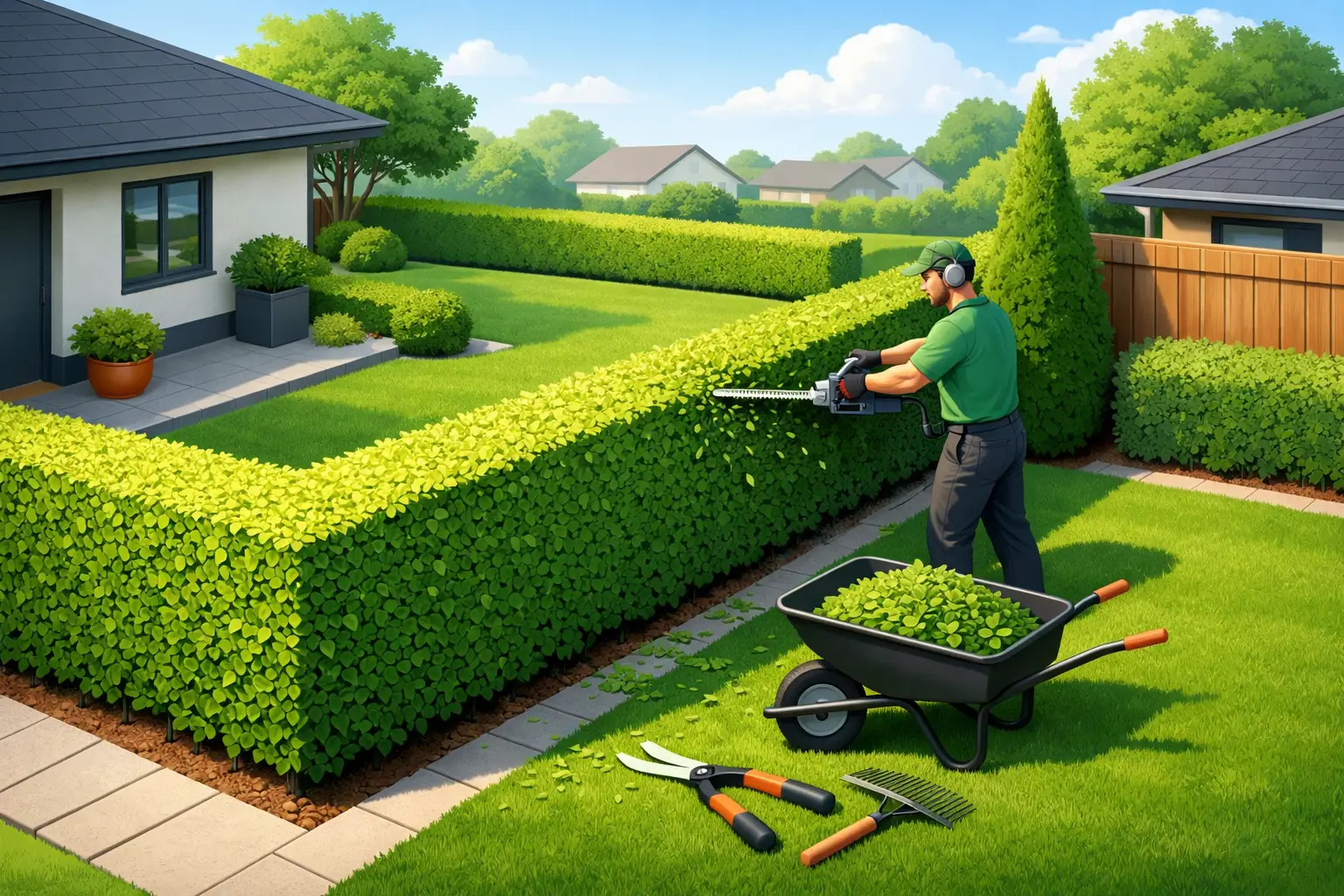
Cuttings are part of the job, not an afterthought. Fresh conifer clippings can spread across lawns and gravel, while large laurel leaves quickly fill paths and borders. Leaving waste piled in a corner can block access, smother grass and create extra work for the property owner.
A professional service should collect and remove the green waste, rake or blow down affected areas and leave the site clean. For commercial properties and managed grounds, this matters just as much as the cut itself. Entrances, pedestrian routes and parking areas need to be left safe and presentable for residents, staff and visitors.
If the hedge has been neglected for a long time, the volume of waste can be substantial. That is one reason a quote should be based on a proper view of the hedge, its height, length, access and the amount of material that will need removing.
Signs your hedge needs attention
You do not need to wait until the hedge is completely out of control. Booking maintenance before it becomes a major reduction job is usually kinder to the plants and easier on the budget. It is worth arranging an assessment if you notice any of the following:
- Growth is narrowing a path, drive or entrance.
- The top has become too high to maintain safely from ground level.
- Lower sections are thinning or turning brown through lack of light.
- Branches are pressing against fences, gutters, windows or neighbouring gardens.
- The hedge is affecting sight lines near a road junction or vehicle exit.
For shared boundaries, it is also sensible to speak with neighbours before substantial work begins. Clear communication can prevent disagreements over height, access and the handling of cuttings.
Choosing the right level of maintenance
The best hedge-cutting plan depends on what the hedge is there to do. A neat front-garden privet may need two light trims through the growing season. A mature beech boundary may only need an annual cut, while a tall conifer screen might require regular height management to stop it becoming unmanageable.
There is a trade-off between a very crisp, formal appearance and the time needed to maintain it. The tighter the shape, the more frequently it will need trimming. For larger gardens, rural properties and commercial land, a slightly softer finish can be practical while still keeping the boundary healthy and under control.
If a hedge is diseased, badly damaged or unsuitable for its location, cutting may not be the whole answer. Selective removal, replacement planting or wider site clearance can sometimes provide a better long-term result. Honest advice is valuable here, especially where the hedge is causing persistent shade, access or structural issues.
A hedge should make a property easier to enjoy, not become another difficult job waiting at the edge of the garden. Arrange work while the growth is still manageable, and there is far more choice in how the hedge looks and how well it recovers.