A large branch comes down across a driveway after high winds, or a mature tree suddenly leans towards the house. The first question is usually practical: who can make it safe? The next is financial: is tree work covered by insurance? The honest answer is that it depends on why the work is needed, what has been damaged, and the wording of the policies involved.
For homeowners, estates and property managers, the distinction matters. Insurance may contribute when a tree has caused sudden damage or presents an immediate insured risk. It is far less likely to pay for routine pruning, removal of an overgrown tree, or work that could reasonably have been arranged before a problem developed.
Is tree work covered by insurance after storm damage?
Storm damage is the situation most people associate with an insurance claim, but a fallen tree does not automatically mean every cost is covered. Buildings insurance may cover damage to an insured structure, such as a house, garage, conservatory, boundary wall or outbuilding, where a tree has fallen because of a storm or another insured event.
The policy may also cover the reasonable cost of removing the part of the tree needed to access and repair that damaged building. However, insurers often treat removal of the remaining timber, stump grinding, garden reinstatement and general tidy-up as separate costs. If a tree falls harmlessly in the garden and damages nothing insured, the cost of clearing it is often the owner’s responsibility.
The same principle can apply when a tree blocks a private drive. It is clearly inconvenient, and it may be urgent if access is required for residents or emergency services, but convenience alone does not guarantee cover. Check the policy wording and speak to the insurer before assuming that clearance will be paid for.
Where a tree is threatening a home, a professional arborist can assess the immediate risk and carry out necessary emergency work. Take clear photographs before anything is moved where it is safe to do so. This gives the insurer a record of the incident, while allowing dangerous work to be dealt with promptly.
What home insurance usually will not pay for
Most standard policies are designed for sudden, unforeseen events rather than ongoing maintenance. A tree that has become too large, a dense crown reducing light, branches overhanging a roof, or roots approaching a path are all issues best addressed before damage occurs.
Insurance commonly excludes the cost of routine tree care, including crown reductions, deadwood removal, hedge cutting, felling for extra garden space and stump removal after planned work. It may also decline a claim where there was evidence of long-term decline, poor maintenance or a known defect that was not addressed.
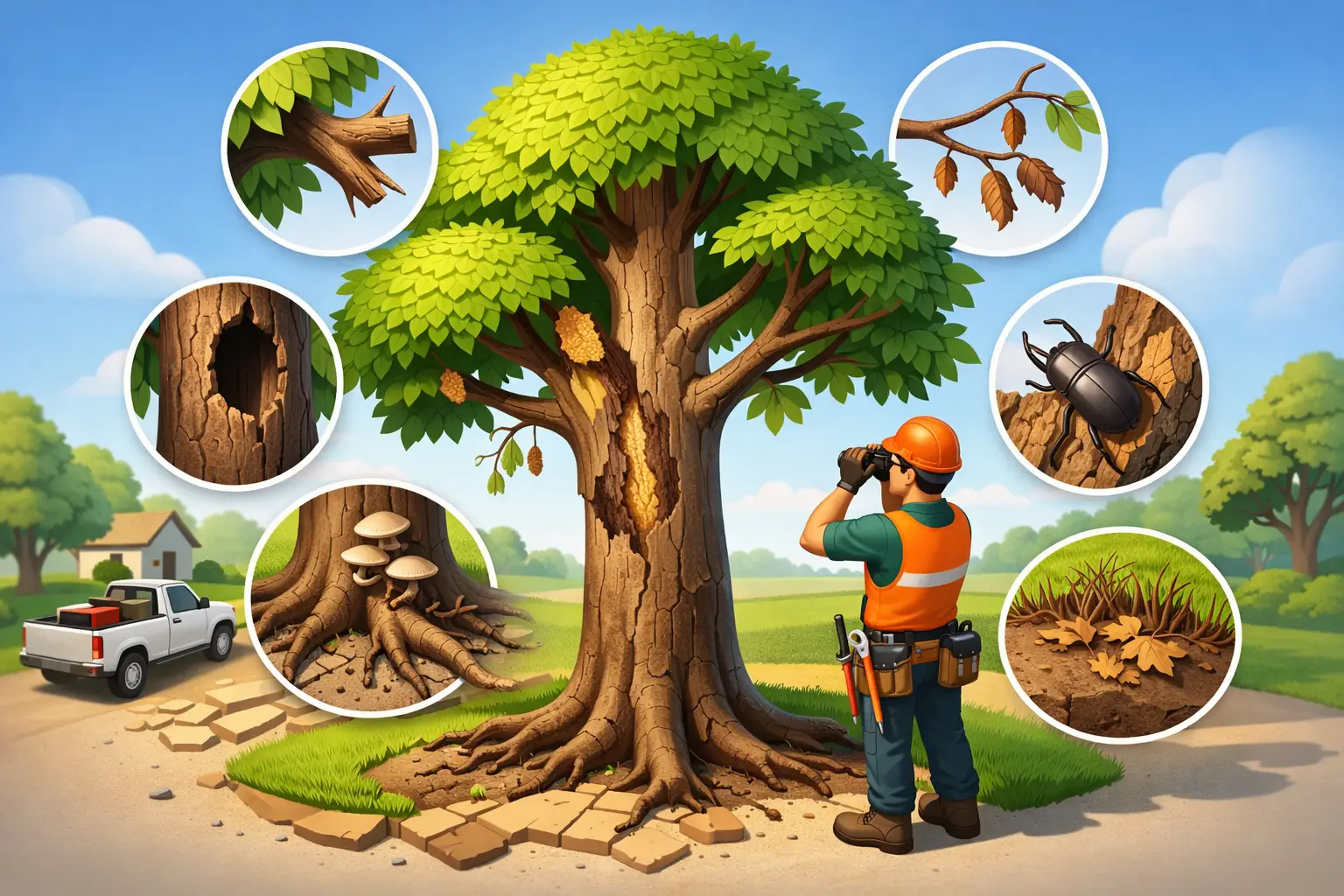
That does not mean a homeowner should ignore a concern for fear of affecting a future claim. Quite the opposite. If a tree shows decay, fungal growth, significant deadwood, cracks, root movement or a pronounced new lean, arranging an inspection demonstrates sensible management. A written tree survey can be particularly useful for properties with mature trees, shared boundaries or high public footfall.
There is a practical trade-off here. Preventative work has an upfront cost, but it gives you control over timing, access and method. Emergency work after a failure can be more complex, may require specialist access equipment, and may still leave costs that insurance does not meet.
Buildings insurance, contents insurance and liability cover
Buildings insurance is normally the relevant policy when a tree damages the fabric of your property. Contents insurance may help if the incident damages belongings kept inside an insured building, subject to the terms and excess. Policies vary, so never rely on a general rule in place of your own schedule and wording.
Liability is different again. If your tree falls onto a neighbour’s property, it is not always automatically your bill simply because you own the tree. The key question is often whether you were negligent. For example, if there were obvious signs that the tree was unsafe and no reasonable action was taken, your liability insurer may need to become involved.
If a healthy-looking tree fails suddenly in exceptional weather, responsibility can be less straightforward. Your neighbour would normally speak with their own insurer regarding damage to their property, while insurers establish the facts if they believe another party may be liable. Keeping records of inspections and recommended work can be valuable if questions arise later.
Avoid arguments over branches, leaves or ownership lines in the immediate aftermath. Make the area safe, document the damage, and let insurers or qualified advisers deal with the policy position. Tree disputes can become expensive when people make assumptions or arrange work that affects a neighbour’s tree without proper consent.
Does the tree surgeon need insurance?
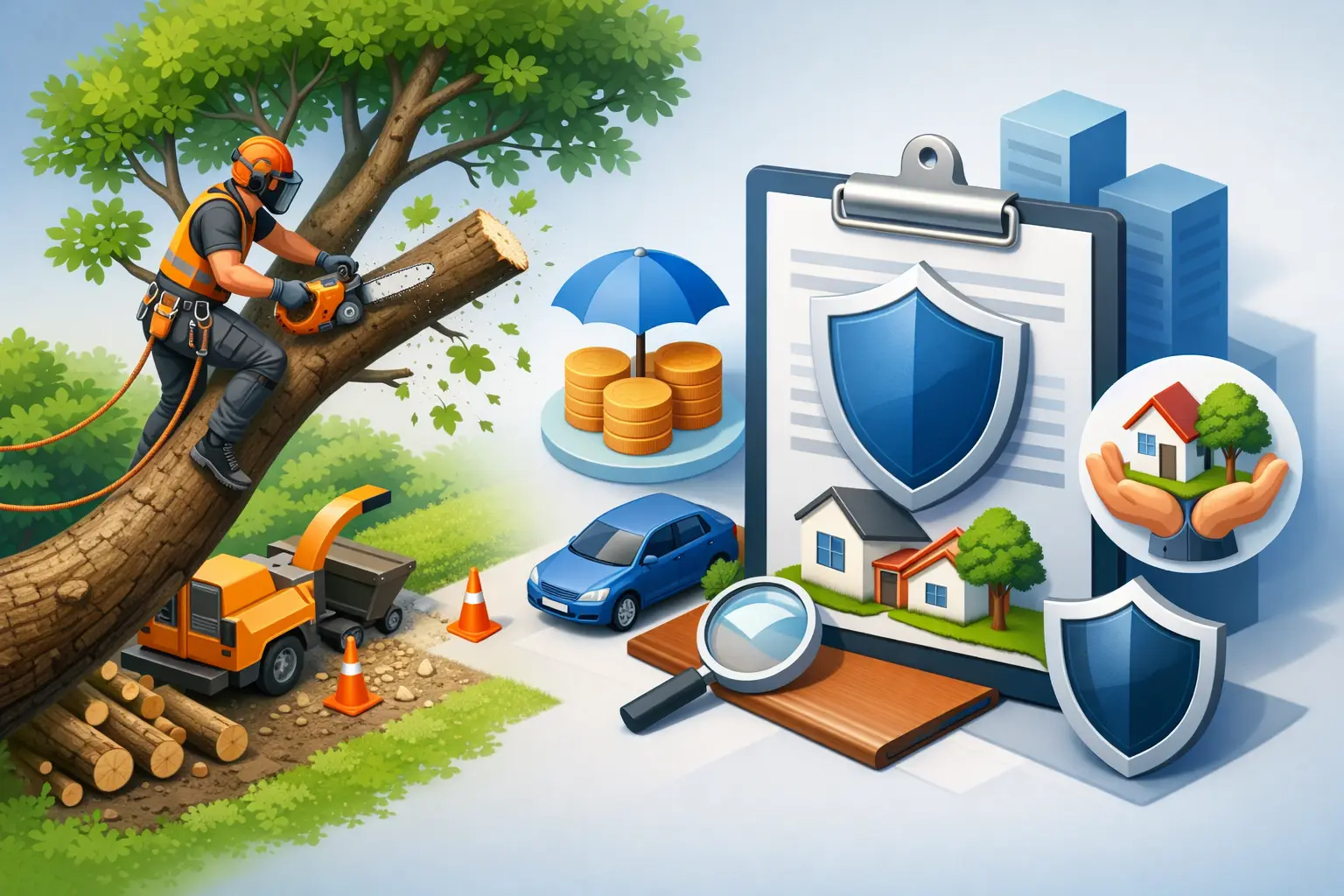
Yes. Even where your own home insurer is paying for part of the work, the contractor carrying it out should have appropriate insurance for professional tree work. Tree surgery involves climbing, chainsaws, rigging, machinery, traffic management and, at times, work close to buildings, roads and overhead services. It is not a job for an uninsured handyman or a homeowner with a saw and a ladder.
Ask any contractor for proof of current public liability insurance and, where relevant, employers’ liability insurance. Public liability is intended to protect against accidental injury or property damage caused during the work. Employers’ liability is required where a business employs staff. The contractor should also have the training, risk assessment process and equipment needed for the site.
Insurance alone is not a measure of workmanship, but it is a basic safeguard. A professional team should explain the proposed method, identify access limitations, protect the work area and remove arisings as agreed. For awkward trees over roofs, tight gardens or commercial sites, equipment such as a cherry picker can make work safer and more controlled than climbing alone.
At HL Tree Services, we assess the job before recommending a method, whether that is careful dismantling, crown work, emergency clearance or a full removal. The aim is always to make the site safe without creating avoidable damage or disruption.
What to do before you make a claim
If a tree has failed or appears dangerous, protect people first. Keep clear of hanging branches, unstable trunks and fallen trees near power lines. Do not attempt to cut or move material yourself, particularly after a storm when the timber may be under tension.
Then contact your insurer as soon as practical, especially if there is damage to a building. Explain what has happened and ask whether they require photographs, a contractor’s quotation or an inspection before non-emergency work begins. If immediate action is needed to prevent further loss, tell them this and keep copies of all communications, invoices and photographs.
A clear quotation should separate emergency make-safe work from further recommended work, such as full dismantling, removal of remaining debris or stump grinding. This can help both you and the insurer understand which elements may be considered under the claim and which are ordinary property maintenance.
Do not forget the excess. Even when a claim is accepted, you may need to pay the excess amount yourself. For relatively minor damage, compare the likely settlement against the excess and consider whether making a claim could affect future premiums or no-claims discounts.
Protected trees and emergency work
Insurance does not override planning or conservation controls. A tree may be protected by a Tree Preservation Order, or it may stand within a conservation area. Except in a genuine emergency, you may need consent or need to give the local authority notice before carrying out certain work.
Where a protected tree is immediately dangerous, only the work necessary to remove that danger should be undertaken. Photograph the condition, record why urgent action was required and seek professional advice. A qualified arborist can help identify the safest proportionate response and explain what information should be retained.
This is particularly relevant for mature trees near homes, roads, shared access routes and commercial premises. The cheapest option is not always the responsible option when safety, legal duties and public access are involved.
The best approach: act early and keep good records
Insurance can be a valuable safety net after a genuine accident, but it should not be treated as a maintenance plan for trees. Regular inspections, timely pruning and professional advice reduce the chance of a preventable failure and make it easier to show that you have managed your trees responsibly.
If you are concerned about a tree at your property, arrange an assessment before the next spell of high winds turns an uncertainty into an emergency. You will receive practical advice on the condition of the tree, the work that is genuinely needed and the safest way to proceed.