A mature beech over a customer car park, a line of windblown conifers beside a farm track, or an overgrown boundary hedge around an estate can quickly become more than a maintenance issue. Commercial tree services for businesses, estates and landowners are about keeping people, property, access routes and working land safe, while retaining healthy trees wherever possible.
For commercial sites, tree work needs to be planned around more than the tree itself. There may be staff and visitors on site, vehicles moving through a car park, neighbouring properties, public footpaths, livestock, overhead services or tight access for machinery. A professional approach protects the site now and helps prevent expensive disruption later.
Commercial Tree Services for Businesses, Estates and Landowners
The right programme depends on the type of land you manage and the risks present. A hotel, school, industrial unit or retail site may need regular inspections of trees near buildings and pedestrian routes. An estate may require woodland management, boundary maintenance, planting or clearance along tracks and fences. Landowners preparing for development may need tree surveys, selective removal and full site clearance carried out to an agreed schedule.
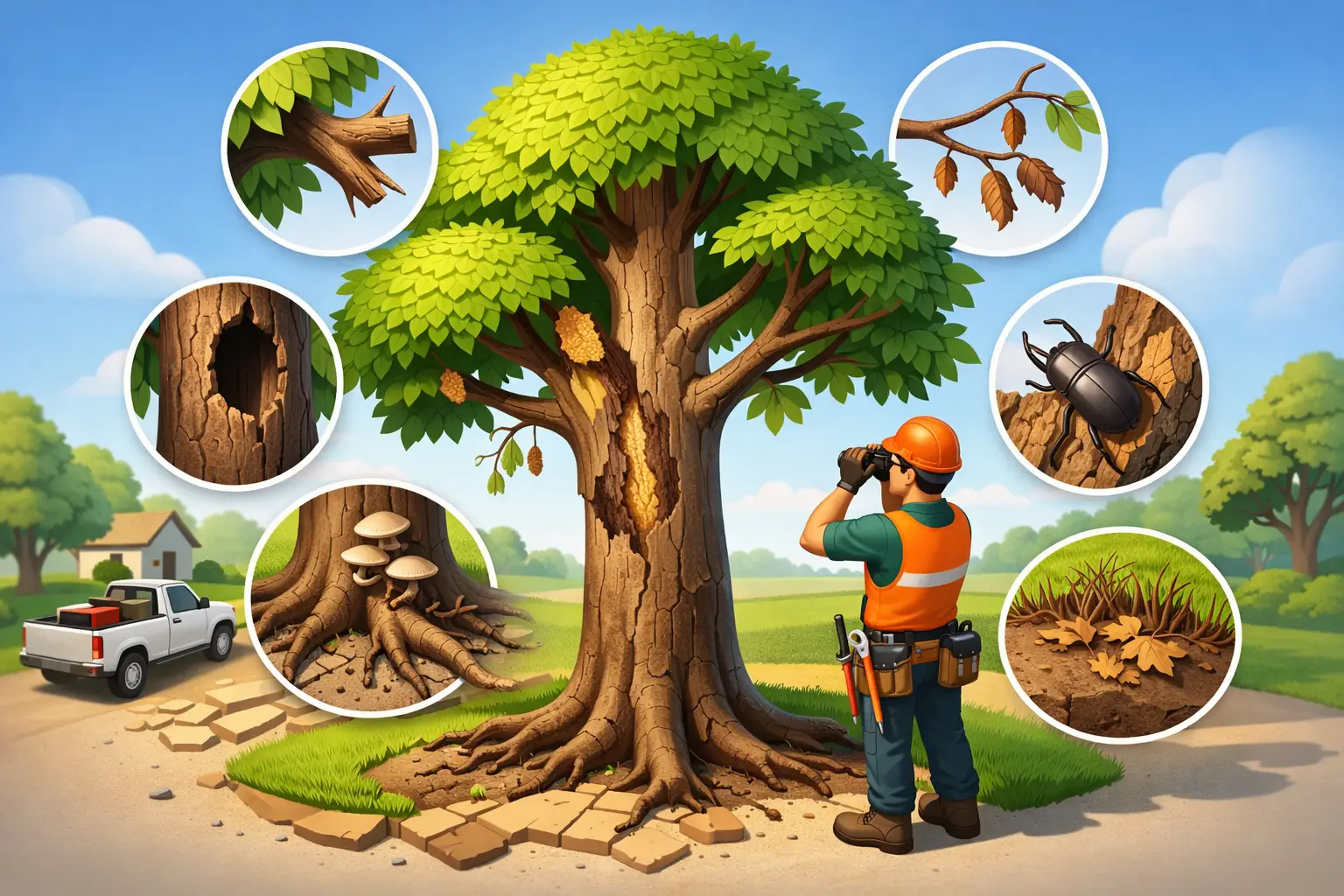
The work can include pruning to remove deadwood or reduce weight from vulnerable limbs, crown lifting to improve clearance above roads and paths, hedge cutting, tree felling, stump grinding and replanting. It can also include specialist tree surveys that help identify defects, assess tree condition and guide decisions before works are commissioned.
There is no one-size-fits-all answer. Removing a tree may be the safest option where it is structurally unsound, badly diseased or causing unavoidable damage. In other cases, careful pruning, bracing advice or routine monitoring can retain a valuable mature tree safely. The aim should be proportionate work based on the condition, location and long-term role of each tree.
Why Routine Tree Care Makes Commercial Sense
Waiting until a branch falls, a gate is blocked or a tree is visibly leaning often turns manageable maintenance into an urgent, costly job. Planned inspections give you time to make informed choices, arrange access and complete work when it causes the least disruption to the site.
For businesses, this helps keep entrances, signage, loading areas and customer parking clear. For estates and rural properties, it supports safe access along drives, lanes and field boundaries. It also reduces the chance of branches damaging roofs, fences, vehicles, lighting or neighbouring land.
Routine pruning can improve the structure of young trees and control growth before limbs become oversized or poorly balanced. Mature trees benefit from sensible, targeted work too. Heavy-handed cutting may create stress, encourage weak regrowth or spoil the appearance of an established site, so the method matters as much as the result.
A well-managed landscape also reflects on the property. Tidy boundaries, safe paths and healthy trees make a difference to tenants, visitors, customers and prospective buyers. That does not mean every tree should look uniform. It means the site should be visibly cared for, practical to use and free from obvious avoidable hazards.
Surveys and permissions before work begins
A tree survey is particularly useful where there are numerous mature trees, planned construction works or uncertainty about condition. It creates a clearer picture of what is on site, where the priorities lie and whether further investigation is needed. For landowners considering a new access road, building extension or site development, this early information can prevent trees being damaged accidentally during later works.
Legal restrictions must also be checked before pruning or felling. Trees may be protected by a Tree Preservation Order, or located within a conservation area where notice is required. Responsibility for obtaining consent can depend on the project and the agreed scope of work, but it should never be treated as an afterthought. A reputable contractor will raise the issue early and help ensure the planned work is appropriate.
Ecology can affect timing too. Nesting birds, bats and other protected species may require checks or changes to the work programme. This is especially relevant on older estates, woodland edges, farm buildings and sites with mature trees containing cavities or loose bark.
Planning Work Around a Live Site
Commercial tree work is rarely carried out in an empty field. The best results come from clear planning before the first cut is made. That includes agreeing the work area, access route, machinery position, traffic management and what will happen to timber, brash and woodchip.
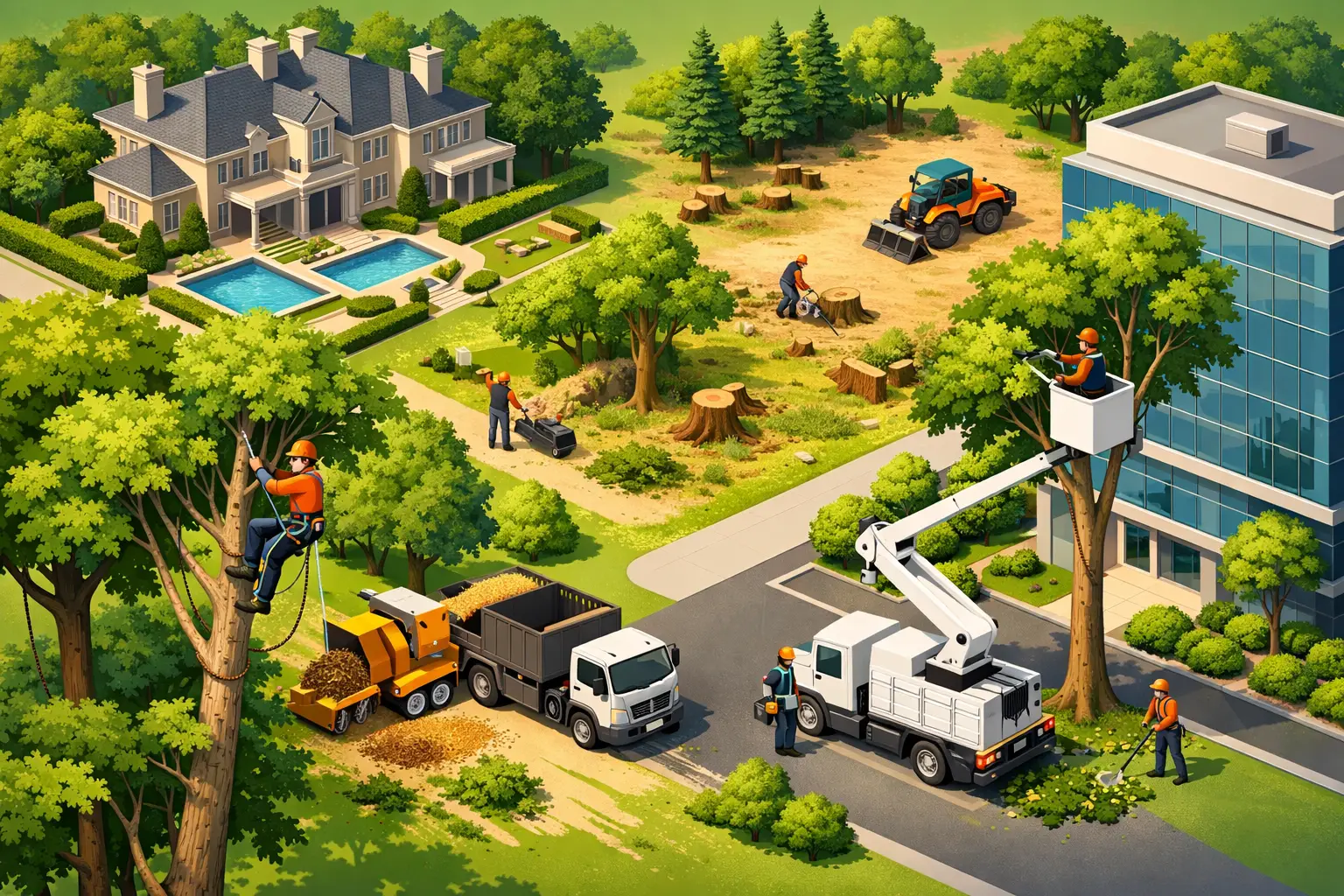
On a busy property, sections may need to be dismantled carefully rather than felled in one piece. Ropes, rigging and a cherry picker can allow trained arborists to work safely around buildings, roads, glasshouses, power lines and confined gardens. Specialist access equipment is not always necessary, but it can make difficult work safer and more efficient where ground conditions and space allow.
A proper site plan should also consider the people using the area. Pedestrian routes may need to be temporarily closed, parking bays kept clear and staff informed of noise or restricted access. For schools, hospitality venues and public-facing premises, work can often be scheduled outside peak hours where practical.
Clean-up is part of the job, not an optional extra. Once work is complete, paths, lawns and hardstanding areas should be cleared of debris. Timber can be stacked for the client, removed from site or processed as agreed. For stump grinding, the resulting material and reinstatement requirements should be discussed in advance, especially where the area will be replanted, turfed or resurfaced.
Site Clearance Without Unnecessary Loss
Site clearance is sometimes essential, particularly for development, new fencing, access improvements or reclaiming neglected ground. However, effective clearance is selective, not indiscriminate. Retaining good-quality trees where they fit the future use of the site can preserve shelter, character and environmental value.
The first question should be what the land needs to achieve. A future building footprint, a safer entrance, more usable grazing or a managed woodland edge will each require a different approach. Once the outcome is clear, the work can be phased to remove unsuitable growth, deal with stumps and invasive vegetation, and protect trees that are being retained.
Where trees are removed, replacement planting may be worthwhile. The right species and position matter. A tree planted too close to a building, boundary wall or overhead line may create the next maintenance problem. Native species can suit many rural and estate settings, while urban commercial sites may need tough, compact varieties able to cope with restricted rooting space and regular footfall.
When Emergency Tree Work Is Needed
Storms can expose weaknesses that were not obvious from ground level. A split stem, hanging limb, uprooted tree or branch resting on a roof needs prompt professional assessment, particularly where there is a risk to the public or property.
The first priority is to keep people away from the affected area. Do not attempt to pull down lodged branches, climb a damaged tree or work beneath a suspended limb. If power lines are involved, keep well clear and contact the electricity network operator as well as your tree contractor.
A 24-hour emergency response is valuable for businesses and landowners when access needs to be restored quickly or a hazard needs making safe. The immediate job may involve removing dangerous material and securing the area, with further corrective work arranged once the site can be assessed properly in daylight.
Choosing a Contractor You Can Rely On
Commercial clients need more than a quick quote. They need a team that understands risk, communicates clearly and arrives with the right skills and equipment for the job. Ask how the work will be carried out, whether access and traffic management have been considered, and how the site will be left at the end of the day.
It is also sensible to check that the contractor has appropriate insurance, trained operatives and experience with the scale of work involved. A small ornamental prune and a large dismantle over a car park are very different jobs. The cheapest option can become costly if the work is poorly specified, causes damage or leaves you with disposal and clean-up issues.
HL Tree Services works with commercial clients, estates and landowners across Fife and nearby areas, providing practical advice alongside safe, tidy tree work. From a single difficult tree to ongoing maintenance and larger clearance projects, the focus should remain on clear planning and a high standard of workmanship.
A site walk with an experienced arborist is often the best starting point. It turns a vague concern about overgrown, damaged or awkward trees into a clear plan for what needs done now, what can wait and how the land can be managed safely for the years ahead.