You can have drawings ready, budgets agreed and contractors lined up, then find the whole programme slowed down by one issue on site – trees. A tree survey before construction is often the point where a project becomes clearer, because it shows what is there, what condition it is in, and how those trees may affect design, access and groundworks.
For homeowners planning an extension, developers preparing a new build, or site managers organising works on larger plots, this is not paperwork for the sake of it. It is a practical step that helps avoid expensive changes later. It can also prevent unnecessary tree loss, reduce the risk of damage during construction and give planning teams the information they need to assess the proposal properly.
What a tree survey before construction actually covers
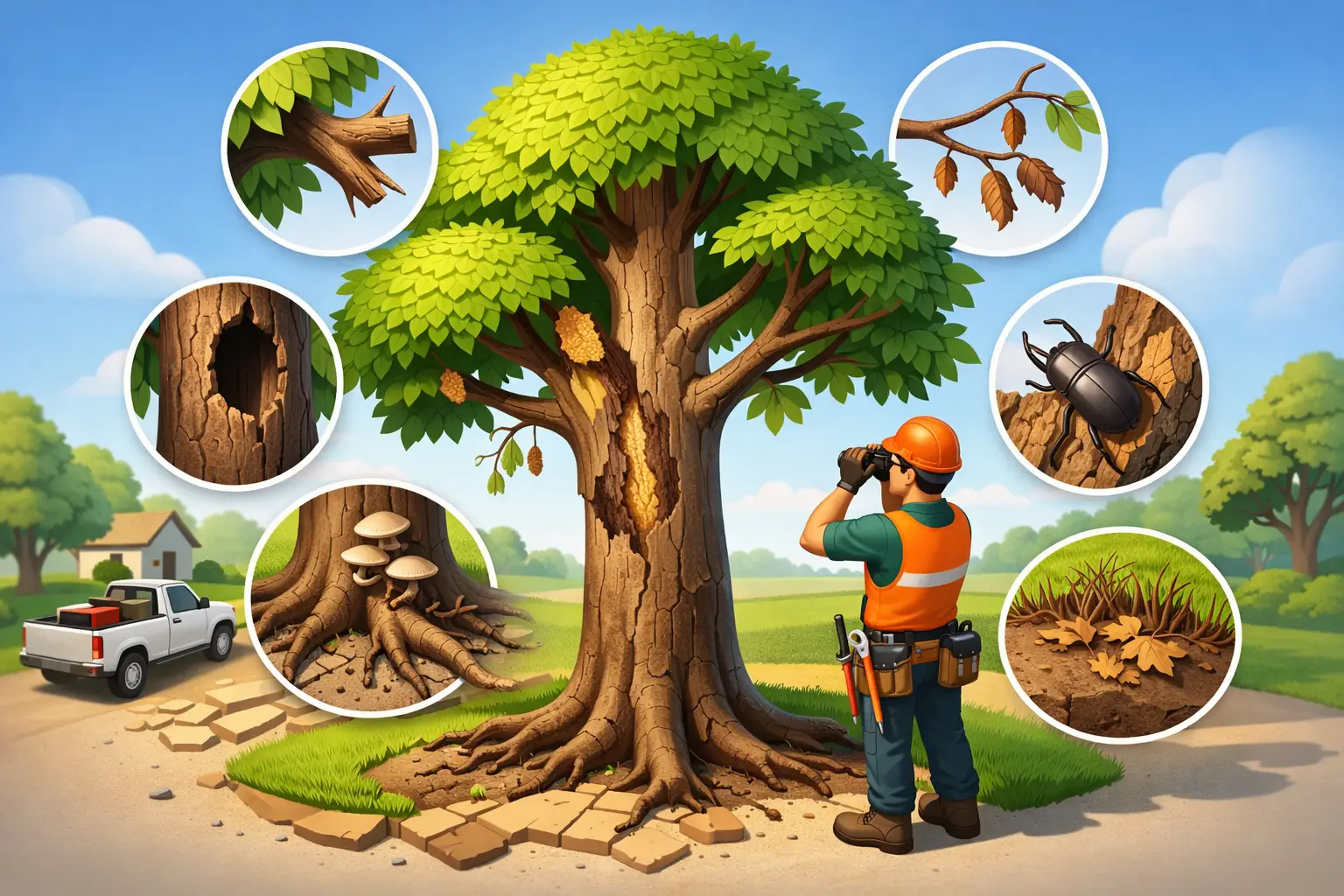
A pre-construction tree survey is an arboricultural assessment of the trees on or near a development site. The purpose is to record accurate information that can be used during design and planning. That usually includes the species, height, stem diameter, crown spread, age category, condition, life expectancy and likely management needs of each tree.
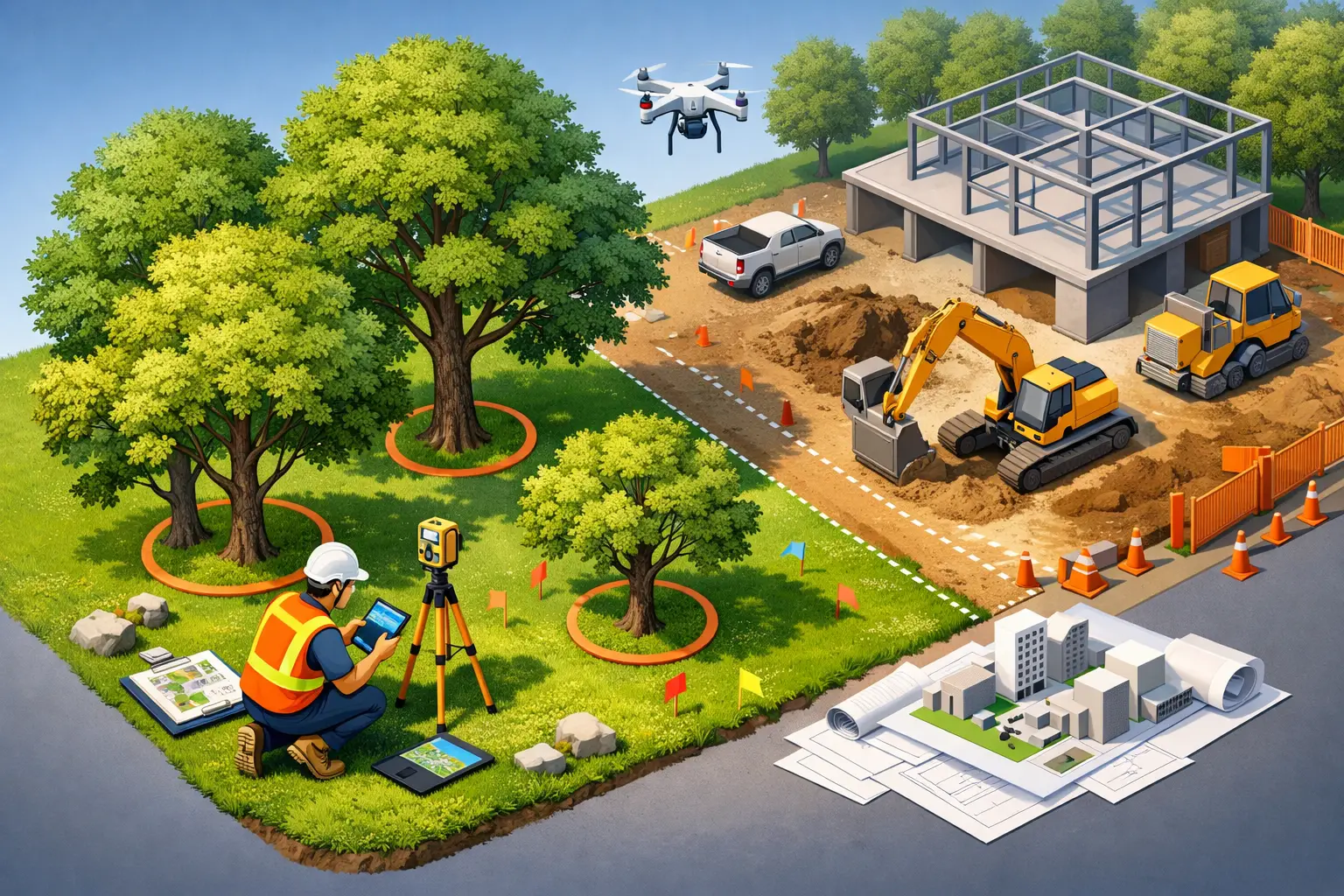
Just as important, the survey identifies the likely root protection area for each relevant tree. This matters because roots are often damaged long before anyone notices a visible problem above ground. Digging foundations, altering levels, installing drainage, storing materials or moving machinery repeatedly over the same area can all cause harm. Once that damage is done, the effects may not appear straight away, but they can become serious over time.
Where the survey is being prepared in support of development, it is commonly carried out in line with British Standard guidance for trees in relation to design, demolition and construction. That gives planners, architects and contractors a recognised framework to work from.
Why this survey matters so much before work starts
The biggest value of a tree survey before construction is timing. If tree constraints are understood early, the layout can be shaped around them. If they are ignored until the design is well advanced, there is a greater chance of redesign, planning delay or avoidable removal work.
A good survey helps answer practical questions quickly. Can the proposed extension sit where you want it? Will an access route run through a root protection area? Is a retaining wall likely to affect nearby trees? Are there trees in poor condition that should be dealt with before heavy works begin? Those are the kinds of decisions that are easier and cheaper to make on paper than when machinery is already booked.
There is also the legal and planning side. Some trees may be protected by a Tree Preservation Order, and others may stand within a conservation area. Even where a tree is not formally protected, local authorities still want to understand how development will affect the site and its surroundings. Clear arboricultural information makes that process smoother.
Which projects usually need a survey
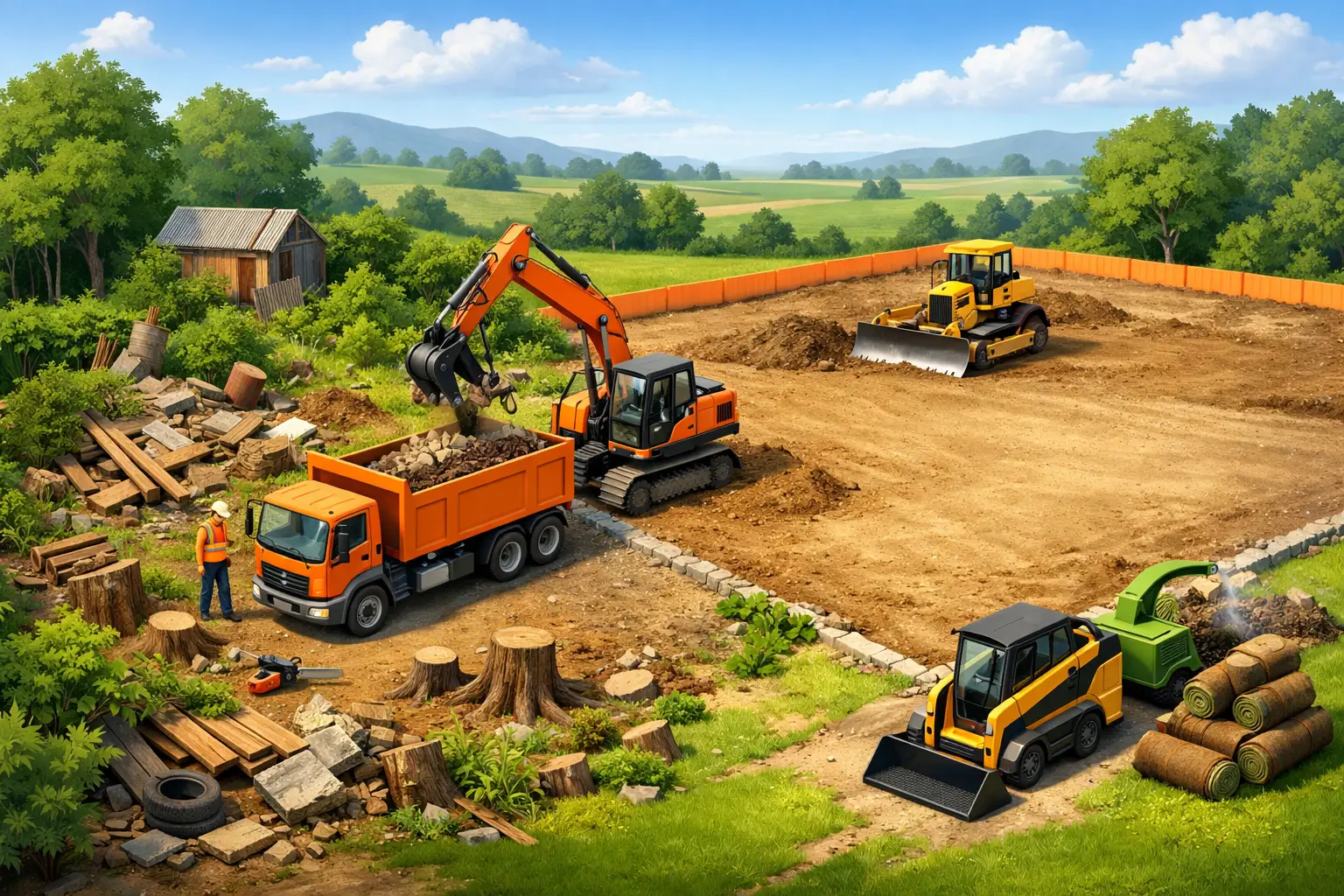
Not every bit of garden work calls for a formal survey, but many construction projects do. New houses, extensions, garages, access roads, site clearance, commercial developments and changes in ground level can all bring trees into the picture. If there are trees on the site, or on neighbouring land close enough to be affected, a survey may be needed.
This is especially common on plots with mature trees, tight boundaries or limited access. In areas across Fife, Dundee and Perthshire, many sites include older trees that add real character but also require careful planning. Mature roots do not respect fence lines, and overhanging canopies can influence scaffolding, cranes and working space.
For domestic clients, the issue often starts with a simple question: do I really need this? The honest answer is that it depends on the site and the proposal. A straightforward single-storey extension in an open garden may be less constrained than a build close to established trees. The right advice early on helps avoid guessing.
What happens during the survey process
The survey itself is usually carried out on site by a qualified arboricultural professional. Trees are inspected, measured and plotted in relation to the proposed development area. The information is then used to prepare a schedule and, where required, supporting plans and reports.
In many cases, the process does not stop at recording trees. The next stage may include an arboricultural impact assessment, which considers how the proposed development affects those trees. After that, there may be an arboricultural method statement and a tree protection plan showing how retained trees should be protected during the works.
That distinction matters. The survey tells you what is there. The impact assessment explains what the proposal means. The method statement sets out how the work should be done to avoid damage. On smaller projects those documents may be quite straightforward. On larger or more complex sites, they become a key part of the planning and construction process.
Common problems a survey helps avoid
One of the most common issues is foundation design clashing with root protection areas. Another is site access passing too close to retained trees. Sometimes the conflict is less obvious, such as proposed changes in soil level, underground services or boundary structures affecting roots and soil conditions.
There is also the question of tree condition. A survey may identify trees that are dead, declining, poorly structured or otherwise unsuitable for retention in the long term. That is useful information for both safety and planning. It is generally better to identify a weak tree before construction starts than to discover it halfway through the job when access is restricted and costs rise.
On the other hand, a survey can also show when good quality trees are worth retaining and protecting. That can improve the finished development, maintain privacy, preserve local character and support planning discussions. Keeping the right trees is often a better result than removing everything and starting again with new planting.
Tree survey before construction and planning applications
Planning authorities often expect tree information to be submitted where development may affect existing trees. If the information is missing, vague or inaccurate, validation can be delayed or further details requested. That slows the whole process down.
A clear survey gives planners confidence that tree issues have been considered properly. It also helps designers demonstrate that retained trees have shaped the proposal, rather than being treated as an afterthought. In practical terms, that can mean adjusting the footprint, moving parking, altering service runs or changing working methods.
For commercial projects, this level of detail is part of keeping the programme under control. For homeowners, it can be the difference between a planning application progressing steadily or getting caught up in avoidable queries.
Why local site knowledge makes a difference
Tree work linked to construction is not only about reports. It is about understanding how sites behave in the real world. Access can be awkward, neighbouring trees can complicate operations, and retained trees may need protection measures that actually work on the ground rather than just on a drawing.
That is where experienced arboricultural contractors can add real value. A team used to working around live sites, restricted gardens, mature trees and specialist access equipment can spot issues that are easy to miss from behind a desk. Good advice should be practical, not theoretical.
For clients, that means clearer decisions. If a tree can be retained safely, you want to know what protection it needs. If removal is the better option, you want an honest explanation. If pruning is enough to facilitate access or clearance, that should be set out plainly as well.
Choosing the right approach for your site
The right tree strategy depends on the balance between development needs, tree quality and site constraints. There are times when retention is straightforward and worthwhile. There are other cases where the layout needs to change, or where poor quality trees can sensibly be removed as part of the wider scheme. Neither answer is automatically right in every situation.
What matters is getting reliable information early, before assumptions become expensive. A proper survey helps everyone involved work from the same set of facts, from the property owner and architect to the planner and contractor. That reduces surprises and gives the project a better chance of moving forward without unnecessary delay.
If you are planning building work near existing trees, getting clear arboricultural advice at the start is one of the simplest ways to protect both your site and your budget. A well-timed survey does not just satisfy planning requirements – it gives you a more workable project from day one.