A tree can look harmless enough from the kitchen window, right up until a heavy branch starts rubbing on the roof, blocks the light from the garden, or shifts badly after a spell of high wind. That is usually when domestic tree services Fife homeowners rely on stop feeling like a nice-to-have and start feeling essential.
For most householders, tree work is not just about appearance. It is about safety, access, property protection and keeping healthy trees in good condition for the long term. The right work, done at the right time, can prevent damage, reduce risk and improve the overall look and usability of your outdoor space. The wrong work can do the exact opposite.
What domestic tree services in Fife usually involve
Domestic tree care covers far more than cutting down problem trees. In many gardens, the best outcome is careful management rather than removal. That might mean crown reduction to bring a tree back into proportion, pruning to remove dead or crossing branches, or lifting the canopy to improve light and clearance over a drive, path or lawn.
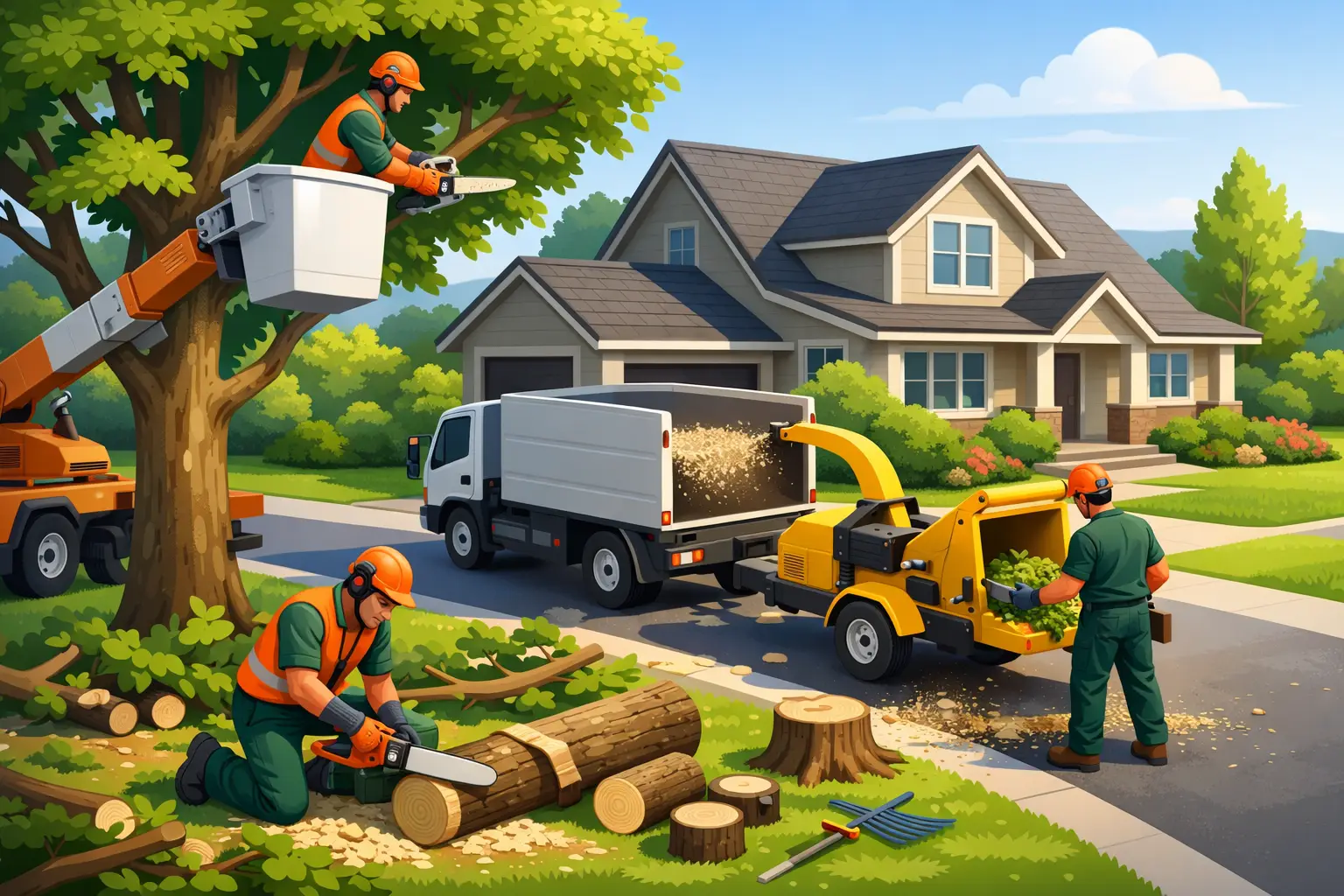
There are also situations where removal is the sensible option. A tree may have outgrown its space, become unsafe, started affecting a wall or fence, or suffered storm damage that leaves it unstable. In those cases, controlled dismantling is often needed, especially where there are sheds, conservatories, neighbouring gardens or overhead lines nearby.
Stump grinding is another part of the picture that many people only think about after the tree has gone. Leaving a stump behind can affect replanting, create a trip hazard and make the garden look unfinished. A proper domestic service should deal with the full job, not just the visible part above ground.
Hedge cutting often sits alongside tree work as well. Overgrown hedges can narrow access, block pavements, shade gardens and quickly make a property look neglected. Regular cutting keeps them healthy, dense and manageable.
Why professional tree work matters at home
There is a big difference between tidying a small ornamental tree and carrying out safe tree surgery on a mature garden tree. Height, weight, decay, awkward angles and limited access all change the job. What looks straightforward from ground level can be far more complex once climbing starts or sections need lowering safely around buildings.
This is where experience matters. Domestic tree work often takes place in the most awkward settings – close to houses, garages, greenhouses, fences and neighbouring boundaries. Every cut needs to be planned. Every section needs to come down under control. Good tree work is not rough cutting. It is skilled, methodical work carried out with safety and tree health in mind.
There is also the question of tidiness. Homeowners do not just want the tree dealt with. They want the site left clean, the waste removed and the garden respected while the work is being carried out. That sounds basic, but it is one of the clearest signs of a professional team.
Common signs your garden trees need attention
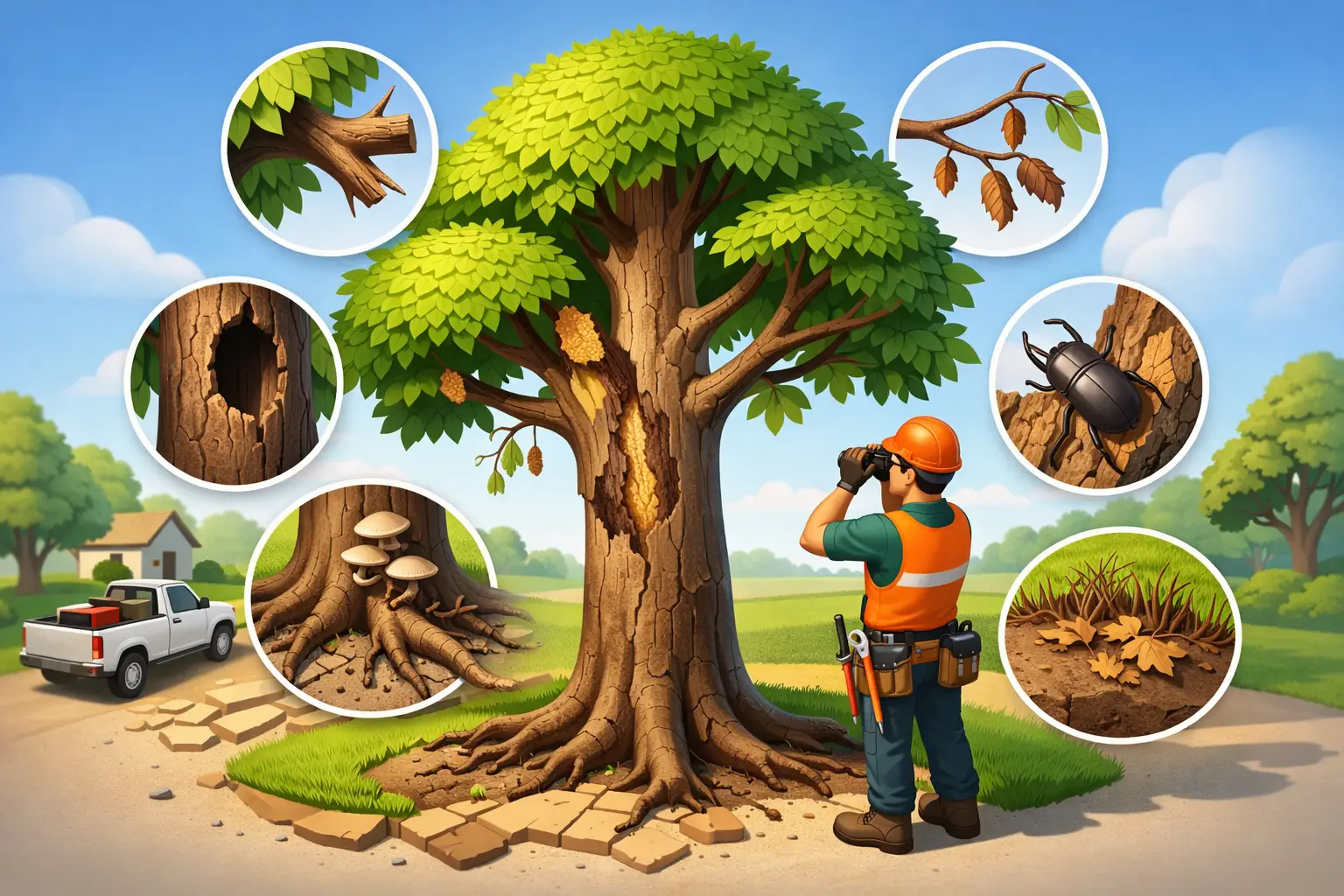
Some issues are obvious. A split limb, a leaning trunk after a storm, or branches touching the house should never be ignored. Others are easier to miss. Deadwood in the canopy, fungi around the base, sudden thinning in leaf cover, and branches overhanging roads or neighbouring land can all point to a need for assessment.
Fast growth is not always healthy growth either. Trees that have become dense and unbalanced may be more vulnerable in strong winds. Large limbs can become overextended, especially where previous poor pruning has encouraged weak regrowth. In smaller gardens, even a healthy tree may simply need managing before it becomes a bigger problem.
If you are unsure, that is usually the point to get advice rather than wait. Early intervention often gives more options. Leave it too long, and the job can become more expensive, more disruptive, or more urgent than it needed to be.
Domestic tree services Fife residents often ask for
In Fife, domestic work tends to reflect the mix of mature residential streets, village properties, newer estates and larger rural gardens. Some households need one-off work after storms or years of growth. Others want regular maintenance to keep trees and hedges under control without losing the character of the garden.
The most common requests include pruning for shape and clearance, crown reduction to manage size, deadwood removal, full tree felling, stump grinding and hedge maintenance. Emergency call-outs are also important, particularly after severe weather when damaged limbs or uprooted trees create immediate risk.
It depends on the property and the tree itself. A mature beech in a tight rear garden needs a very different approach from a line of conifers on a boundary or a fruit tree that has been left untouched for years. Good advice should reflect that rather than pushing the same answer for every job.
Choosing the right solution, not the biggest one
One of the biggest concerns homeowners have is whether they are being told a tree needs to come down when it could be retained. That is a fair concern. Responsible tree work starts with assessing what is actually necessary.
Sometimes reduction or selective pruning is enough to improve safety and restore balance. Sometimes a tree is in decline, poorly positioned or too compromised to keep. There is no single rule that fits every garden. The right contractor should explain the options clearly, set out the likely result and be honest about the trade-offs.
For example, heavy cutting may give a quick reduction in size, but it can leave a tree looking poor and encourage weak future regrowth. Lighter, well-considered pruning may preserve the tree better, though it may not produce such a dramatic immediate change. A good result is usually the one that balances safety, appearance and long-term health.
Access, equipment and awkward jobs
Domestic sites rarely offer perfect working conditions. Narrow entrances, sloping gardens, limited parking and close neighbouring properties all affect how a job is planned. That is why specialist equipment can make such a difference.
For some work, climbing is the best option. In other cases, access equipment such as a cherry picker allows safer and more efficient handling of difficult trees, especially where shape, height or condition make climbing less suitable. The point is not to use machinery for the sake of it, but to choose the safest and most effective method for the site.
That matters even more when dealing with large, awkward or high-risk trees. A capable team should be able to assess the site properly, protect surrounding areas and carry out the work without unnecessary disruption. For homeowners, that means less guesswork and more confidence from the outset.
Safety, permissions and neighbour concerns
Tree work at home is not always just between you and the contractor. In some cases, there may be conservation area restrictions or tree preservation considerations. Boundaries can also complicate matters where branches extend over neighbouring gardens or where shared access is involved.
A professional service should flag up any issues that need checking before work starts. That does not mean every garden tree comes with red tape, but it is far better to ask the question early than find out later that consent was needed.
Neighbours are worth thinking about too. Careful planning, tidy working practices and sensible timing go a long way. Tree work can be noisy and disruptive for a short period, but it should still be handled with consideration.
What a good domestic tree service looks like
For most homeowners, the experience matters as much as the final cut. You want clear advice, a fair quote, reliable attendance and a team that turns up ready to work safely and properly. You also want a straightforward explanation of what is being done and why.
A strong local company will usually stand out in the basics. They assess the job carefully, communicate clearly, use the right equipment, keep the site organised and leave it clean. If conditions change during the work, they explain that too. Confidence is built through competence, not sales talk.
That is especially important in domestic settings, where people are trusting a contractor to work close to their home, family and property. Firms such as HL Tree Services build that trust by combining practical expertise with a professional, respectful approach on site.
When to book tree work
There is no perfect month for every job. Some pruning is better timed around species and growth patterns, while storm damage and emergency work obviously cannot wait. Hedge cutting often becomes a seasonal task, and larger garden tidy-ups tend to be planned around broader landscaping work.
If you already know a tree is becoming an issue, it is usually better to book before it becomes urgent. You will have more flexibility, more time to consider the right option and less chance of weather turning a manageable problem into an immediate one.
A well-kept tree can add shape, privacy and real value to a property. A neglected one can become expensive surprisingly quickly. If something in your garden is overgrown, damaged or simply getting beyond what feels safe, sensible advice from an experienced local team is often the first step towards putting it right.